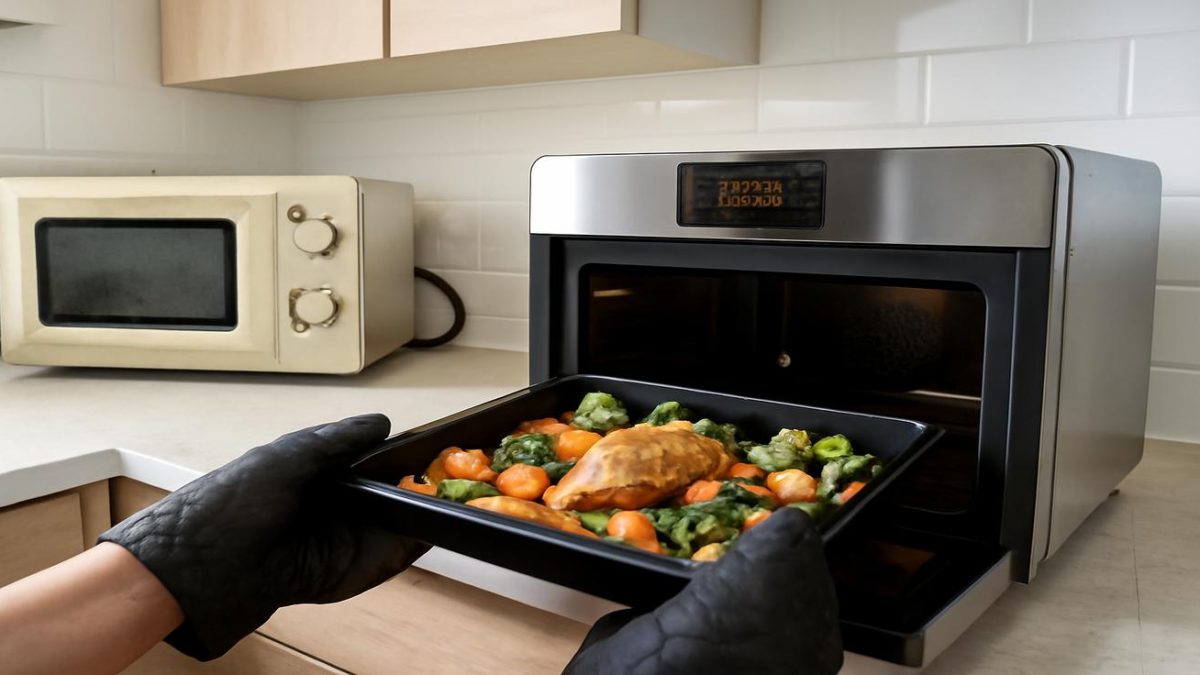
For generations, the microwave has been the default choice for busy households seeking quick meal solutions. Its convenience seemed unmatched—a few button presses and dinner was ready. However, a quiet revolution is sweeping through kitchens worldwide, as homeowners discover that newer cooking technologies offer something the microwave never could: speed combined with superior quality results. This shift represents more than just a preference change; it’s a fundamental reimagining of what fast cooking should deliver.
The Microwave’s Long Dominance
Since arriving in American homes during the 1970s, the microwave became synonymous with convenience. It promised to save time, reduce cooking complexity, and provide reliable heat for leftovers. By the 1990s, nearly every household possessed one, and it claimed prime real estate on kitchen counters. The microwave transformed eating habits, making it socially acceptable to reheat meals rather than cook fresh, and enabled the expansion of frozen food industries that still thrive today.
Yet despite its ubiquity, the microwave always had notable limitations. Foods heated unevenly, creating scorching hot spots alongside cold sections. Textures suffered dramatically—crispy items became soggy, delicate foods turned rubbery, and nutritional content degraded more significantly than with conventional cooking methods. The microwave’s reliance on radiation-based heating meant compromises were built into its fundamental design.
Enter the Speed Cooking Revolution
Today’s kitchen landscape looks dramatically different. Air fryers, convection ovens, and hybrid cooking appliances are experiencing explosive growth, with sales increasing by over 300% in the past five years. These devices share a common philosophy: deliver rapid cooking times while maintaining or enhancing food quality. Unlike microwaves that rely on electromagnetic radiation, modern speed cookers use rapidly circulating hot air, convection heating, or halogen technology to cook food more evenly and thoroughly.
The air fryer phenomenon specifically deserves attention. This compact appliance heats air to extreme temperatures—typically between 300-400 degrees Fahrenheit—and circulates it at high velocity around food. The Maillard reaction occurs, creating the golden-brown exterior and improved flavor profiles that microwaved foods can never achieve. Foods cooked in air fryers emerge with better texture, enhanced taste, and surprisingly, require minimal to no added oils.
Speed Without Compromise
What makes these devices genuinely revolutionary isn’t just their speed—it’s that they accomplish fast cooking without sacrificing results. Frozen chicken breasts cook in 12 minutes. Vegetables crisp beautifully in under eight minutes. Even baked goods emerge properly textured and fully cooked. The cooking times rival microwave speeds, yet the quality differences are immediately apparent to anyone who tastes the results.
Convection ovens offer another compelling alternative, particularly for families preparing larger quantities. By forcing heated air to circulate continuously, these appliances cook 25-30% faster than traditional ovens while distributing heat evenly. Foods maintain moisture where desired while developing proper browning and texture. Many households find that investing in a quality convection oven eliminates the need for separate microwave and conventional oven usage.
The Health and Nutrition Factor
Beyond taste and texture, health-conscious consumers are increasingly concerned about how cooking methods affect nutritional content. Research indicates that microwave radiation can degrade certain vitamins and minerals more severely than conventional heating methods. Additionally, some studies suggest that extreme heat cycling in microwaves may affect food structure at a molecular level.
Speed cookers that use convection and thermal heating maintain nutritional profiles more effectively. The shorter cooking times mean less exposure to high heat, preserving heat-sensitive nutrients. For families prioritizing wellness, this distinction matters considerably. Parents especially appreciate that air fryers require significantly less added oil than traditional frying, providing healthier versions of favorite foods.
Practical Advantages Beyond Cooking
The transition away from microwaves extends beyond cooking performance. Air fryers and convection ovens are remarkably easy to clean, lacking the interior vents and crevices where microwave debris accumulates. Many have dishwasher-safe components and non-stick surfaces requiring just simple wipes. For people with limited time, easier cleanup represents a genuine quality-of-life improvement.
Countertop real estate has also influenced adoption rates. Air fryers come in compact sizes that consume similar space to microwaves but serve more cooking purposes. Some households eliminate their microwave entirely, replacing it with a single multipurpose appliance. This represents a significant shift in kitchen prioritization, suggesting that consumers value versatile performance over single-function convenience.
Environmental and Economic Considerations
Environmental consciousness plays a role in this transition as well. Microwave ovens contain specific materials and electromagnetic components that complicate recycling. Air fryers, built from more standard materials like stainless steel and traditional electrical components, integrate more easily into recycling streams. Furthermore, these devices often outlast microwaves significantly, reducing replacement frequency and electronic waste generation.
From an economic perspective, quality air fryers typically cost $80-200, comparable to mid-range microwaves. However, their extended lifespan and reduced replacement frequency create better long-term value. Additionally, their ability to replace multiple appliances—microwave, toaster oven, and fryer—means some families actually reduce total appliance spending while improving cooking results.
The Behavioral Shift
Perhaps most significantly, these devices are changing how people approach meal preparation. The microwave encouraged reheating and quick fixes. Speed cookers encourage light cooking—preparing fresh foods rapidly rather than defaulting to leftovers and frozen meals. This subtle behavioral change has profound implications for family eating patterns, nutritional intake, and food waste reduction.
Young adults establishing independent households increasingly skip microwaves entirely, viewing them as outdated technology. They’re instead investing in convection or combination appliances that align with their cooking philosophies. This generational preference suggests that the microwave’s reign is genuinely ending.
What This Means for Your Kitchen
If you’re considering making this transition, the decision largely depends on your cooking patterns. Light users who primarily reheat beverages and leftovers may find limited advantage. However, families preparing fresh foods, managing diverse dietary preferences, or prioritizing food quality will likely discover that speed cookers dramatically improve their cooking experience.
The kitchen appliance landscape continues evolving, and this shift away from microwaves represents a meaningful step forward. As technology advances and consumer preferences shift toward quality and health, the reliable beeping microwave increasingly looks like a relic from previous decades. The future of fast cooking is cleaner, faster, and genuinely better—and it’s already here.











Leave a Comment