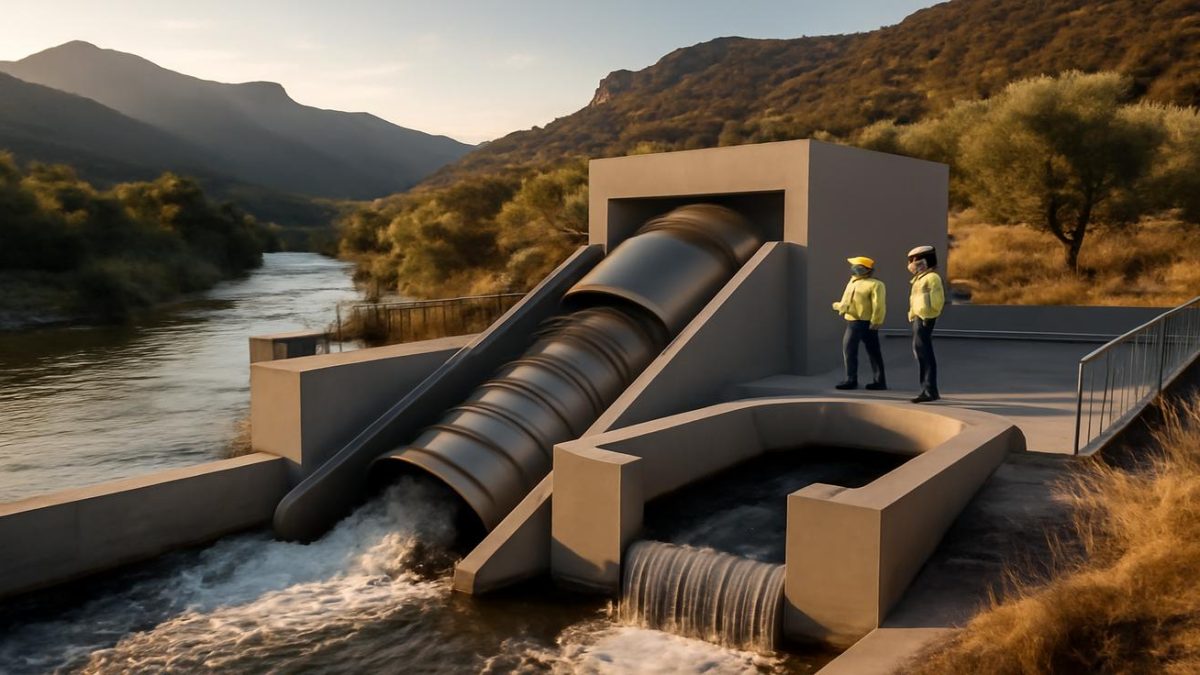
For decades, Spain’s river ecosystems have faced an invisible crisis. While hydroelectric dams have powered millions of homes and supported industrial development, they’ve simultaneously created an ecological catastrophe for freshwater fish species. Now, Spanish engineers and environmental scientists are collaborating on a groundbreaking solution that could transform how the world approaches renewable energy generation without sacrificing aquatic life.
The Cost of Conventional Hydropower
Traditional hydroelectric facilities represent one of the most efficient renewable energy sources available today. However, their environmental price has been devastating for fish populations across Spain’s major waterways. The spinning turbines that generate electricity act as deadly barriers, fragmenting river ecosystems and preventing fish migration during critical breeding seasons. Juvenile fish attempting to navigate downstream face virtually impossible odds against the massive mechanical structures.
Spain’s rivers have witnessed alarming declines in native fish species over the past thirty years. Eel populations have plummeted by over ninety percent in some regions, while salmon runs have become virtually non-existent in formerly productive waterways. The infrastructure that provides clean electricity has essentially created underwater deserts, where once-thriving ecosystems thrived.
Environmental agencies and fishing communities have grown increasingly frustrated with the trade-off between energy production and environmental stewardship. Scientists documented that the problem wasn’t simply the dams themselves, but rather the turbine technology that made conventional hydropower possible. This recognition sparked a crucial question: could hydroelectric power be generated without the turbines that cause such ecological damage?
Engineering a New Solution
Spanish researchers began exploring alternative mechanisms for extracting energy from flowing water without relying on spinning turbines. Their investigations led to several promising technologies that could fundamentally reshape the hydropower industry. These innovations focus on capturing the kinetic energy of water movement through non-destructive means.
The breakthrough involved designing systems that allow water to flow naturally through channels while generating electricity through alternative mechanisms. Rather than forcing water through turbines, these new approaches harness water pressure and flow dynamics using solid-state technology or oscillating systems that don’t create the lethal conditions of traditional turbines.
Initial prototypes demonstrated that electricity generation rates could match or exceed conventional systems while eliminating the fish mortality problem. The engineering challenge centered on creating efficient energy conversion at scales large enough to be commercially viable. Spanish companies invested millions in research and development, recognizing this technology could become a significant export opportunity.
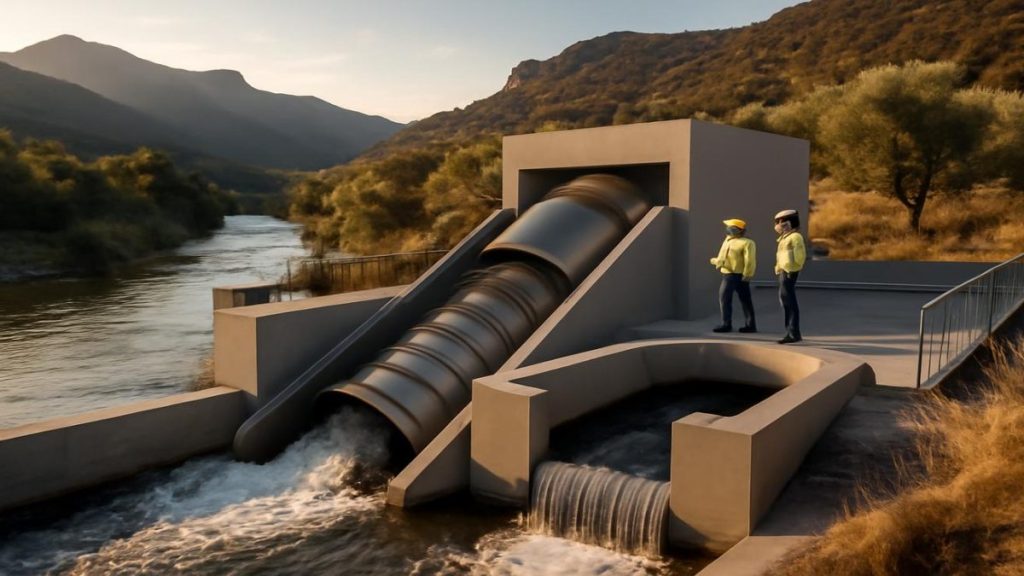
How Turbine-Free Systems Work
The new Spanish hydropower systems operate on fundamentally different principles than their predecessors. Instead of massive rotating machinery, these installations use advanced solid-state converters or pressure-based generators that transform water’s kinetic energy into electricity without creating physical obstacles.
One innovative approach utilizes flexible membrane systems that oscillate in response to water flow, converting mechanical motion into electrical current. These systems allow fish to pass through relatively unharmed since there are no fast-spinning blades or extreme pressure differentials. Another method employs electromagnetic induction principles where flowing water induces electrical generation without requiring turbine rotation.
The beauty of these technologies lies in their scalability. Unlike conventional dams that require massive capital investments and extensive environmental permitting, turbine-free systems can be installed in existing waterways with minimal infrastructure disruption. Multiple units can be deployed across a river system, creating distributed generation networks rather than centralized megastructures.
Environmental and Economic Benefits
The ecological advantages extend far beyond simple fish mortality reduction. By restoring natural water flow patterns, these systems help revitalize entire river ecosystems. Fish populations can migrate freely during spawning seasons, sediment flows naturally downstream maintaining aquatic habitats, and water temperature regulation improves throughout affected waterways.
Communities that depend on fisheries report cautious optimism. Commercial and recreational fishing operations could potentially expand as fish stocks recover over time. Native species that disappeared decades ago might reestablish themselves in Spanish rivers, restoring biodiversity that conventional hydropower destroyed.
Economically, the technology presents compelling advantages. Installation costs remain lower than building new traditional dams. Maintenance expenses decrease significantly without complex turbine systems requiring constant servicing. Energy output proves comparable to conventional hydropower, making the transition economically rational for energy companies.
Global Implications and Future Prospects
Spain’s innovation arrives at a critical moment for global environmental policy. Nations worldwide struggle with balancing renewable energy expansion against environmental protection. Many countries have built extensive hydroelectric infrastructure that devastated local ecosystems. Spain’s turbine-free approach offers a pathway for upgrading existing facilities or developing new capacity without repeating past ecological mistakes.
International water management organizations have expressed strong interest in Spain’s technology. Countries like Norway, Chile, and Canada, which rely heavily on hydropower, are closely monitoring these developments. The potential for retrofitting existing dams with turbine-free systems could create enormous opportunities for environmental restoration alongside continued energy production.
Research continues advancing efficiency and cost-effectiveness. Spanish universities collaborate with private sector companies to optimize designs for different river conditions and flow rates. Within the next five to ten years, turbine-free hydropower could represent a substantial portion of new renewable energy installations globally.
Challenges and Next Steps
Despite impressive progress, challenges remain. Regulatory frameworks in many countries don’t yet accommodate turbine-free hydropower installations. Grid integration and energy storage coordination require technological refinement. Some skeptics question whether early prototypes can maintain promised efficiency levels at commercial scales.
Spain’s government has committed substantial funding to accelerate deployment and address remaining technical hurdles. Pilot projects in multiple river systems will provide data for continuous improvement. Collaboration between environmental groups and energy companies ensures that ecological benefits remain central to development priorities.
The evolution from traditional turbine-based hydropower represents more than technological advancement—it reflects a fundamental shift in how society approaches balancing human energy needs with environmental stewardship. Spain’s engineers have demonstrated that these goals need not be mutually exclusive, offering hope for sustainable energy futures worldwide.









Leave a Comment