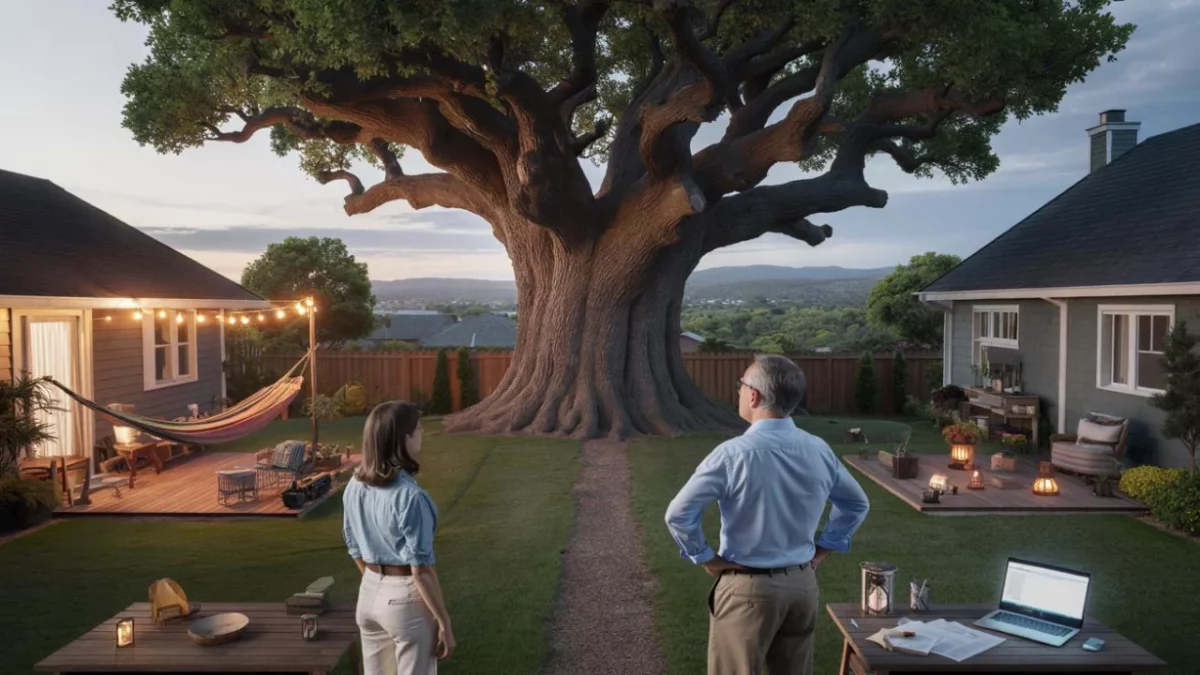
In the tranquil suburban landscape of Millbrook, a quiet community known for tree-lined streets and well-maintained neighborhoods, a dispute has escalated that challenges everything residents thought they understood about property ownership and natural heritage. At the center of this conflict stands an oak tree—not just any tree, but a botanical giant estimated to be over three hundred years old, with branches stretching majestically across the property lines of two neighboring homes.
The Dream Home and the Magnificent Tree
Five years ago, the Patterson family purchased their residence in Millbrook with visions of creating an idyllic family retreat. The property listing highlighted numerous features—the updated kitchen, the two-car garage, the proximity to good schools—but what truly captured their hearts was the massive oak tree anchoring the backyard. Its sprawling canopy promised summer shade for afternoon barbecues, its gnarled trunk seemed to whisper stories of centuries past, and its existence felt like owning a piece of natural history.
The Pattersons invested in landscaping improvements specifically designed around this arboreal centerpiece. They added a stone patio beneath the lowest branches, installed subtle lighting to highlight the tree’s dramatic silhouette at night, and even commissioned a local artist to create a bronze plaque documenting the tree’s estimated age. The oak became the heart of their outdoor living space, the feature that had justified their decision to stretch their budget for this particular property.
An Unexpected Challenge Emerges
Trouble began brewing when the neighboring property—which had sat vacant for nearly a year—was purchased by the Mitchell family. The Mitchells arrived with their own vision for their space, one that involved significant renovations to maximize their home’s footprint and create optimal sightlines from their master bedroom toward the distant hills. It was during the architectural planning phase that surveyors made an unexpected discovery: the ancient oak tree’s trunk, while firmly rooted on Patterson property, extended substantial branches and root systems onto Mitchell land.
More significantly, the tree was positioned in such a way that its canopy created substantial shade across the Mitchell property for much of the day, directly obscuring the scenic views toward the surrounding hills that the family had purchased the lot partly to access. What the Mitchells saw as an obstruction to their property’s value and enjoyment, the Pattersons viewed as a natural treasure that transcended property lines.
Property Lines and Legal Complexity
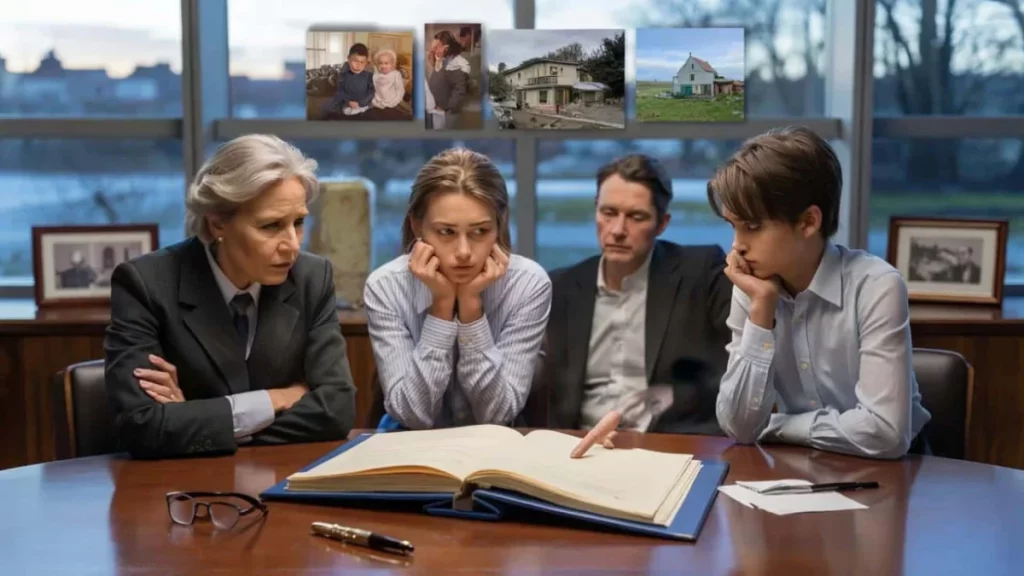
When initial conversations between the families proved unproductive, attorneys became involved. The legal battle that followed revealed just how complicated tree ownership could be in modern property disputes. Unlike straightforward boundary disagreements, tree law exists in a murky intersection of property rights, environmental regulations, and local ordinances.
The Mitchells’ legal team argued that because significant portions of the tree extended onto their property, they had legitimate claim to the branches and roots within their land boundaries. They further contended that trees creating unreasonable shade or obstruction that diminishes property value give neighbors the right to request removal or substantial pruning. The Pattersons countered that the tree’s status as a heritage specimen—one likely predating both current properties—warranted special protections under Millbrook’s recently enacted Tree Heritage Preservation Ordinance.
Millbrook’s municipal code, enacted just three years prior, designated certain trees of significant age and historical value as protected heritage specimens. Removal or major pruning of such trees required approval from a Heritage Conservation Board. The designation, however, applied to trees whose primary trunk was located on a single property. The oak’s ambiguous status—mature trunk on Patterson land, but substantial canopy and root system spanning both properties—created unprecedented legal uncertainty.
Expert Testimony and Ecological Considerations
As the dispute escalated, both families commissioned independent arborists and environmental specialists. The resulting reports offered fascinating but contradictory conclusions. One expert testified that the tree’s health and longevity depended on the undisturbed root system extending across both properties, and that removing branches from one side would compromise structural integrity and potentially kill the entire organism.
Another expert, hired by the Mitchells, suggested that strategic pruning could reduce shade coverage by forty percent while maintaining the tree’s health. Testimony regarding the tree’s actual age varied dramatically—one dendrochronologist estimated three hundred twenty years based on core samples, while another suggested the figure could be closer to two hundred fifty years. These variations mattered because Millbrook’s protection ordinance only applied to trees exceeding two hundred seventy-five years of age.
The Neighborhood Impact
What began as a two-family dispute gradually rippled through the entire community. Some neighbors sided with the Pattersons, viewing the ancient oak as a shared community asset that enhanced the entire neighborhood’s character and ecological value. Others sympathized with the Mitchells, arguing that property owners shouldn’t be held hostage to environmental features they didn’t choose and didn’t benefit from.
The dispute attracted attention from regional environmental groups, heritage preservation organizations, and property rights advocates. News outlets covered the battle with increasing interest, transforming a local disagreement into a case with broader implications for how communities balance individual property rights against collective heritage preservation.
Lessons in Property Ownership and Community Living
The Patterson-Mitchell case illustrates several profound truths about modern residential life. First, property ownership in developed areas rarely means absolute dominion over every square inch. Second, natural features that predate modern property divisions often exist in legal gray areas. Third, what feels like a straightforward real estate transaction can become extraordinarily complex when environmental, aesthetic, and legal considerations intersect.
For potential homebuyers, the dispute serves as a cautionary tale about thoroughly investigating not just the property you’re purchasing, but features—both desired and potentially problematic—that extend beyond your official boundaries. For communities, it highlights the importance of clear ordinances addressing heritage protection, tree law, and neighbor disputes before conflicts arise.
As of this writing, the case remains unresolved, with mediation continuing and the ancient oak still standing, casting its shadow across two properties, two families, and increasingly, the broader question of what we owe to natural heritage in an age of property rights and development pressures.










Leave a Comment