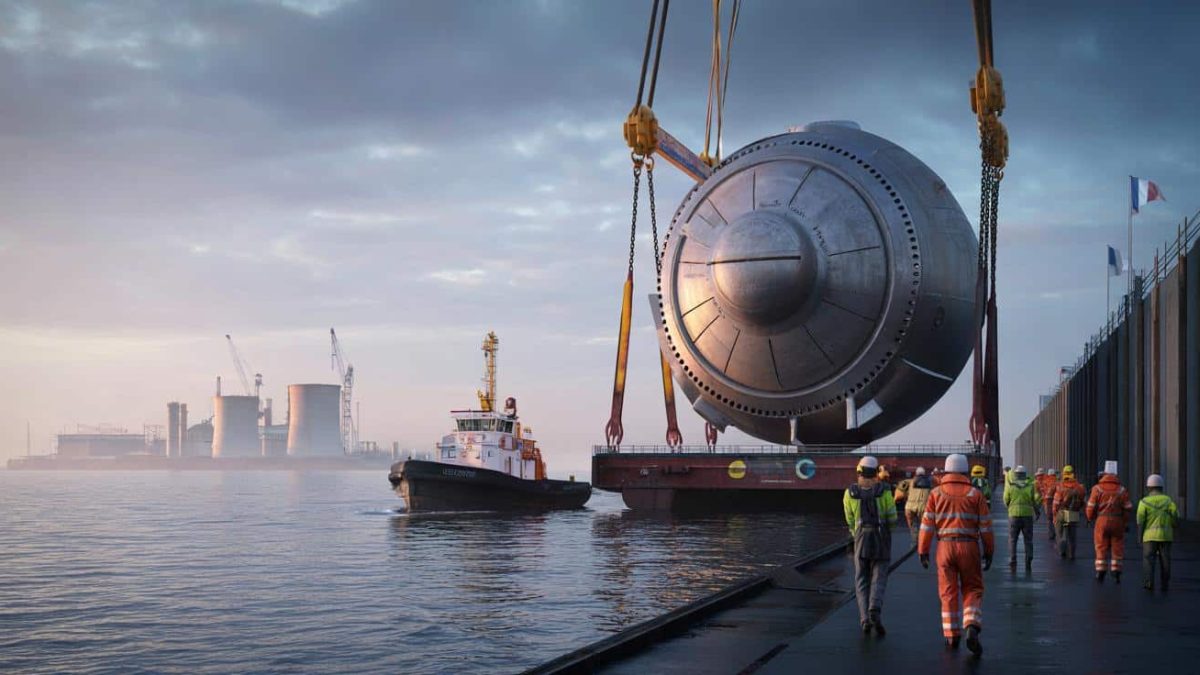
Britain’s energy sector stands at a crossroads. Recent developments have thrust critical questions into the spotlight about how public money flows through the nation’s power infrastructure and who ultimately benefits from taxpayer investment. The arrival of a colossal industrial component across the Channel serves as a tangible reminder of these complex arrangements.
The Transatlantic Transfer and What It Means
When substantial industrial equipment begins its journey across international waters, it rarely captures public imagination. Yet the movement of massive nuclear components tells a story far more significant than logistics alone. This particular shipment represents far more than metal and machinery—it symbolizes fundamental questions about national energy strategy and public expenditure priorities.
The component in question weighs approximately 500 tonnes, a scale that demands specialized transportation and coordination across multiple countries. Such undertakings don’t happen in isolation. Government agencies must approve routes, environmental assessments must be completed, and security protocols must be established. Yet despite the complexity, these operations often proceed with remarkably little public awareness or discussion.
The broader context matters considerably. This particular piece of equipment represents a critical element within a larger power generation facility. Its journey from Continental manufacturing facilities to British shores underscores existing European industrial relationships and contractual obligations that extend backward in time, often to agreements made with limited public scrutiny.
Understanding the Investment Structure
Modern nuclear power plants represent staggering financial commitments. The construction, operation, and maintenance of such facilities require billions of pounds—amounts that dwarf conventional energy infrastructure projects. When citizens examine their energy bills or consider public spending priorities, the sheer magnitude of nuclear investment becomes difficult to ignore.
What particularly raises eyebrows among taxpayers and policy analysts alike concerns the financial architecture underlying these projects. Public funds flow toward nuclear infrastructure development, yet the ownership structures and profit distribution mechanisms often remain opaque to ordinary citizens. This disconnect between public investment and private benefit creates a fundamental question of accountability.
Energy companies involved in nuclear power generation typically operate as private corporations. These entities extract considerable value from projects that receive substantial government support, subsidies, and guarantees. The arrangement essentially transfers financial risk to the public sector while allowing corporations to capture profits. For taxpayers footing much of the bill, this model raises legitimate concerns about fairness and transparency.
The international dimension complicates matters further. When foreign corporations lead project development or manufacture critical components abroad, additional questions emerge about where economic benefits ultimately accumulate. Employment opportunities, technological advancement, and industrial capability development may occur elsewhere, while financial burdens rest domestically.
The Taxpayer’s Perspective
Citizens across Britain increasingly find themselves asking uncomfortable questions about energy infrastructure decisions. Why should public resources support projects that generate private profits? What alternatives exist? How were these particular arrangements justified to the public?
These questions aren’t merely abstract concerns for policy wonks. Real families make energy choices based on available resources and job prospects. Communities face environmental impacts from industrial infrastructure. Future generations inherit both the benefits and burdens of present energy decisions. Yet public participation in determining these trajectories often remains minimal.
The disconnect between investment and return particularly troubles many observers. When governments commit substantial resources to nuclear projects, they typically argue such investments serve national interest—providing stable, low-carbon electricity generation for decades. Yet if foreign corporations capture most benefits, the national interest argument weakens considerably. Taxpayers funded infrastructure that enriches distant shareholders rather than supporting domestic communities.
International Energy Politics and Strategy
Britain’s energy sector exists within a complicated international framework. European relationships, trade agreements, and long-standing industrial partnerships shape which companies win contracts and which technologies receive priority. These agreements predated modern scrutiny of public spending and sometimes appear frozen in outdated structures.
France, as a major nuclear power, possesses extensive expertise and manufacturing capacity within this sector. Contractual relationships between British energy authorities and French corporations reflect both technical capabilities and established business relationships. Yet from a purely economic perspective, such arrangements merit examination. Do these partnerships serve British interests optimally, or do they primarily perpetuate existing power structures regardless of changing circumstances?
The geopolitical dimension adds another layer. Energy independence represents a significant national security concern. Countries that depend heavily on external sources for critical power infrastructure become vulnerable to supply disruptions or political pressure. Britain’s reliance on foreign expertise and components for nuclear development creates strategic dependencies worth considering seriously.
Alternative Approaches and Future Considerations
Several alternative models exist for structuring energy infrastructure investment. Public ownership models preserve profits within government systems, theoretically allowing reinvestment in infrastructure or reduction of consumer costs. Mixed ownership arrangements could balance private efficiency incentives with public benefit preservation. Community-focused projects might distribute benefits more equitably while building local support.
Renewable energy technologies increasingly offer competitive alternatives to nuclear power. Wind, solar, and emerging battery storage technologies require different capital structures and offer different ownership possibilities. While renewable projects also require substantial investment, they potentially distribute benefits more widely across supply chains and manufacturing sectors.
The fundamental question confronting policymakers concerns what energy infrastructure truly serves national interest. Complex contractual arrangements with foreign corporations may offer technical advantages, but they come at cost—measured in taxpayer burden and potentially compromised strategic independence.
Moving Forward with Greater Transparency
British citizens deserve clear understanding of energy decisions affecting their bills and environment. When substantial public resources flow toward infrastructure projects, public scrutiny should be expected rather than exceptional. Decision-makers should articulate clearly why particular arrangements serve national interest better than alternatives.
The arrival of massive nuclear components crossing the Channel provides opportunity for broader reflection about energy strategy. Britain can reexamine whether current arrangements truly optimize public benefit or simply perpetuate established relationships regardless of contemporary alternatives. Transparency, accountability, and public participation should frame these discussions moving forward.











Leave a Comment