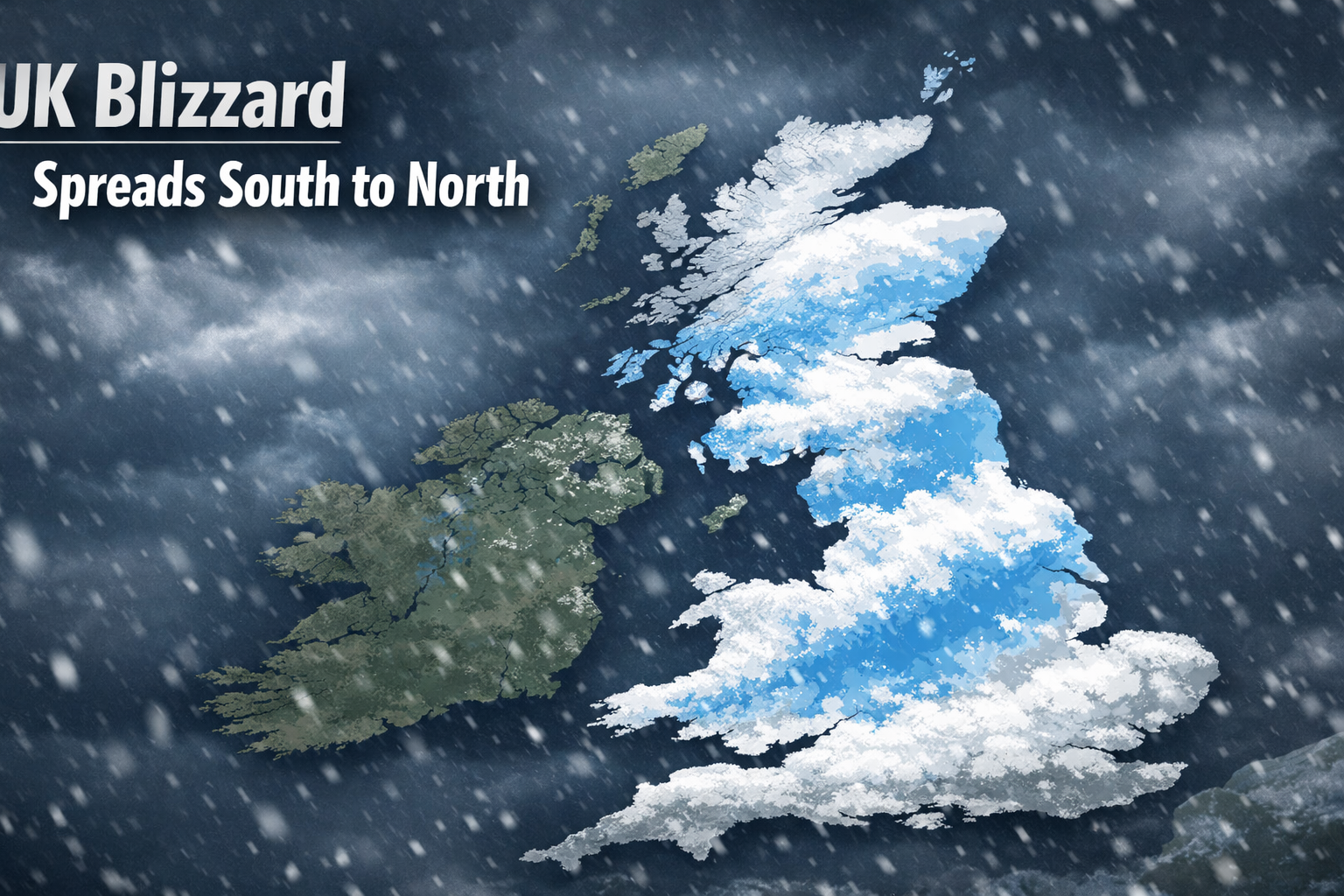
A powerful winter system is sweeping across the United Kingdom, and snow weather maps are lighting up red and white, showing a huge blizzard spreading from London all the way to Dundee. Forecasters warn that up to 5 inches of snow could fall in a wide corridor of the country, bringing travel chaos, school disruption, and bitterly cold conditions just as millions try to go about their daily routines.
Unlike short-lived flurries, this system has the hallmarks of a prolonged snow event, driven by a clash of Arctic air and moist Atlantic weather. The result? Heavy, persistent snowfall, icy winds, and rapidly dropping temperatures — a combination that can catch people off guard.
This article breaks down what the maps are showing, which areas are worst hit, how long the snow may last, and what it means for travel, schools, and households across the UK.
A Blizzard Stretching the Length of Britain
Snowfall of this scale is unusual not because it affects one region — but because it stretches from southern England to eastern Scotland.
Weather maps show a broad snow band pushing north-east, covering:
-
Greater London and the Home Counties
-
The Midlands
-
Northern England
-
Eastern Scotland, including Dundee
In many places, snow is forecast to fall steadily for several hours, allowing depths to build quickly. Rural and elevated areas may see even higher totals, while cities face the biggest risk of disruption due to untreated roads and pavements.
Why This Snow Event Is Different
This is not just a cold snap — it’s a classic blizzard setup.
Three key ingredients are coming together:
-
Arctic air pushing south across the UK
-
Moist Atlantic fronts moving in from the west
-
Strong surface winds whipping falling snow into drifting conditions
The interaction creates heavy snowfall rates, sometimes exceeding an inch per hour, while gusty winds reduce visibility — the definition of blizzard-like conditions in some areas.
UK Weather Maps Show 6 Hours of Snow Hammering England – The 5 Counties Hit
Snowfall Forecast: Who Gets What?
Below is a regional breakdown based on the latest weather models and snow maps.
Expected Snowfall by Region
| Region | Expected Snowfall | Risk Level |
|---|---|---|
| London & Home Counties | 2–4 inches | High |
| Midlands | 3–5 inches | Very High |
| Northern England | 3–6 inches | Severe |
| Eastern Scotland (incl. Dundee) | 4–6 inches | Severe |
| Wales (higher ground) | 2–5 inches | High |
| South West England | 1–3 inches | Moderate |
Snow totals may vary locally, but 5 inches is widely possible across a large swathe of the country.
London Braces for Rare Heavy Snow
For Londoners, snowfall of this depth is rare and disruptive.
Even a few inches can bring the capital to a standstill, and maps now suggest multiple inches settling across Greater London. Transport networks are preparing for delays, with buses, trains, and roads all vulnerable to ice and drifting snow.
Pedestrians are urged to take extra care, as untreated pavements can become dangerously slippery within minutes.
Midlands and Northern England: Worst-Hit Zone
The Midlands and northern England sit directly under the most intense snow band.
Here, snow is forecast to fall heavily and persistently, especially overnight and into the morning rush. Strong winds could lead to drifting, making some rural roads impassable.
Communities in these regions are advised to prepare for:
-
Power interruptions
-
School closures
-
Difficult driving conditions
-
Delayed deliveries
Dundee and Eastern Scotland Under Deep Snow
In eastern Scotland, including Dundee, cold air is firmly locked in place.
Snowfall totals here could exceed 5 inches, particularly inland. Combined with freezing temperatures, the snow is expected to linger for days, not hours.
Local authorities are prioritising gritting, but residents should expect icy conditions even after snowfall eases.
UK Weather Maps Show Six Hours of Snow Just After Christmas in England and Wales
Travel Disruption Likely Nationwide
With snow covering such a wide area, UK travel networks are under pressure.
Travel Impacts to Expect
| Sector | Likely Impact |
|---|---|
| Roads | Slow journeys, accidents, closures |
| Rail | Delays, frozen points |
| Airports | De-icing delays, cancellations |
| Buses | Route suspensions in heavy snow |
| Deliveries | Missed or late deliveries |
Motorists are urged to avoid non-essential journeys, especially during peak snowfall hours.
Schools and Workplaces on Alert
Heavy snow often triggers school closures, particularly in rural areas or where buses cannot operate safely.
Parents are advised to:
-
Check school announcements early
-
Prepare for possible remote learning
-
Plan childcare alternatives
Employers are also being encouraged to offer flexible or remote working where possible.
How Long Will the Snow Last?
The worst snowfall is expected over a 24 to 36-hour window, but cold temperatures mean snow may remain on the ground for several days, especially in shaded or untreated areas.
A gradual easing is expected from the west, but icy conditions will persist, particularly overnight.
Cold Temperatures Add to the Danger
Snow is only part of the story.
Temperatures are expected to fall below freezing in many areas, increasing the risk of:
-
Black ice
-
Burst pipes
-
Frozen car batteries
Households are advised to keep heating on low overnight and check on vulnerable neighbours.
What You Can Do to Stay Safe
Simple preparation can make a big difference.
Winter Safety Tips
-
Keep essentials stocked at home
-
Dress in layers and wear proper footwear
-
Carry a torch, blanket, and phone charger in your car
-
Allow extra travel time or delay journeys
-
Follow local authority updates closely
Why Snow Maps Matter More Than Headlines
Snow weather maps give early visual warnings that help communities prepare before disruption hits.
When maps show continuous snow bands over large areas, it signals a higher risk of widespread impact — not just isolated flurries.
This event stands out because the snow is both heavy and widespread, affecting millions across England and Scotland at the same time.
What Happens Next?
As the system moves east, attention will turn to ice and refreezing, which can sometimes be more dangerous than snowfall itself.
Further updates are expected as models refine snowfall totals and track the system’s exit.
For now, one thing is clear: this is one of the most significant UK snow events of the season.
Frequently Asked Questions
Will London really get 5 inches of snow?
While not guaranteed everywhere, parts of Greater London could see several inches, especially in outer boroughs and higher ground.
Which areas are most at risk?
The Midlands, northern England, and eastern Scotland face the highest risk of deep snow and disruption.
Will schools close?
Closures are possible, particularly where transport is affected or safety cannot be guaranteed.
Is this officially a blizzard?
In some regions, strong winds combined with heavy snowfall may meet blizzard-like conditions, especially in open or elevated areas.
How long will the snow stay?
Snow may remain on the ground for several days, with ice persisting even longer in colder areas.
Final Word
With snow weather maps showing a huge blizzard blanketing the UK from London to Dundee, preparation is key. Whether you’re commuting, running a household, or managing a business, this is a weather event that demands attention.
Stay informed, stay cautious, and take winter conditions seriously — becaus





Leave a Comment