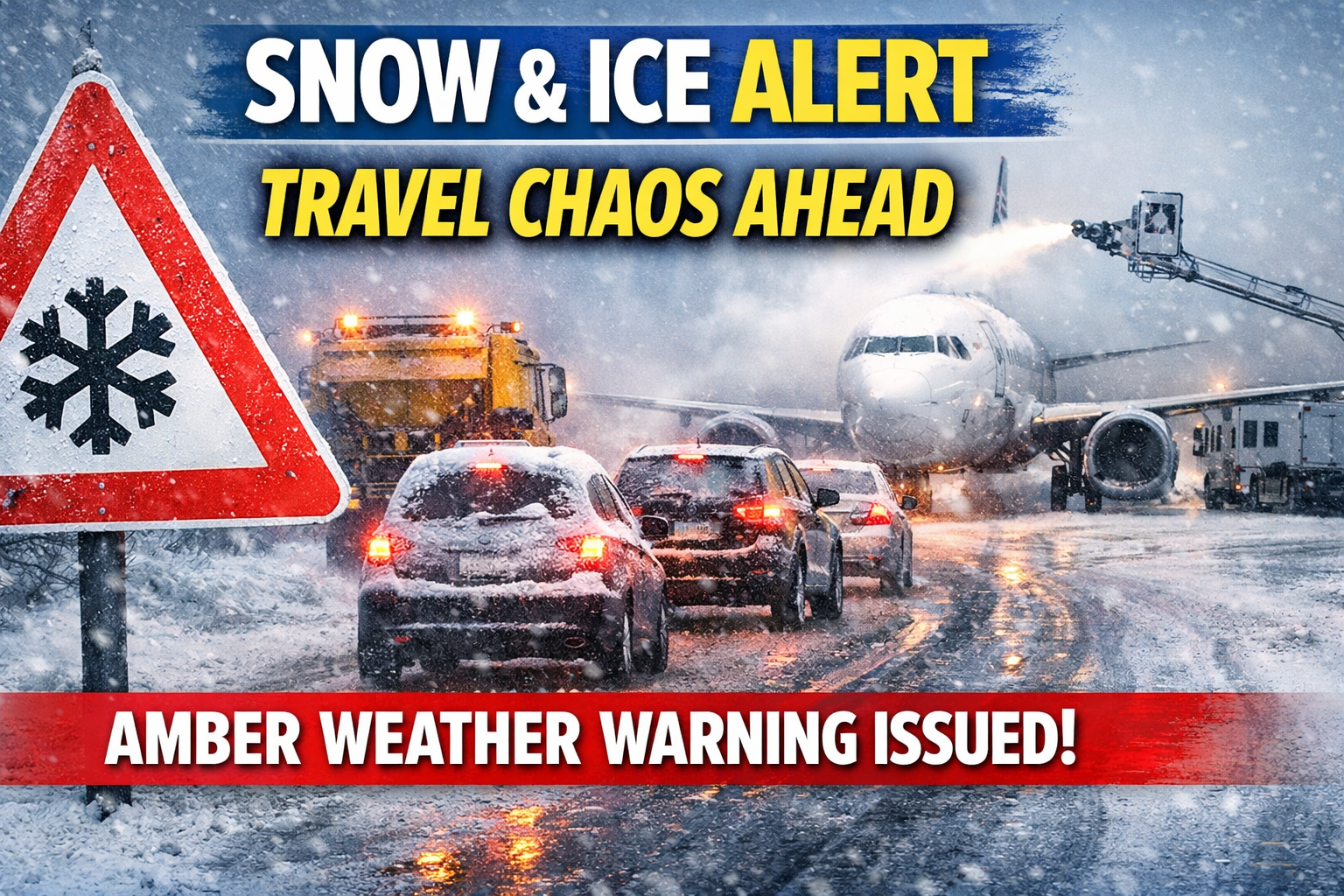
Snow and ice are set to sweep across large parts of the UK, bringing widespread travel disruption just as authorities issue an amber weather warning ahead of the most dangerous conditions. Commuters, drivers, and air passengers are being urged to prepare for delays, cancellations, and hazardous journeys as temperatures plunge and snowfall intensifies.
The warning comes amid forecasts of heavy snow, freezing rain, and icy surfaces, creating what experts describe as a “high-impact winter event” capable of severely affecting transport networks, schools, and essential services.
Amber Weather Warning Explained: Why This Storm Is Serious
An amber weather warning means there is a significant risk to life and property. According to the Met Office, the combination of persistent snowfall and sub-zero temperatures sharply increases the chances of:
-
Dangerous road conditions
-
Rail and flight cancellations
-
Power outages
-
Delays to emergency services
Meteorologists warn that snow accumulation could happen rapidly, with icy layers forming beneath fresh snowfall — a particularly dangerous mix for vehicles and pedestrians.
Where Snow and Ice Are Expected to Hit Hardest
Forecast models indicate that multiple regions will be affected, though intensity will vary by location and elevation.
Most at-risk areas include:
-
Northern England and parts of the Midlands
-
Scotland, particularly higher ground
-
Wales, especially rural routes
-
Eastern and southeastern England during overnight hours
Urban areas may initially see sleet or freezing rain, but as temperatures fall, this is expected to turn to snow, increasing the risk of black ice.
Travel Disruption: What Commuters Should Expect
Transport operators are already warning passengers to brace for widespread disruption, particularly during peak travel times.
🚗 Road Travel
-
Motorways may see lane closures
-
Rural roads could become impassable
-
Increased accident risk due to black ice
🚆 Rail Services
-
Slower speeds enforced for safety
-
Points freezing causing signal failures
-
Short-notice cancellations likely
✈️ Flights
-
De-icing delays at major airports
-
Possible cancellations on short-haul routes
-
Knock-on delays throughout the day
Authorities are advising people to avoid non-essential travel, especially overnight and early morning when ice formation is most severe.
Key Weather Timeline: What to Expect and When
| Time Period | Conditions Expected | Main Risks |
|---|---|---|
| Next 12 hours | Snow developing, freezing rain in places | Slippery roads, early delays |
| Overnight | Temperatures below 0°C, ice forming | Black ice, accidents |
| Morning commute | Heavier snow in affected regions | Severe travel disruption |
| Following 24–48 hrs | Prolonged cold, refreezing overnight | Continued delays, school closures |
Schools, Workplaces, and Public Services on Alert
Local councils are preparing contingency plans as snow and ice increase pressure on public services.
-
Schools may close at short notice, particularly in rural areas
-
Healthcare services could see appointment cancellations
-
Bin collections and deliveries may be disrupted
Parents are advised to monitor local authority updates closely, while employers are being encouraged to offer remote working where possible.
Power Cuts and Infrastructure Concerns
Heavy, wet snow can accumulate on power lines and trees, increasing the risk of electricity outages. Energy providers have placed repair teams on standby, warning that icy conditions may slow response times.
Residents are encouraged to:
-
Keep torches and spare batteries ready
-
Charge mobile devices
-
Check on elderly or vulnerable neighbours
Safety Advice: How to Stay Safe During Snow and Ice
Officials stress that preparation can significantly reduce risk during severe winter weather.
Essential safety tips:
-
Drive only if necessary and reduce speed
-
Wear shoes with good grip outdoors
-
Keep emergency supplies in your vehicle
-
Allow extra travel time
-
Follow official travel and weather updates
Pedestrians are urged to take particular care on untreated pavements, where ice may not be immediately visible.
Why This Amber Warning Could Escalate
Weather experts caution that amber warnings can be upgraded to red if conditions worsen or impacts become more severe than initially expected. Rapid snowfall, combined with freezing temperatures, leaves little room for error across transport and emergency systems.
Climate patterns also suggest that sudden temperature drops following milder weather increase the likelihood of freezing rain, one of the most dangerous winter hazards.
What Happens Next?
The amber warning remains under constant review. Meteorologists will assess:
-
Snow accumulation rates
-
Road and rail impacts
-
Emergency service demand
If disruption escalates, further advisories or extensions of the warning may be issued.
Final Word: Plan Ahead and Stay Informed
This developing snow and ice event has the potential to cause significant disruption across the UK, particularly for travel and daily routines. Staying informed, planning journeys carefully, and following official guidance will be key to staying safe as winter conditions tighten their grip.
As authorities monitor the situation hour by hour, the message is clear: prepare early, travel only if necessary, and take winter weather seriously.




Leave a Comment