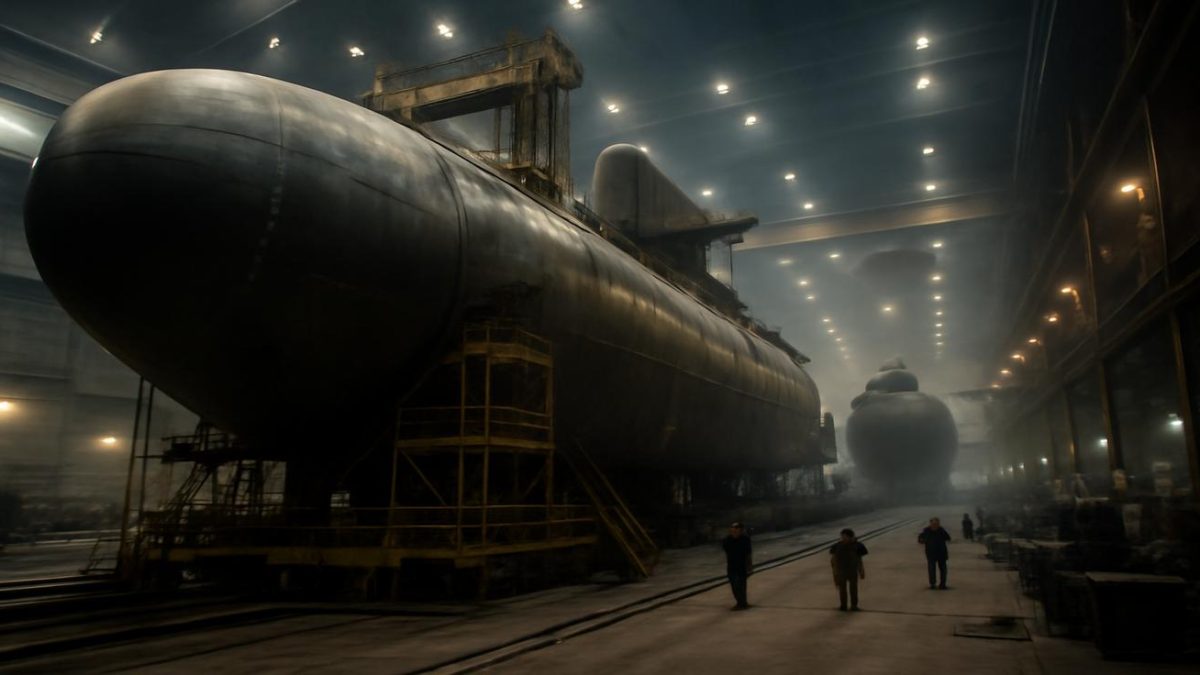
Britain stands at the threshold of an industrial revolution that will reshape its maritime capabilities and manufacturing landscape. The nation’s shipyards are gearing up for a monumental challenge: delivering a fully operational submarine every eighteen months. This ambitious timeline represents a watershed moment for British engineering, defence procurement, and industrial policy—marking the most significant manufacturing commitment since the post-war boom of the 1940s and 1950s.
The Scale of Britain’s Industrial Commitment
The submarine construction programme represents far more than a simple defence procurement decision. It embodies a strategic investment in Britain’s technological infrastructure, workforce development, and economic resilience. The commitment to produce a submarine every eighteen months demands an unprecedented level of coordination across multiple shipyards, supply chains, and manufacturing facilities spread throughout the United Kingdom.
This timeline is extraordinarily ambitious when one considers the complexity involved in constructing modern submarines. Each vessel incorporates thousands of components, requires advanced nuclear engineering expertise, and demands rigorous quality control measures. The fact that Britain is committing to such a pace suggests a profound confidence in its manufacturing capabilities and a determination to maintain technological superiority in an increasingly competitive global security environment.
Historical Context and Modern Ambition
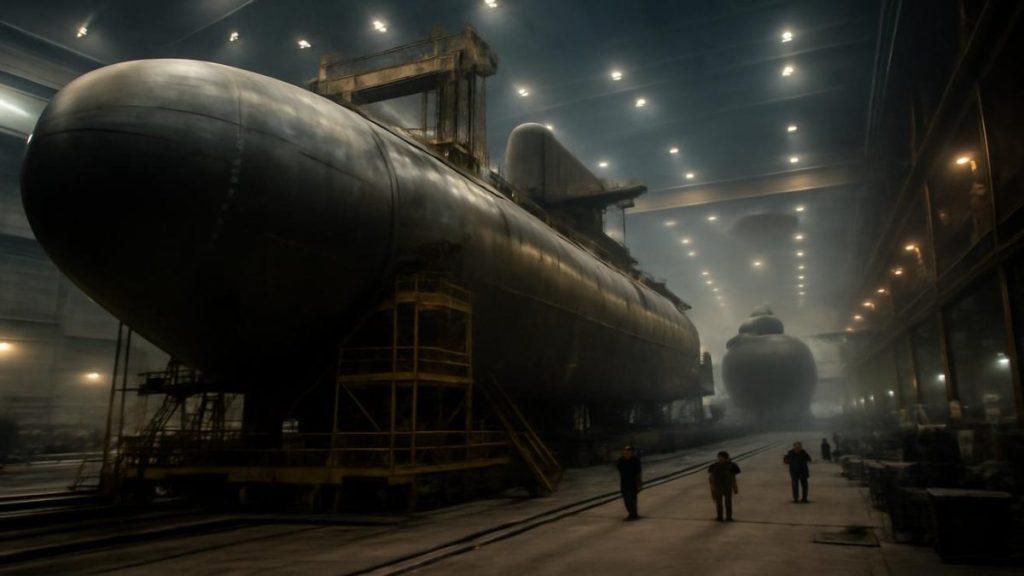
The last time Britain attempted such an intensive industrial programme was during the immediate post-war years when the nation’s factories were reconfigured for peacetime production. During that era, British shipyards were legendary for their efficiency and innovation. The decision to undertake a similarly ambitious programme today indicates that policymakers believe modern British industry can recapture that manufacturing excellence while incorporating contemporary technological innovations.
However, this modern initiative differs fundamentally from its post-war predecessor. Today’s submarines are not merely larger or faster versions of earlier designs—they represent quantum leaps in automation, artificial intelligence integration, stealth capabilities, and sensor systems. Building these vessels at such a rapid pace requires innovations in manufacturing processes themselves, not just in the submarines’ specifications.
The Manufacturing and Supply Chain Challenge
Meeting an eighteen-month construction cycle demands meticulous orchestration of the entire supply ecosystem. Britain’s submarine programme relies on hundreds of specialized suppliers, materials scientists, electronics manufacturers, and engineering firms. Each component must meet exacting military specifications while being produced efficiently enough to maintain the aggressive timeline.
The supply chain challenge extends beyond simple component production. Submarine construction involves modular assembly techniques, where different sections are manufactured simultaneously and then integrated with precision timing. This requires investment in advanced manufacturing facilities, robotic systems, and digital coordination platforms that can track hundreds of concurrent manufacturing processes.
Moreover, the programme must account for inevitable supply disruptions, quality control rejections, and technological updates. Building buffer capacity into the production schedule without abandoning the eighteen-month timeline requires sophisticated project management and contingency planning.
Workforce Development and Skills Investment
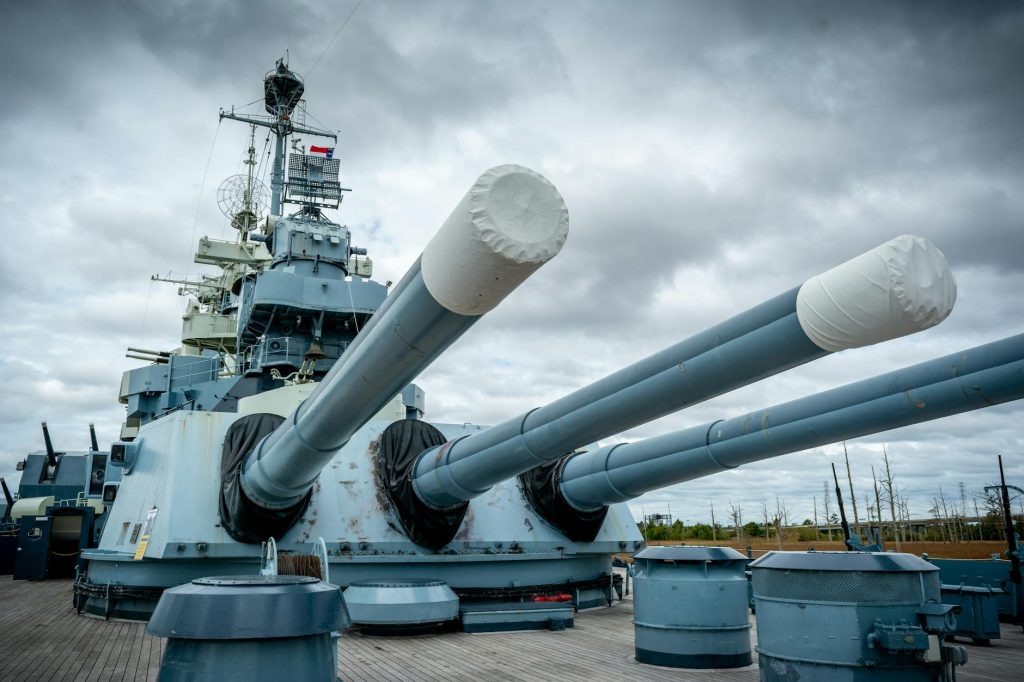
The submarine construction programme cannot succeed without a skilled workforce capable of executing complex engineering work at scale. Britain’s shipbuilding industry has experienced decades of contraction, resulting in a loss of institutional knowledge and trained personnel. Reversing this trend requires significant investment in education, apprenticeships, and workforce development.
The programme presents an opportunity to establish new training centres, refurbish existing facilities, and create career pathways that attract talented engineers and skilled tradespeople. Young people entering the industry will inherit a sector with genuine growth prospects, contrasting sharply with recent decades when shipbuilding seemed to offer limited career advancement.
This workforce investment extends beyond immediate submarine construction. The skills developed in this programme—advanced welding techniques, precision engineering, quality assurance systems—have applications across maritime industries, renewable energy infrastructure, and advanced manufacturing sectors.
Technological Innovation and Industrial Spillovers
One of the most significant benefits of the submarine programme lies in its capacity to drive technological innovation across British industry. Research and development investments associated with submarine construction often yield applications in civilian sectors. Advanced materials, underwater robotics, sensor technologies, and manufacturing automation techniques developed for defence purposes frequently find applications in commercial industries.
Historical examples demonstrate this pattern clearly. The aerospace industry’s technological achievements benefited from defence investments, creating spillovers into civilian aircraft manufacturing. Similarly, internet technologies emerged from military research initiatives. Britain’s submarine programme will almost certainly generate innovations applicable to offshore energy infrastructure, environmental monitoring systems, and maritime transport.
Economic Impact and Regional Development

The geographic distribution of submarine manufacturing facilities means that multiple regions will benefit from the programme’s economic impact. Shipyards in England, Scotland, and Northern Ireland will see sustained employment, infrastructure investment, and supply chain opportunities. This geographical spread makes the programme particularly valuable for regional economic development strategies.
Beyond direct employment, the programme supports thousands of ancillary jobs in logistics, engineering services, quality assurance, and administrative roles. The cumulative economic benefit extends to local communities through increased demand for housing, services, and retail facilities near shipyard locations.
Strategic Defence Considerations
The decision to commit to such an intensive submarine construction programme reflects strategic assessments about future naval requirements and maritime security. Modern navies increasingly recognize submarines as crucial assets for maintaining deterrence, protecting trade routes, and projecting power across global waters. Britain’s commitment to this production pace signals its determination to maintain a substantial submarine fleet capable of addressing contemporary and anticipated future security challenges.
Looking Forward
Britain’s submarine construction programme represents a watershed moment in the nation’s industrial policy. The commitment demonstrates confidence in British manufacturing capabilities, recognition of defence infrastructure’s economic importance, and determination to maintain technological sovereignty in critical sectors. Success in this endeavour will require sustained political commitment, substantial financial investment, and unprecedented coordination across government, industry, and educational institutions. The eighteen-month construction cycle represents not merely an engineering target but a symbol of Britain’s aspirations to reclaim its place among the world’s leading industrial nations.











Leave a Comment