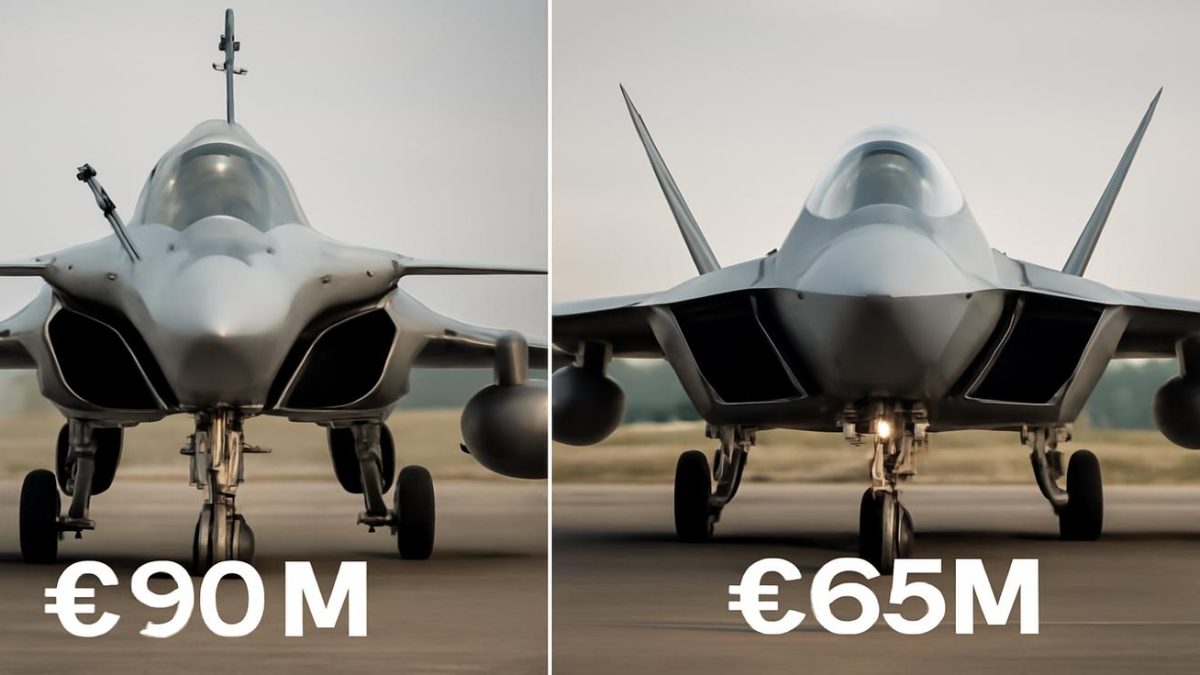
For generations, the Rafale fighter jet has maintained an almost unassailable position in Asian defense markets. France’s multi-role combat aircraft has served as the gold standard for nations seeking advanced aerial capabilities without committing to American or Russian platforms. Yet the dynamics of international defense procurement are shifting in ways that Paris may find deeply unsettling. A new entrant from within Asia itself is now challenging the Rafale’s supremacy, armed with a weapon that proves more powerful than superior avionics: a substantially lower price tag.
The Emergence of an Asian Powerhouse
The global fighter jet market has traditionally been dominated by a handful of established players—the United States with its F-35 and F-16 variants, Russia with the Su-30 family, and France with the Rafale. However, the calculus of defense procurement extends far beyond raw capabilities. For mid-tier military budgets across Asia, affordability, maintenance logistics, and long-term operational costs matter just as much as performance specifications.
This is precisely where the emerging Asian competitor has positioned itself strategically. By offering a modern, combat-proven platform at approximately €25 million less per unit than the Rafale, this new rival is fundamentally altering how defense planners evaluate their options. This price differential isn’t merely a marketing tactic—it represents the capacity to acquire significantly more airframes with identical budgets, or to invest those savings into supporting infrastructure, pilot training, and maintenance facilities.
Understanding the Cost Advantage
The €25 million price advantage deserves careful examination, as it’s not the result of cutting corners or producing an inferior product. Rather, several factors contribute to this favorable positioning. Manufacturing costs in the originating nation are demonstrably lower than European production expenses. Labor costs, supply chain efficiencies, and streamlined production processes allow for competitive pricing without sacrificing quality standards.
Additionally, the absence of extensive development costs—since this aircraft builds upon proven designs—reduces unit prices. The platform has already undergone rigorous testing and combat validation in various operational theaters, providing customers with tangible performance data rather than theoretical projections. This proven track record actually enhances the value proposition when factoring in risk assessment and procurement confidence.
From a geopolitical perspective, purchasing this Asian-origin aircraft carries different implications than acquiring Western platforms. Nations increasingly value supply chain independence and the opportunity to develop indigenous aerospace capabilities through partnerships with manufacturers in the region. This consideration has become particularly important following recent global supply chain disruptions and growing concerns about technology dependency.
Performance Capabilities and Modern Features
The assumption that lower cost automatically means lower capability would be misguided. The competing Asian fighter jet incorporates modern avionics, composite construction, advanced radar systems, and impressive aerodynamic characteristics. Its payload capacity rivals the Rafale, and in certain operational parameters, exceeds it. Air-to-air combat performance, acceleration characteristics, and maneuverability profiles place it firmly in the same performance tier as its French competitor.
What’s particularly noteworthy is how rapidly aerospace technology proliferation has democratized advanced capabilities. Elements that were once exclusive to Western platforms—stealth characteristics, sensor fusion, network-centric warfare integration—are now available across a broader range of platforms. The gap between premium and emerging competitors has narrowed considerably, making the incremental performance advantages insufficient to justify substantial price premiums.
Strategic Implications for France and Europe
The Rafale export program has been a cornerstone of France’s defense industry and geopolitical influence. Nations across Africa, the Middle East, and Asia have selected the aircraft, effectively extending French technological and political reach. However, export success ultimately depends on sustained competitive advantage. As this Asian alternative gains traction, France faces the uncomfortable reality that technological prowess alone cannot secure market dominance indefinitely.
European defense contractors face a crossroads. They can either accept lower margins in competitive markets or concede market share to more economically positioned competitors. The complexity intensifies when considering that purchasing decisions in defense procurement involve considerations beyond spreadsheet economics—relationships, technology transfer agreements, training partnerships, and maintenance support networks all factor into final selections.
The Asian Market Transformation
Regional powers across Asia have been engaged in gradual military modernization programs. India, Vietnam, Malaysia, and Indonesia all maintain substantial defense budgets and ongoing aircraft acquisition programs. These nations possess sophisticated military establishments capable of evaluating technical specifications rigorously. The emergence of a credible alternative at significantly lower cost provides decision-makers with enhanced negotiating leverage and genuine optionality.
Furthermore, the precedent established by selecting this Asian alternative carries implications beyond individual procurement decisions. It signals to other regional powers that advanced combat capabilities need not come exclusively from traditional Western suppliers. This shift in perception and available options reshapes the entire regional defense landscape, with potential cascading effects on alliance structures and defense partnerships.
Looking Forward: Market Dynamics and Competition
The fighter jet market has entered a new competitive phase characterized by genuine alternatives. Rather than a duopoly between Western and Russian options, Asia now produces credible competitors capable of satisfying sophisticated military requirements at competitive prices. This development will likely accelerate innovation and drive efficiency improvements across the entire sector.
For the Rafale program, this challenge demands strategic response. France might emphasize operational experience, superior maintenance infrastructure, or exclusive technological features. Alternatively, pricing adjustments could restore competitive positioning. However, each approach involves trade-offs and difficult decisions regarding margins, market positioning, and long-term strategy.
The €25 million advantage represents more than numerical differentiation—it symbolizes fundamental shifts in global defense manufacturing, supply chain dynamics, and regional power assertions. As Asia’s aerospace and defense capabilities mature, expect continued pressure on established European and American market positions. The Rafale will undoubtedly remain a formidable platform, but its days of uncontested dominance in Asian markets have definitively concluded.









Leave a Comment