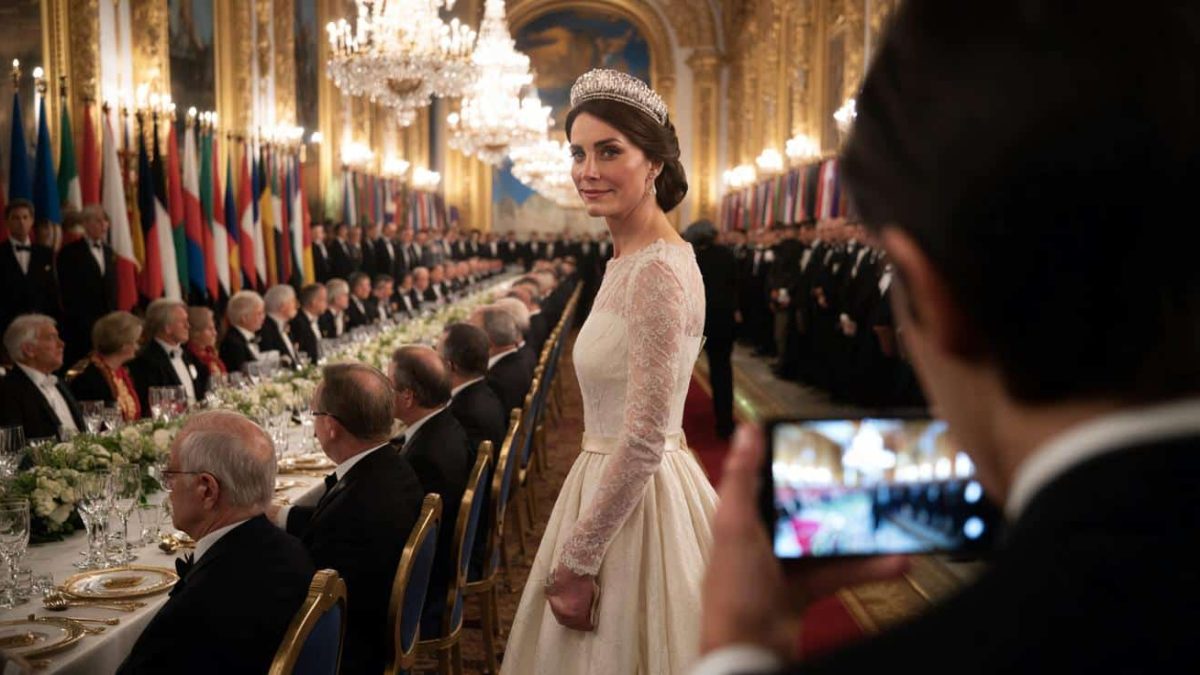
Fashion has always been a language spoken by royalty, but rarely has a single outfit generated as much heated discourse as the ivory lace gown that graced a recent state banquet. What began as appreciative commentary about exquisite craftsmanship quickly transformed into a global conversation about privilege, representation, and what it truly means to be a modern princess in the twenty-first century.
The Moment That Changed Everything
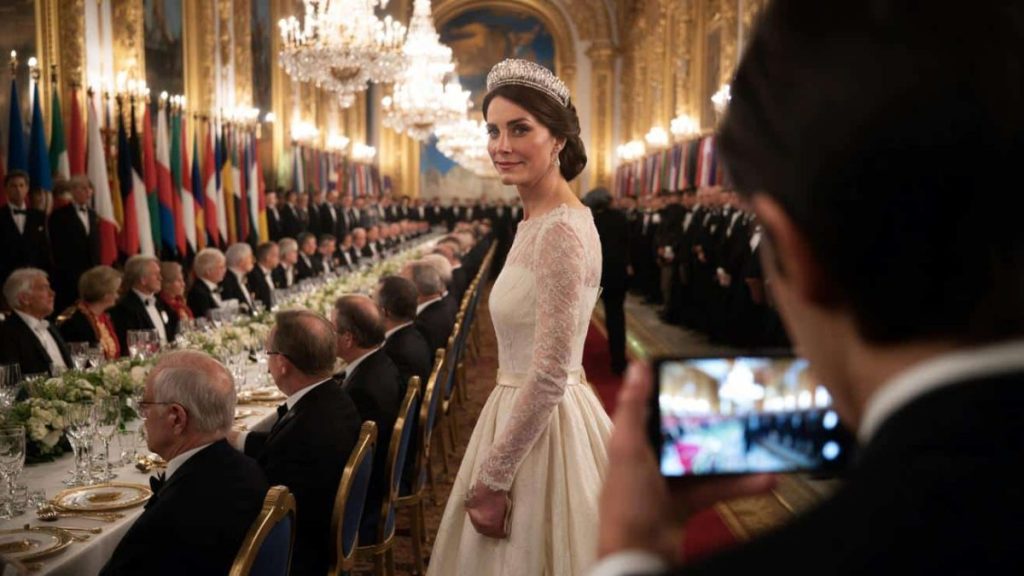
State banquets represent carefully orchestrated displays of national pride and diplomatic relations. Every element, from the guest list to the table settings, carries symbolic weight. When a prominent member of the royal family emerged wearing a floor-length ivory lace gown adorned with her signature accessories, the moment seemed destined to become merely another elegant photograph in the endless archive of royal events.
The gown itself was undeniably beautiful—a masterpiece of textile artistry that required countless hours of skilled labor. The lace work demonstrated technical excellence, and the overall silhouette embodied classical elegance that aligned perfectly with royal protocol. Yet somewhere between the photographers’ shutters and the initial social media posts, something shifted.
When Beauty Becomes Contested
Within hours, the image had ignited a complex debate that transcended traditional fashion commentary. Critics began questioning not the aesthetic quality of the dress, but what it represented. Discussion threads multiplied across platforms, each one exploring different angles of a fundamental tension: the relationship between royal extravagance and public expectations during times of economic uncertainty.
Some observers highlighted the contrast between the cost of such garments and the financial struggles facing ordinary citizens. Others pointed out that the jewelry chosen to complete the look represented wealth that many individuals would never accumulate in their lifetimes. The conversation evolved from admiration to examination, from celebration to scrutiny.
What made this moment particularly significant was that it occurred within a broader cultural moment of questioning institutional hierarchies and privilege. The debate wasn’t happening in isolation—it was part of a larger conversation about whether traditional monarchical systems could remain relevant without addressing legitimate concerns about inequality and representation.
The Signature Accessory Factor
Interestingly, the particular jewelry pieces worn with the gown became almost as controversial as the gown itself. Royal accessories carry their own histories and significance, often representing inherited wealth and familial legacy. When these items are photographed alongside formal wear at state occasions, they function as visual reminders of accumulated generational privilege.
Some fashion analysts defended the choices as appropriate for the formal occasion. State banquets, they argued, are exactly the settings where such displays are expected and culturally sanctioned. The accessories weren’t merely decorative—they carried symbolic meaning within the context of diplomatic protocol and tradition.
However, others posed more uncomfortable questions. In an era when younger generations increasingly challenge inherited systems of advantage, does wearing such visibly expensive items undermine efforts to present a modern, relatable version of royalty? Should contemporary monarchs consider how their sartorial choices might be perceived by those struggling with basic financial security?
The Broader Conversation About Modern Royalty
The gown controversy became a vessel for deeper anxieties about institutional relevance. As traditional power structures face unprecedented scrutiny, royal families globally are grappling with identity questions. What should a princess represent in 2024? Is the role purely ceremonial, or does it carry responsibility for projecting particular values?
Some commentators argued that criticism of the outfit represented an unfair burden placed specifically on female members of royal families. Male royals wearing similar formal attire rarely face equivalent scrutiny about cost or appropriateness. This observation opened another layer to the discussion—the intersection of gender expectations and class privilege within monarchical institutions.
Meanwhile, fashion industry professionals offered their own perspective. High-end couturiers and textile artisans noted that custom gowns of this caliber represent significant employment and economic activity. The dress wasn’t merely consumption—it was production, craftsmanship, and support for skilled workers in specialized fields. Dismissing such garments as frivolous overlooked the economic ecosystem they sustained.
Cultural Tradition Versus Contemporary Values
The tension at the heart of this debate reflects a fundamental challenge facing contemporary monarchy. Royal institutions have always relied on ceremonial pageantry and visual magnificence to project authority and stability. These traditions serve specific functions within national cultures.
Yet the same visual language that once communicated power and legitimacy now risks appearing tone-deaf in societies increasingly concerned with sustainability, equality, and responsible consumption. The gown represented everything tradition demanded while simultaneously embodying values that modernizing populations increasingly questioned.
Fashion critics noted that the outfit actually reflected restraint compared to previous royal events. Yet this detail seemed almost irrelevant to the larger conversation. The discussion had transcended the specific garment to address something much more fundamental: what visual role royalty should play in contemporary democratic societies.
Moving Forward: Fashion and Representation
The global reaction to the state banquet gown ultimately revealed that royal fashion has become a contested space where cultural values collide. Future royal fashion choices will inevitably occur within this new context of heightened awareness and critical evaluation.
This doesn’t necessarily mean royals should abandon formal attire or ceremonial tradition. Instead, it suggests an opportunity for thoughtful consideration about how these visual statements can evolve alongside changing societal values. Some designers are already exploring ways to merge formal elegance with sustainability, ethical production, and inclusive representation.
The real conversation isn’t about whether the gown was beautiful—it clearly was. Rather, it’s about acknowledging that in the modern world, beauty alone doesn’t shield any public figure from questions about what their choices communicate. For contemporary royalty, this reality represents both a challenge and an opportunity to demonstrate that tradition and progressive values needn’t be mutually exclusive.
As state banquets continue and royal fashion evolves, this moment will likely be remembered as a turning point. The moment when observers globally decided that what royalty wears matters not just aesthetically, but politically, economically, and morally.










Leave a Comment