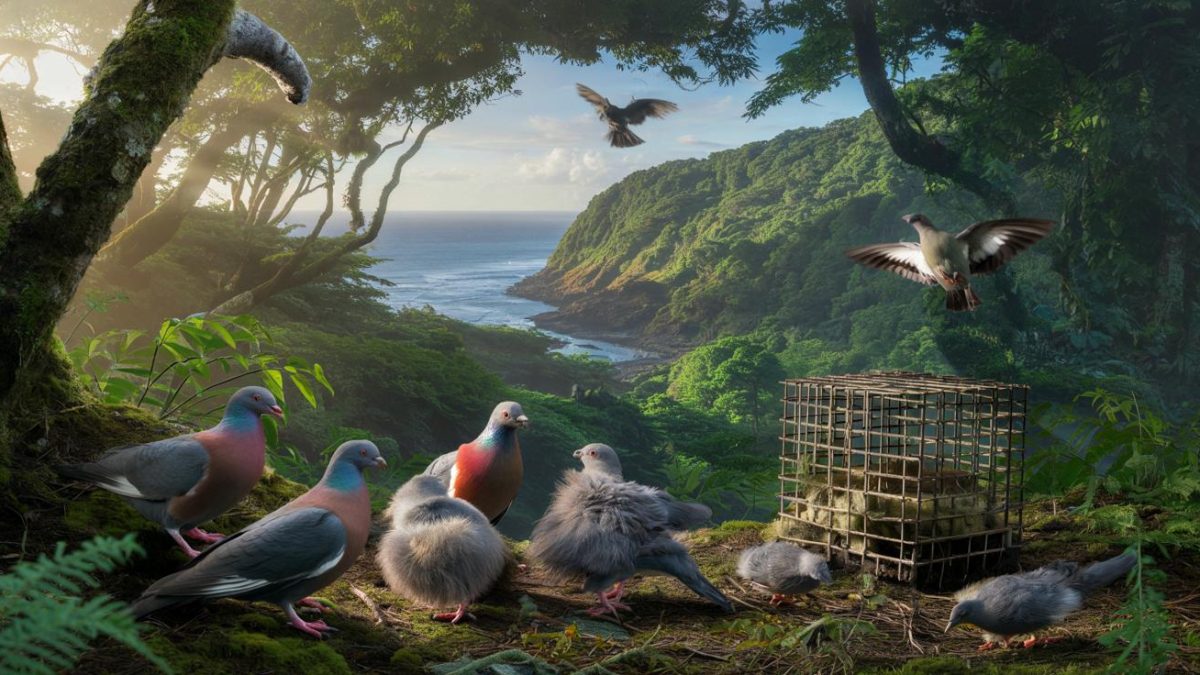
When conservation specialists launched their ambitious predator removal project on a remote Pacific island, the goals were modest but meaningful. Nobody anticipated the stunning transformation that would unfold in the months following the departure of 131 feral cats. What emerged was a textbook case of ecological restoration, where removing a single invasive species triggered a cascade of positive changes that rippled throughout the entire island ecosystem.
The Problem That Nobody Fully Understood
For decades, feral cats had roamed this small Pacific island largely unchecked, hunting native seabirds with devastating efficiency. The island, which had once hosted thriving colonies of various seabird species, had seen its avian population plummet to concerning levels. Conservationists recognized the threat, but the true scope of the problem remained underestimated until detailed ecological surveys revealed just how thoroughly the introduced predators had suppressed the island’s natural bird populations.
Feral cats represent one of the most damaging invasive species on island ecosystems worldwide. Unlike native predators that have evolved alongside island species, these introduced carnivores faced prey animals with limited defensive behaviors and evolutionary adaptations. The seabirds of this particular Pacific island had no ancestral history of avoiding terrestrial mammalian predators, making them exceptionally vulnerable to the hunting prowess of domestic felines gone wild.
Planning the Removal Campaign
The conservation team spent months preparing for the systematic removal operation. This wasn’t a casual effort—it required precision, planning, and coordination. Specialists had to develop strategies that would ensure the humane capture and removal of all 131 cats while minimizing stress to other island wildlife. The operation demanded detailed mapping of cat territories, understanding population dynamics, and implementing removal techniques that would work effectively in the island’s diverse terrain.
Scientists involved in the project held modest expectations. Based on historical data from similar removal projects, they anticipated a gradual recovery of seabird populations over several years. Their models suggested steady population growth, perhaps reaching pre-decline numbers within a decade. These predictions, while optimistic, were grounded in conventional conservation biology understanding. What actually happened would rewrite those projections entirely.
The Unexpected Explosion of Life
Within weeks of the final cat removal, island researchers began noticing unusual activity. Seabirds previously confined to remote cliff faces and offshore rocks began returning to accessible coastal areas. Nesting activity increased dramatically. Species that had been restricted to tiny populations began breeding in numbers not seen for generations. But the surprise wasn’t just in the speed of recovery—it was in the magnitude.
Over the following months, seabird populations didn’t just bounce back to historical levels. They exploded beyond what existed before the cats arrived. Scientists discovered that removing the apex predator had allowed not just the direct prey species to recover, but had triggered ecological cascades throughout the island’s food web. Native insects flourished without bird predation pressure diminishing to nothing. Plant regeneration accelerated as bird droppings enriched the soil. The entire ecosystem seemed to remember its original state and rushed to reclaim it.
Understanding the Ecological Cascade
The explosive recovery reveals a fundamental truth about island ecosystems: they possess remarkable resilience when the invasive pressure is removed. The birds hadn’t evolved away or disappeared entirely during the cat-dominated decades. Instead, their populations had been artificially suppressed to unsustainable levels. The moment that suppression ended, reproductive success skyrocketed.
Returning seabirds brought additional benefits beyond their sheer numbers. These species play crucial roles as nutrient transporters, moving marine resources onto land through their waste products. This nutrient cycling had been severely diminished during years of cat predation. As bird populations recovered, the island’s vegetation responded to this renewed nutrient influx, creating denser native plant communities that further stabilized the ecosystem.
Additionally, the increased bird activity created positive feedback loops. More birds attracted more potential mates, improving breeding success rates. Better nesting habitat, protected from cat predation, meant higher survival rates for chicks. Safer conditions allowed birds to spend more time foraging and less time vigilantly watching for danger. Each factor compounded the others, creating exponential rather than linear growth.
What This Means for Conservation Science
The results from this island removal project challenge assumptions that have guided conservation efforts for decades. Conservationists now recognize that invasive species impacts may be even more severe than previously understood, suppressing populations to fractions of what they could sustainably support. This suggests that removal projects might yield more dramatic results than historical models predicted.
The success also highlights the importance of decisive action. Rather than attempting to manage cat populations through culling or contraception, the complete removal approach proved infinitely more effective. For island ecosystems especially, where invasive species can cause cascading extinctions, total removal rather than population control appears to be the superior strategy.
Implications for Other Island Ecosystems
Hundreds of Pacific islands face similar predation pressures from introduced feral cats. This conservation success story provides hope and a blueprint for future projects. If similar removals on comparable islands produce comparable results, the cumulative impact on global seabird conservation could be transformative.
The project also demonstrates that ecosystem recovery timelines may be more optimistic than previously believed. Habitats and species don’t remain permanently damaged by invasive species. With the right intervention, nature’s healing capacity can exceed our expectations. This finding offers encouragement to conservation efforts worldwide, suggesting that restoration may be faster and more complete than traditionally anticipated.
The Broader Conservation Lesson
Perhaps the most valuable lesson from this island’s remarkable recovery is that invasive species removal, though operationally challenging and expensive, may represent one of conservation’s highest-impact investments. A single removal operation, conducted once, can trigger decades or centuries of ecosystem benefits. Compared to ongoing management efforts, eradication provides exceptional value for conservation resources.
The 131 removed cats have enabled countless seabirds to thrive, restored ecosystem functions that had been dormant, and created conditions for continued natural recovery. This Pacific island now stands as a testament to what becomes possible when conservation teams commit to bold, decisive action against invasive threats. For anyone questioning whether ecosystem restoration can truly work, the answer comes clearly from this island’s transformed landscape, now teeming with the wildlife it once hosted so abundantly.











Leave a Comment