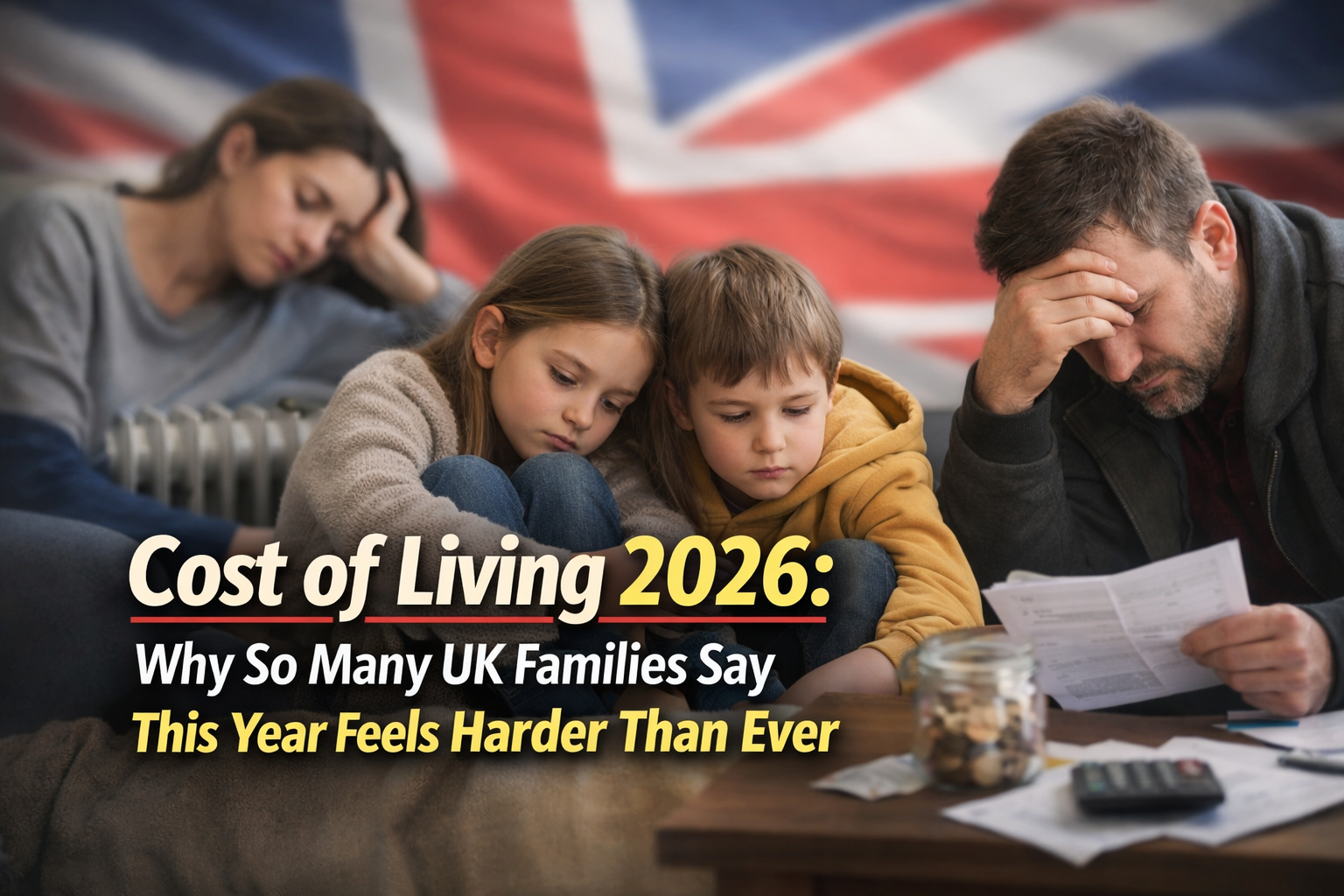
The cost of living 2026 is shaping up to be one of the most challenging periods UK households have faced in over a decade. Even as inflation appears more stable on paper, everyday costs tell a very different story. From rent and mortgages to food, energy, transport and childcare, millions of families are feeling the pressure more intensely than ever before.
For many, 2026 does not feel like recovery. It feels like survival.
This article breaks down what is driving the cost of living crisis in 2026, how much prices are expected to rise, which households are most affected, and what practical steps families are taking to cope.
Why the Cost of Living Remains High in 2026
While headline inflation has slowed compared to previous years, the base cost of essentials is now permanently higher. Prices rose sharply between 2022 and 2024, and instead of falling back, they have largely stayed elevated.
Several long-term factors are keeping living costs high in 2026:
-
Housing shortages pushing rents upward
-
Higher interest rates feeding into mortgage costs
-
Energy prices remaining volatile
-
Food supply chains still under pressure
-
Wage growth failing to keep pace with essentials
For households, this means monthly budgets are stretched thinner, even without sudden price spikes.
Goodbye to Retiring at 67? Millions of UK Workers Face a New State Pension Reality
Housing Costs in 2026: Rent and Mortgages Still Rising
Housing remains the single biggest driver of the cost of living in 2026.
Rent in the UK (2026 Outlook)
Private renters are facing record-high rents, especially in cities and commuter towns. Demand continues to outstrip supply, giving landlords the upper hand.
Average UK Rent Changes
| Region | Average Monthly Rent (2026 est.) | Annual Increase |
|---|---|---|
| London | £1,550 | +6–8% |
| South East | £1,150 | +5–7% |
| Midlands | £850 | +4–6% |
| North England | £750 | +3–5% |
Many tenants report rent increases of £100–£250 per month when renewing contracts.
Mortgage Costs in 2026
Homeowners coming off fixed-rate deals in 2026 are experiencing sharp payment increases. Even modest interest rates feel expensive compared to pre-2022 levels.
For some households, monthly mortgage payments are now £300–£500 higher than just a few years ago.
Food Prices in 2026: Cheaper Than 2024, Still Expensive
Food inflation has cooled, but supermarket prices remain far above historical norms. Essentials like bread, milk, eggs, fruit and meat cost significantly more than they did before the crisis.
Typical Monthly Food Shop (Family of Four)
| Year | Average Monthly Cost |
|---|---|
| 2020 | £420 |
| 2023 | £620 |
| 2026 | £680 |
Discount supermarkets remain popular, but even budget brands have seen steady price increases.
Shoppers are adapting by:
-
Buying own-brand items
-
Reducing meat consumption
-
Shopping late for yellow-sticker discounts
-
Planning meals more carefully
——————————————————————————————————————————————————-
Keir Starmer Considers Social Media Ban for Under-16s as UK Looks to Australia’s Model
Energy Bills in 2026: Still a Major Burden
Energy prices are no longer exploding, but they are not returning to pre-crisis levels.
Electricity and gas bills in 2026 remain one of the biggest worries for households, particularly during winter.
Average Annual Energy Costs
| Household Type | Annual Cost (2026 est.) |
|---|---|
| Single adult | £1,250 |
| Couple | £1,700 |
| Family home | £2,100–£2,400 |
Older homes with poor insulation are hit hardest, and many families still rely on credit or payment plans to manage winter bills.
Transport Costs: Fuel Down, Everything Else Up
Fuel prices have stabilised compared to previous peaks, but transport overall is more expensive.
-
Rail fares continue to rise
-
Bus fares vary by region
-
Car insurance costs remain high
-
Vehicle maintenance costs have increased
Monthly Transport Costs (2026)
| Expense | Average Monthly Cost |
|---|---|
| Fuel | £120–£160 |
| Public transport | £140–£220 |
| Car insurance | £70–£110 |
Commuters are increasingly working hybrid or remote to reduce travel expenses.
Childcare and Education Costs in 2026
For families with young children, childcare is one of the fastest-growing expenses.
Even with government support, many parents say childcare costs outweigh wage increases.
Average Monthly Childcare Costs
| Child Age | Monthly Cost |
|---|---|
| Under 2 years | £1,200–£1,400 |
| Age 3–4 | £850–£1,050 |
| After-school care | £300–£500 |
School-related costs such as uniforms, transport, lunches and activities also continue to rise, putting pressure on working parents.
Wages vs Cost of Living in 2026
Although wages are rising in many sectors, they are not rising fast enough to offset higher living costs.
Average Annual Pay Growth vs Living Costs
| Category | Change in 2026 |
|---|---|
| Average wages | +4–5% |
| Housing costs | +5–8% |
| Food & energy | +3–6% |
This gap explains why many households feel poorer despite being employed full-time.
Who Is Most Affected by the Cost of Living in 2026?
The impact of the cost of living crisis is uneven.
The hardest-hit groups include:
-
Private renters
-
Single-parent households
-
Pensioners on fixed incomes
-
Low- and middle-income families
-
Young professionals without property
Many households earning what was once considered a “comfortable” income now struggle to save or cover emergencies.
How UK Families Are Coping in 2026
Across the UK, families are adapting in creative but often difficult ways.
Common coping strategies include:
-
Cutting non-essential spending
-
Cancelling subscriptions
-
Using savings to cover basics
-
Taking on second jobs or freelance work
-
Moving to cheaper areas
For many, lifestyle changes once seen as temporary are becoming permanent.
Is Relief Coming After 2026?
Economic forecasts suggest slow improvement rather than sudden relief. Prices may rise more slowly, but they are unlikely to fall significantly.
The reality for many households is that 2026 sets a new normal, where budgeting carefully is no longer optional—it is essential.
Final Thoughts: Cost of Living 2026 in the UK
The cost of living 2026 is not about short-term inflation shocks. It is about a long-term shift in how much it costs to live in the UK.
Housing, energy, food and childcare now consume a much larger share of household income than ever before. While wages are rising, they are not keeping up with the reality of everyday expenses.
For millions of people, the question in 2026 is no longer about lifestyle upgrades—but about stability, security and making ends meet.
FAQs for “Cost of Living 2026” (UK)
1. What is the cost of living in the UK in 2026?
The cost of living in the UK in 2026 remains high due to rising housing costs, expensive food prices, elevated energy bills and higher transport expenses. Although inflation has slowed, everyday essentials cost significantly more than they did before 2022, leaving many households financially stretched.
2. Why is the cost of living still high in 2026?
The cost of living is still high in 2026 because prices rose sharply in previous years and have not returned to earlier levels. Housing shortages, higher interest rates, energy market instability and slow wage growth continue to push household expenses up.
3. Is the cost of living expected to go down after 2026?
Most forecasts suggest the cost of living may stabilise after 2026, but major price reductions are unlikely. Instead of falling, prices are expected to rise more slowly, meaning households may not feel significant financial relief in the near future.
4. What expenses have increased the most in 2026?
The biggest increases in 2026 are seen in rent, mortgage repayments, childcare costs and energy bills. Food prices have risen more gradually, but still remain much higher than pre-crisis levels.
5. How much does a UK family need to live comfortably in 2026?
A family of four in the UK typically needs between £3,000 and £3,500 per month after tax in 2026 to cover rent or mortgage, food, energy, transport and childcare. Costs are higher in London and the South East.
6. Are wages keeping up with the cost of living in 2026?
Wages are increasing in 2026, but for many workers they are not rising fast enough to match living costs. Housing and energy bills continue to grow faster than average pay, leaving real incomes under pressure.
7. Who is most affected by the cost of living crisis in 2026?
Private renters, single-parent families, pensioners on fixed incomes and low-to-middle income households are most affected. Many working families report struggling despite being in full-time employment.
8. How are UK families coping with the cost of living in 2026?
Families are cutting non-essential spending, switching to cheaper supermarkets, reducing energy use, cancelling subscriptions and using savings to cover everyday costs. Some households are also taking on extra work to manage rising bills.
9. Is rent expected to rise again in 2026?
Yes, rent is expected to continue rising in 2026 due to limited housing supply and strong demand. Many tenants are seeing annual rent increases of 5 to 8 percent, particularly in urban areas.
10. Will energy bills go down in 2026?
Energy bills in 2026 are more stable than previous years but remain higher than historic averages. Seasonal increases during winter still cause financial strain, especially for families in poorly insulated homes.








Leave a Comment