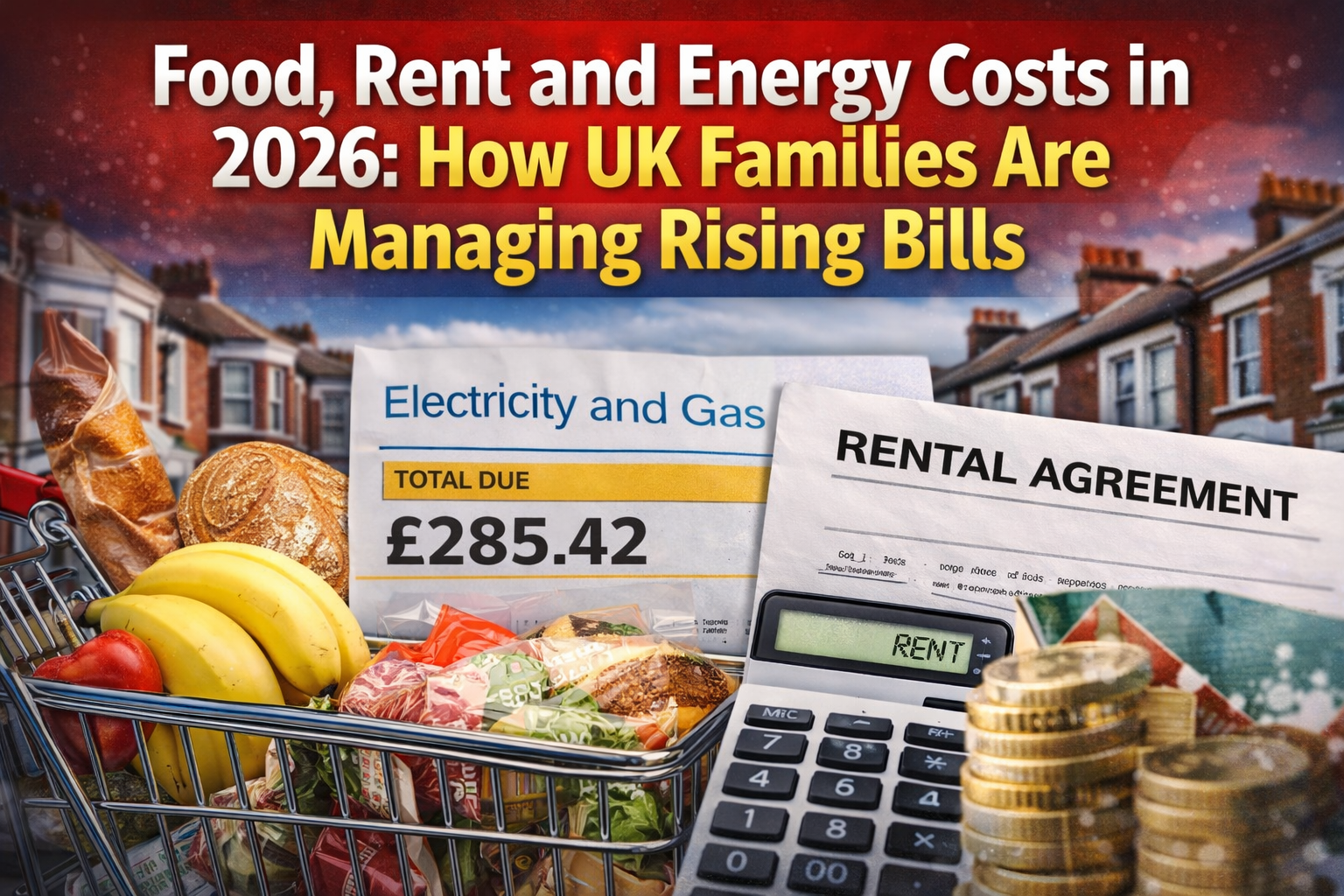
or many households across the UK, 2026 has not brought the financial relief people once hoped for. While inflation has slowed and economic conditions appear more stable on paper, everyday life still feels expensive. Food shopping remains costly, rents continue to rise in many areas, and energy bills are a constant worry—especially for families already balancing tight budgets.
Talk to parents, pensioners or renters and a common phrase comes up again and again: things haven’t got cheaper, they’ve just stopped getting worse. For millions, managing household finances has become an ongoing exercise in careful planning, compromise and, in some cases, sacrifice.
This is how UK families are coping with food, rent and energy costs in 2026—and why the pressure is still very real.
A New Cost-of-Living Reality
Official figures show that inflation is no longer rising at the dramatic pace seen in previous years. However, prices for essentials rose sharply earlier in the decade and have remained high. Wages have increased in some sectors, but often not enough to match the higher baseline cost of living.
According to the Office for National Statistics, households are spending a greater share of their income on essentials than they were five years ago. Food, housing and energy now take priority over almost everything else, leaving little room for savings or unexpected costs.
For many families, this has reshaped daily life.
Food Costs: Still a Struggle at the Checkout
Food prices in 2026 are more stable than they were at the height of the crisis, but they remain well above pre-pandemic levels. The weekly shop continues to be one of the most closely watched expenses in household budgets.
Parents often say they notice it most when buying basics. Items that once felt affordable—meat, dairy products, fresh fruit and vegetables—are now carefully rationed. Families are increasingly choosing supermarket own-brand products, shopping later in the day for discounted items, or visiting multiple stores to keep costs down.
Meal planning has become routine rather than optional. Many households now plan meals a week ahead, cook in batches, and freeze leftovers to avoid waste. Takeaways and eating out, once a regular treat for some families, are now reserved for special occasions.
Changing Eating Habits at Home
Rising food costs are not just affecting how much families spend, but also how they eat. Some households report cutting back on protein or fresh produce because of price fluctuations. Others say they rely more on filling, lower-cost meals that stretch further but may not always offer the best nutrition.
Food banks and community pantries remain busy in 2026. While demand is no longer rising at emergency levels, it has not returned to what charities describe as “normal”. Many working families continue to rely on short-term food support during difficult months.
Rent Pressures Continue in 2026
For renters, housing costs remain one of the biggest challenges. In many parts of the UK, rents have continued to rise due to high demand and limited supply. Families renting privately often say that rent increases have had a bigger impact on their finances than food or energy bills.
Some households report rent taking up more than half of their monthly income, leaving little flexibility when other costs rise. For families with children, moving to a cheaper area is not always an option due to schools, childcare arrangements or work commitments.
As a result, many renters feel trapped—paying more for housing without a realistic path to lower costs.
Social Housing Demand Remains High
Demand for social housing continues to exceed supply. Waiting lists remain long, and some families spend extended periods in temporary accommodation while waiting for a permanent home.
Local authorities acknowledge the pressure but face challenges expanding affordable housing quickly, particularly as construction and maintenance costs remain high. For many families, this means staying in the private rental market despite rising rents.
Energy Bills: A Persistent Source of Anxiety
Energy costs in 2026 remain unpredictable. While wholesale prices have stabilised compared with previous years, household bills are still significantly higher than they were before the crisis.
Energy is one of the most difficult expenses for families to control. Bills fluctuate with the seasons, and many households struggle to predict how much they will owe month to month. This uncertainty makes budgeting harder, especially for families on fixed or low incomes.
The Department for Energy Security and Net Zero continues to promote energy efficiency, but renters often say they have limited control over insulation, heating systems or home improvements.
Winter Still Brings the Biggest Pressure
Winter remains the most financially stressful time of year for many households. Heating costs rise just as food expenses often increase, putting extra strain on budgets.
Some families say they cope by heating fewer rooms, lowering thermostats or wearing extra layers indoors. While these steps help manage bills, health experts warn that under-heating homes can have serious consequences, particularly for older people and young children.
How Families Are Coping Day to Day
Despite the pressure, families across the UK are finding ways to adapt.
Budgeting has become more detailed and more frequent. Many households track spending weekly rather than monthly, using apps, notebooks or spreadsheets to monitor where money goes. Essentials are prioritised first, with discretionary spending adjusted as needed.
Small savings have become important. Cancelling unused subscriptions, switching mobile or broadband providers, and cutting back on car use are common strategies. While none of these changes solve the bigger issue, together they can make a meaningful difference.
Relying More on Family and Community
Extended families are playing a larger role in helping people cope. Grandparents providing childcare, relatives sharing food costs, and informal support between family members have become increasingly common.
Community groups, local charities and neighbourhood food schemes also continue to support households facing short-term financial pressure. For some families, these networks provide a vital safety net.
Government Support Still Plays a Role
Benefits and government support remain essential for many households managing high living costs. Universal Credit, Housing Benefit, Pension Credit and disability support help cover basic expenses, though many recipients say payments still feel tight.
While broad cost-of-living payments have reduced compared with earlier years, targeted support remains available for some groups. Families often say that stability and clear communication matter as much as the level of support itself.
The Emotional Impact of Ongoing Pressure
The cost of living is not just a financial issue—it takes an emotional toll. Many parents describe constant worry about bills, saving and the future. Financial stress is closely linked to anxiety, sleep problems and strained relationships.
Children can also feel the impact, particularly when families cut back on activities, outings or holidays. Experts say prolonged financial pressure can affect wellbeing, even when families are managing to get by.
Is There Hope for Improvement?
Economists suggest that while sharp price rises may be behind us, a return to pre-crisis affordability is unlikely in the short term. Instead, families are adjusting to a new baseline where essentials cost more than they once did.
Small improvements in wages and employment help, but rising rents and energy costs continue to offset those gains for many households. For renters especially, housing affordability remains the key issue shaping financial stability.
What Families Say Would Help Most
When asked what would make the biggest difference, many families point to similar priorities:
-
More affordable housing options
-
Greater stability in energy pricing
-
Support with childcare costs
-
Clear and predictable government policies
Addressing housing costs in particular could ease pressure across household budgets, freeing up income for food, savings and wellbeing.
Living Carefully, Not Comfortably
For many UK families, 2026 is about managing rather than thriving. Food, rent and energy costs remain high, and while the situation has stabilised, it has not eased enough to feel comfortable.
Families are adapting with resilience—planning carefully, supporting one another and making difficult choices to stay afloat. The challenge ahead is ensuring that this period of adjustment does not become a permanent state of financial strain.
As households continue to navigate rising bills, the focus remains on one simple goal: making everyday life affordable again.









Leave a Comment