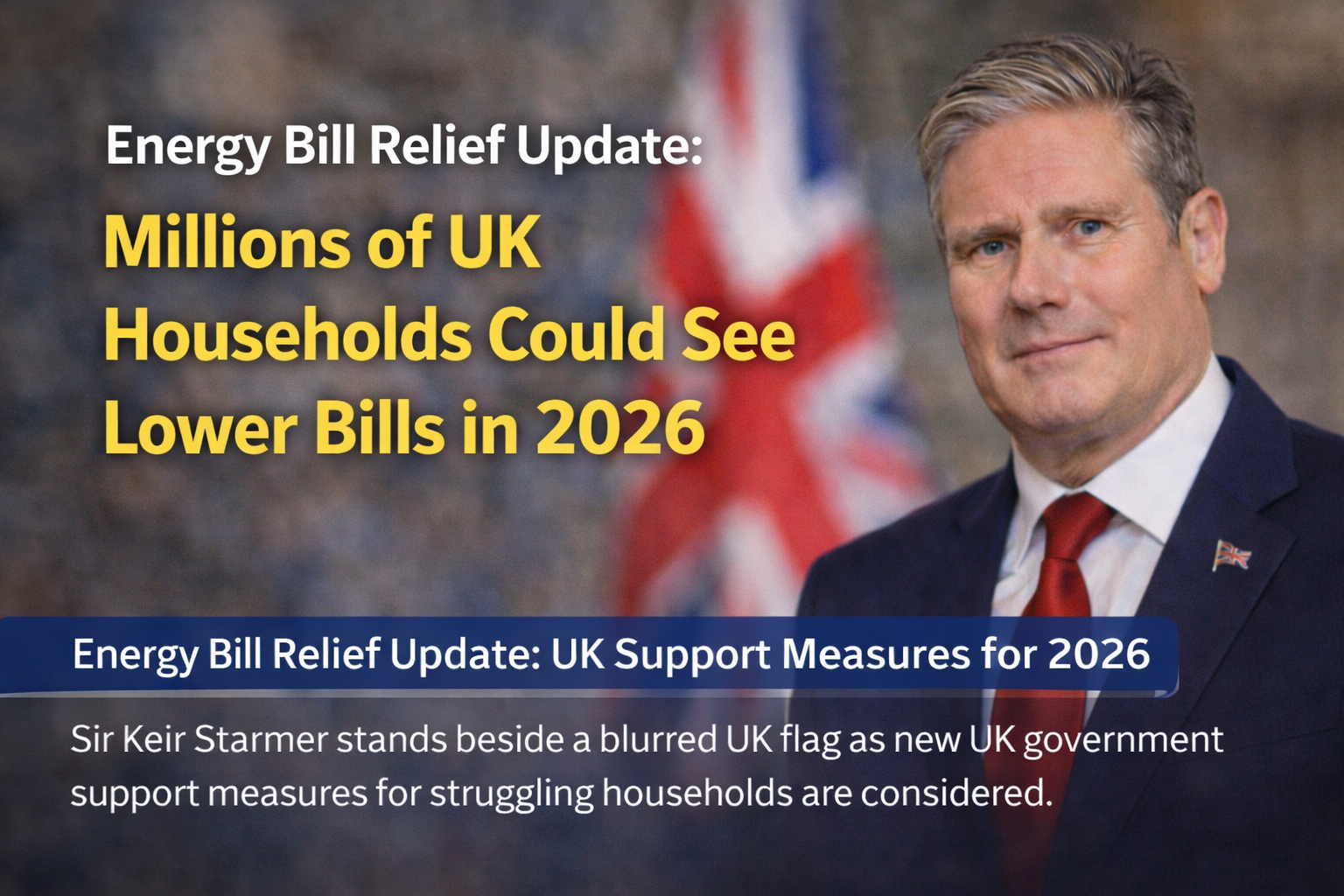
Energy bills remain one of the biggest financial pressures facing UK households, even as inflation slows and wholesale prices stabilise. For millions of families, pensioners, and low-income households, gas and electricity costs continue to eat into already stretched budgets.
Now, fresh discussions around energy bill relief suggest further support could be rolled out through 2026, offering targeted help to those most affected by high costs. While universal subsidies are unlikely to return, government-backed schemes and supplier-led support could still make a meaningful difference.
Here’s a clear look at what energy bill relief really means, who could benefit, and why this issue remains so critical for UK households.
With energy bills still placing heavy pressure on household budgets, the discussion around wider cost-of-living support continues to grow. Alongside proposed energy bill relief measures, the government is also exploring additional financial help for families, pensioners and low-income households — including a potential £725 Cost-of-Living Grant in early 2026, aimed at easing the combined impact of rising energy, food and housing costs.
Why Energy Bills Are Still Hurting UK Households
Although energy prices are no longer at crisis levels, bills remain far higher than they were before the cost-of-living surge. Standing charges, seasonal demand, and long-term market adjustments have kept household costs elevated.
Many families are facing:
-
Monthly energy bills that remain difficult to manage
-
Higher winter usage due to cold weather
-
Reduced disposable income as rent and food costs rise
-
Limited savings to absorb sudden price increases
For households on fixed incomes, even small increases can create serious financial stress.
What Is Energy Bill Relief?
Energy bill relief refers to financial measures designed to reduce the cost of gas and electricity for households. These measures can come from government policy, energy regulators, or supplier obligations.
Relief usually takes the form of:
-
Direct discounts applied to bills
-
Automatic credits during winter periods
-
Special tariffs for vulnerable customers
-
Supplier-funded support for those in difficulty
Unlike broad price caps, modern relief schemes are increasingly targeted, ensuring help reaches those who need it most.
Targeted Support Is the Focus for 2026
Current policy thinking suggests that future energy support will not be universal. Instead, relief will focus on households facing the greatest financial strain.
Groups most likely to benefit include:
-
Low-income households
-
Pensioners
-
People receiving disability or sickness benefits
-
Families with high energy needs
This approach aims to balance affordability for consumers while keeping the energy market stable.
Warm Home Discount Remains a Cornerstone
The Warm Home Discount continues to be one of the most important forms of energy bill relief in the UK.
This scheme provides:
-
A direct reduction on electricity bills
-
Automatic payments for most eligible households
-
Support during the winter period when costs are highest
For many pensioners and low-income families, this discount plays a vital role in keeping homes warm without falling into debt.
Supplier Support Schemes You Might Not Know About
Beyond government-backed programmes, many energy suppliers offer their own hardship and affordability schemes.
These can include:
-
Flexible repayment plans
-
Temporary payment reductions
-
Emergency credit for prepayment meters
-
Help for customers in arrears
These schemes are often underused, simply because households are unaware they exist. Contacting an energy supplier early can unlock options before financial problems escalate.
Prepayment Meter Households and Energy Relief
Households using prepayment meters often face higher costs and greater risk of disconnection. Energy bill relief remains particularly important for these customers.
Support may include:
-
Emergency credit access
-
Special protections during cold weather
-
Alternative payment arrangements
Prepayment users are encouraged to check whether they qualify for additional safeguards or financial help.
Why Energy Bills Still Vary So Much
One of the biggest frustrations for consumers is the wide variation in energy bills. Factors influencing costs include:
-
Type of tariff
-
Household energy usage
-
Region
-
Standing charges
-
Payment method
Even as average prices ease, some households continue to pay far more than others. Relief measures aim to reduce this inequality, especially for vulnerable groups.
What Households Can Do Right Now
While future support is still being finalised, households don’t need to wait to take action.
Practical steps include:
-
Reviewing current energy tariffs
-
Checking eligibility for existing support schemes
-
Updating details linked to benefits or pensions
-
Registering for priority services if vulnerable
Small changes can lead to noticeable savings over time.
Why Energy Affordability Remains a Political Priority
Energy costs are not just a household issue – they are a political one. Public concern over bills remains high, and affordability is closely tied to wider cost-of-living pressures.
As a result:
-
Energy relief continues to feature in policy planning
-
Vulnerable households remain a focus
-
Long-term solutions are being balanced with short-term support
Energy affordability is expected to stay high on the agenda well beyond 2026.
What to Expect Next
While no single announcement will solve the problem overnight, energy bill relief is likely to remain a key tool for supporting households through periods of high demand.
Future measures may:
-
Expand targeted support
-
Strengthen supplier obligations
-
Improve protections for vulnerable customers
For millions of households, even modest relief can make a real difference in managing monthly budgets.
Final Thoughts
Energy bills may no longer dominate headlines as they once did, but for many UK households, the pressure has never truly eased. Energy bill relief remains essential, particularly for those on low incomes or fixed budgets.
As new measures take shape through 2026, households are encouraged to stay informed, check eligibility for support, and engage with suppliers early.
Relief may not eliminate energy costs, but it can provide crucial stability during uncertain times.







Leave a Comment