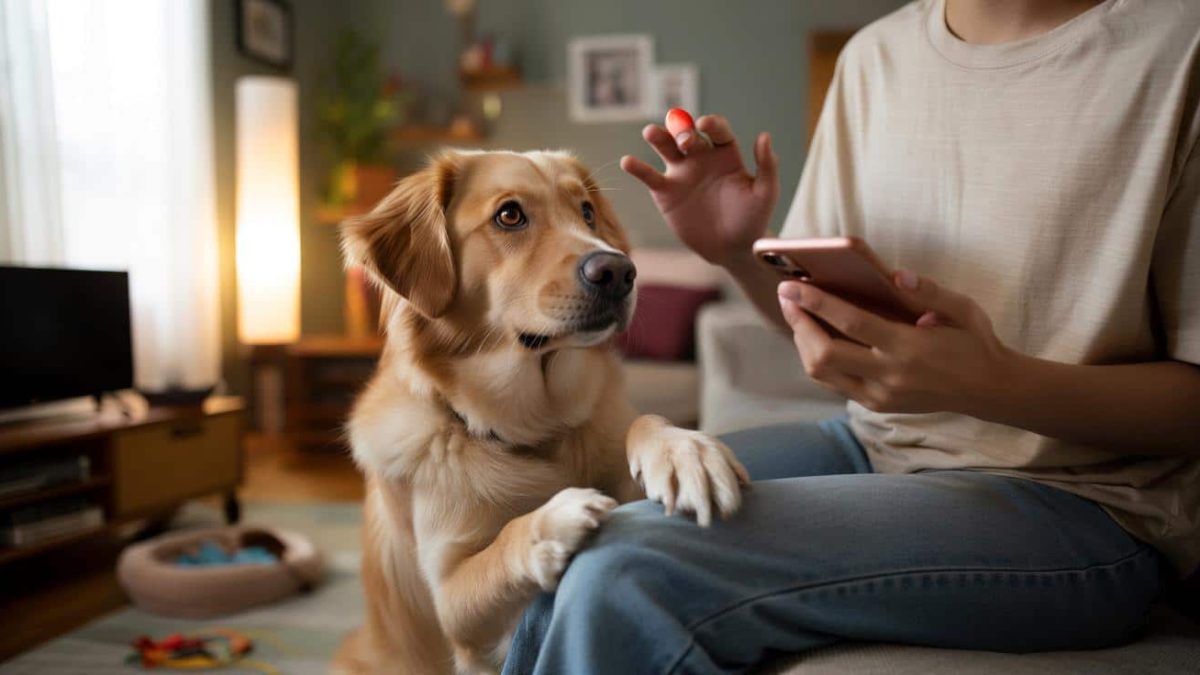
We’ve all experienced that endearing moment when our beloved canine companion places a soft paw gently on our lap or arm. It feels like pure affection, doesn’t it? Many dog owners interpret this behavior as their pet’s way of showing love or initiating playtime. However, recent insights from animal behaviorists and veterinary experts suggest that this common gesture carries deeper meaning than we might realize. Understanding the true motivations behind your dog’s paw placement can strengthen your bond and help you respond to your pet’s actual needs more effectively.
The Communication Gap: What We Think vs. What Dogs Mean
Dogs communicate primarily through body language, vocalizations, and physical touch. Unlike humans who rely heavily on verbal communication, our four-legged friends have developed a sophisticated system of signals over thousands of years of domestication. When your dog places its paw on you, it’s engaging in a deliberate form of communication—but the message might not be what you assume.
Dr. Sarah Mitchell, a certified animal behaviorist from the International Association of Canine Professionals, explains that dog owners often project human emotions onto their pets’ actions. “We assume paw contact means love because that’s how we express affection,” Dr. Mitchell notes. “But dogs have their own language, and we need to learn to read it correctly.” This fundamental misunderstanding can lead to reinforcing behaviors that stem from anxiety, frustration, or learned manipulation rather than genuine bonding.
Attention-Seeking: The Primary Motivation
The most common reason your dog places its paw on you is to capture your attention. Dogs are remarkably intelligent creatures who quickly learn what behaviors yield results. If your dog has noticed that putting a paw on you leads to petting, talking, or treats, it will repeat this behavior consistently.
This attention-seeking behavior becomes especially pronounced when you’re focused on something else—a phone, computer, or television. Your dog essentially learns that a paw placement is an effective way to interrupt your activity and redirect your focus toward them. While this might seem endearing in small doses, reinforcing this behavior can create a demanding pet that struggles with independence and develops anxiety when left alone.
Dog trainer James Rodriguez emphasizes the importance of recognizing this pattern: “If you consistently reward paw contact with attention, you’re essentially teaching your dog that placing its paw on you is the correct way to get what it wants. Over time, this can escalate into more insistent or intrusive behaviors.”
Anxiety and Insecurity: When Paw Contact Signals Stress
Beyond simple attention-seeking, a dog’s paw placement can indicate emotional distress. Dogs experiencing anxiety, fear, or insecurity may use paw contact as a self-soothing mechanism or a way to maintain connection with their trusted human. This behavior is particularly common during thunderstorms, fireworks, or other anxiety-triggering situations.
Veterinary behaviorist Dr. Emma Chen explains: “When dogs are anxious, they seek reassurance from their human companions. Physical contact, including placing a paw on you, helps them feel grounded and secure.” The problem arises when owners instinctively provide comfort for this behavior, as it can inadvertently reinforce the anxiety response and teach the dog that fearful situations warrant paw-based appeals for help.
Distinguishing between attention-seeking paw placement and anxiety-driven paw contact requires observing the context and your dog’s overall body language. An anxious dog will typically display additional signs such as lowered ears, tucked tail, yawning, or lip licking alongside the paw contact.
Medical Issues and Physical Discomfort
Sometimes, a dog’s repeated paw placement on your body signals a health concern that shouldn’t be ignored. Dogs experiencing pain, discomfort, or illness may use paw contact to communicate their distress to their caregivers. This is particularly true for chronic conditions like arthritis, skin irritations, or digestive issues.
If your dog has recently increased its paw contact behavior or appears to focus the paw placement on a particular area of your body, it’s worth scheduling a veterinary examination. Your vet can rule out underlying medical conditions and provide appropriate treatment. Additionally, if your dog seems to be specifically pawing at its own body or your hands in relation to a particular body part, this warrants prompt professional evaluation.
Learned Behavior and Training Implications
Dogs are exceptionally skilled at learning cause-and-effect relationships. If you’ve previously responded positively to your dog’s paw placement—whether through treats, praise, or physical affection—your dog will naturally repeat this behavior more frequently. This learned behavior is neither good nor bad in isolation; it simply reflects your dog’s understanding of how to interact with you effectively.
However, understanding this dynamic empowers you to make intentional choices about what behaviors you want to encourage or discourage. If you find your dog’s paw placement intrusive or problematic, you can redirect the behavior by teaching alternative attention-seeking methods, such as sitting calmly or touching a designated object.
Building Better Communication With Your Dog
Rather than automatically responding to paw placement with attention and affection, consider observing the context more carefully. Ask yourself: Is my dog anxious? Is this a habitual attention-seeking behavior? Could this indicate a health concern? By asking these questions, you develop a more nuanced understanding of your pet’s needs.
Dr. Patricia Wong, a canine behavior specialist, recommends a balanced approach: “Acknowledge your dog’s communication attempt, but respond intentionally rather than automatically. If you suspect anxiety, address the underlying stressor. If it’s attention-seeking, provide attention on your terms, not theirs.”
Conclusion: Deeper Connection Through Understanding
Your dog’s paw on your lap represents a communication attempt, but decoding this message requires moving beyond assumptions and observing the complete behavioral picture. Whether your dog is seeking attention, expressing anxiety, or signaling a health concern, responding thoughtfully strengthens your relationship and addresses their actual needs. By becoming fluent in your dog’s language, you transform these everyday interactions into meaningful conversations that deepen your bond and promote your pet’s emotional and physical wellbeing.










Leave a Comment