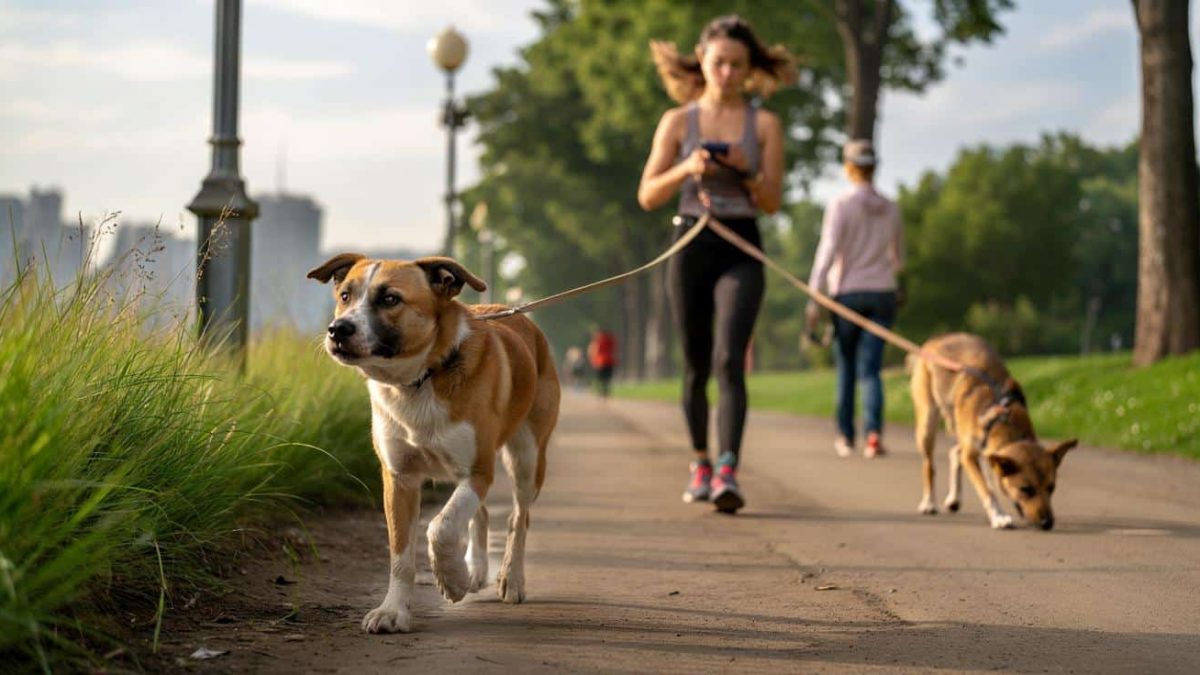
Your dog bounds out the door at the promise of a walk, but somewhere during that forty-five-minute jog through the neighborhood, their enthusiasm fades into reluctant compliance. This increasingly common scenario isn’t a sign of laziness or age—it’s a red flag that your exercise routine may be missing something crucial for your dog’s wellbeing.
The Exercise Treadmill Trap
For years, conventional wisdom has emphasized that dogs need “exercise,” often interpreted as brisk walks, runs, or play sessions that leave them physically tired. Pet owners understandably adopt this philosophy, viewing a vigorous morning jog with their canine companion as the ultimate solution to behavioral problems and restlessness. However, veterinary behaviorists and canine psychologists are now pushing back against this one-dimensional approach.
The problem lies in confusing physical exhaustion with mental satisfaction. When dog owners structure their walks around human fitness goals—maintaining a steady pace, covering specific distances, hitting daily step counts—they inadvertently neglect what dogs actually need from their outdoor time. A dog trotting alongside you at a forced pace isn’t experiencing joy; they’re simply complying with your direction while their mind starves for stimulation.
Understanding Your Dog’s Psychological Needs
Dogs are multisensory creatures with complex cognitive requirements that go far beyond running in straight lines. A dog’s nose contains approximately 300 million olfactory receptors, compared to a human’s six million. When your dog lowers their head to sniff a particular spot on the sidewalk, they’re not dawdling—they’re reading an elaborate chemical newspaper that contains information about neighborhood events, other animals, and territorial markers. This activity engages their brain in ways that locomotion alone simply cannot match.
Veterinary behaviorist Dr. Karen Overall has extensively documented how mental stimulation and enrichment are fundamental to canine psychological health. When these needs go unmet, dogs experience frustration, anxiety, and behavioral issues that physical exercise alone won’t resolve. A dog that spends thirty minutes jogging beside you but never gets to explore, investigate, or make independent decisions is an understimulated dog, regardless of how tired their muscles might be.

The Frustration Factor
Imagine being taken to an amusement park but only being allowed to run back and forth in a straight line. You’d have a sore body but feel incredibly frustrated. This analogy captures what many dogs experience during speed-focused walks. They’re being asked to suppress their natural instincts—investigating scents, exploring their environment, making choices about where to direct their attention—in favor of maintaining pace alongside their human.
This suppression of natural behaviors creates a peculiar paradox: the dog who receives only brisk walks may actually become more frustrated and anxious than a less active dog whose owner allows exploration time. The frustration manifests in various ways—increased pulling on the leash, reluctance to walk, reactive behavior toward other dogs or people, and destructive tendencies at home. Owners often misinterpret these signs as needing even more exercise, leading to an escalating cycle of inadequate enrichment.
The Missing Component: Sniff Walks and Enrichment
Forward-thinking trainers and behaviorists now advocate for a balanced approach that includes “sniff walks” or “enrichment walks” alongside any fitness-based exercise. During these walks, the dog leads the experience. They choose which trees to investigate, which sidewalk cracks to explore, and how long to spend at each location. The human’s role shifts from director to protector, ensuring safety while allowing maximum exploration.
Research from animal behavior studies shows that dogs who receive regular enrichment-based walks demonstrate lower cortisol levels (indicating reduced stress), fewer behavioral problems, and better overall emotional resilience. They’re also more likely to be genuinely enthusiastic about walk time, showing the tail-wagging excitement that often disappears in dogs subjected exclusively to regimented exercise routines.
Restructuring Your Walk Routine
The solution isn’t to abandon exercise entirely but to restructure how you allocate walk time. A practical approach involves dividing your dog’s daily walking time into different types of experiences. Dedicate some time to purpose-driven walks where you set the pace and direction—these serve fitness needs for both human and dog. But allocate at least as much, if not more, time to exploratory walks where your dog’s nose dictates the adventure.
During enrichment walks, resist the urge to maintain momentum. Let your dog linger at fire hydrants, sidewalk corners, and garden patches. Allow them to backtrack if they’ve caught a scent trail. Bring along puzzle toys or treat-dispensing devices that encourage problem-solving. Create variety by rotating walking routes, visiting dog parks or fields where off-leash exploration is possible, and introducing novel environments that stimulate their senses in new ways.
The Behavior Connection
Dog trainers report a fascinating phenomenon: behavioral issues often improve dramatically once owners shift their walking philosophy. A dog that pulls incessantly on the leash during brisk walks may become calm and cooperative when given enrichment-based alternatives. A dog that displays reactivity toward other animals may relax when their cognitive needs are being met. The difference isn’t in the amount of physical activity—it’s in the psychological satisfaction provided.
This shift also strengthens the human-dog bond. When you follow your dog’s lead occasionally, you learn more about their individual preferences, personality quirks, and sensory world. You become a facilitator of their happiness rather than merely a director of their exercise routine.
A New Standard for Dog Walking
As our understanding of canine psychology advances, the culture around dog walking is gradually shifting. Progressive veterinary clinics now counsel owners to provide both fitness and enrichment, recognizing that a truly well-exercised dog is one whose physical, mental, and emotional needs are all satisfied. Your dog doesn’t need you to be their personal trainer—they need you to be their trusted guide who allows them to experience the world through their own extraordinary sensory capabilities.
The next time you notice your dog’s enthusiasm waning during your usual brisk walk, consider it an invitation to try something different. Slow down. Let them lead. Embrace the sniffs, the pauses, and the meandering routes. Your dog will thank you with the renewed enthusiasm and contentment that comes from having their true needs met.











Leave a Comment