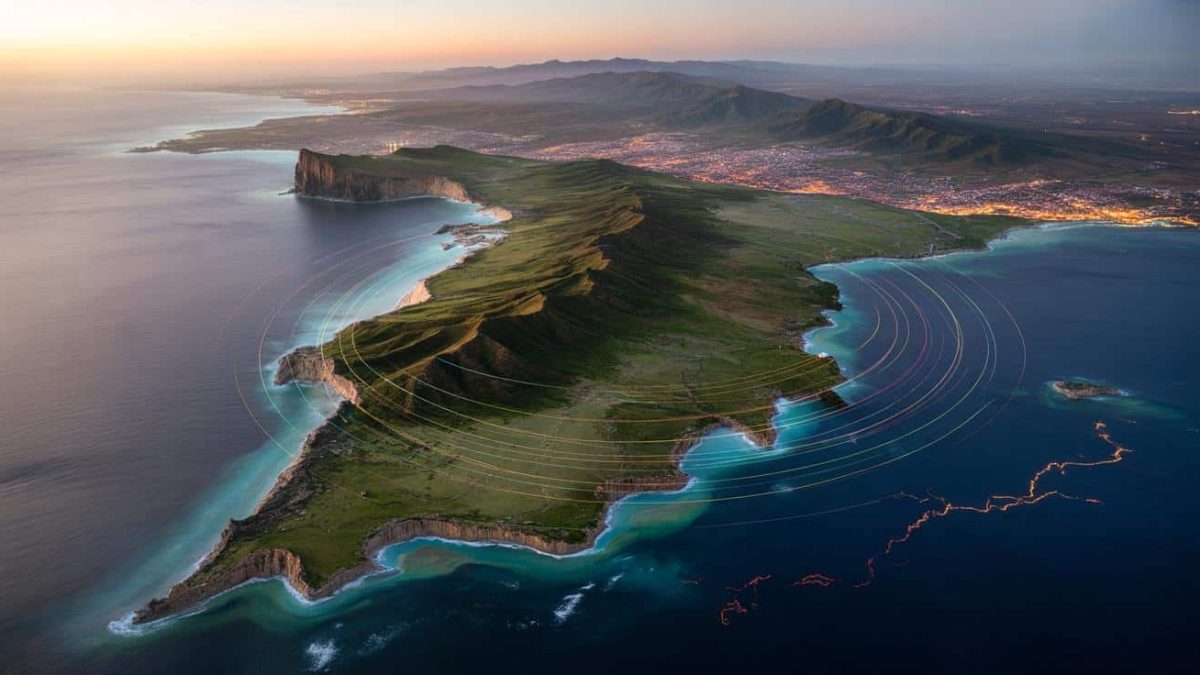
The solid ground that supports cities, forests, and coastlines across Portugal and Spain is engaged in an ancient, almost undetectable motion. Geological research has revealed that the entire Iberian Peninsula is slowly rotating on itself, a phenomenon that unfolds across geological timescales while remaining virtually imperceptible in human terms. This fascinating discovery provides insight into the dynamic processes that continuously reshape our planet’s surface.
Understanding the Rotation Phenomenon
When we think of geological movement, dramatic earthquakes and volcanic eruptions often come to mind. However, the rotation of the Iberian Peninsula represents a different class of geological activity—one that operates in near-silence across millions of years. This rotation isn’t a sudden event or catastrophic shift, but rather a gradual, clockwise or counterclockwise turning of the entire peninsular mass.
Geologists have identified this rotation through careful analysis of plate boundaries, rock formations, and paleomagnetic data. These scientific tools allow researchers to read Earth’s geological history like chapters in a book, revealing movements that would be completely invisible to human observation. The Iberian Peninsula’s rotation is connected to the broader tectonic forces that have been sculpting the Mediterranean region and Atlantic margins for tens of millions of years.
The driving force behind this rotation lies in the complex interactions between the African, Eurasian, and smaller microplates that surround the Iberian region. As these tectonic plates continue their eternal motion—moving at rates comparable to the growth of human fingernails—they exert forces that cause the Iberian block to twist and rotate gradually.
The Mechanism Behind Continental Rotation
The Iberian Peninsula sits in a geologically complex position, positioned between the African Plate to the south and the Eurasian Plate to the north. This positioning creates what geologists call a “transcurrent” environment, where lateral forces dominate over vertical ones. These sideways-directed forces naturally induce rotation in the crustal blocks caught between the moving plates.
The Mediterranean Basin has long been recognized as one of Earth’s most tectonically active regions, but the Iberian Peninsula’s specific rotational behavior is a more recent discovery in geological science. Modern GPS networks and satellite measurements have provided unprecedented precision in tracking these movements, revealing that different parts of the peninsula may rotate at slightly different rates.
This differential rotation can create stress accumulation in certain zones, leading to the earthquakes that periodically affect the region. The famous 1755 Lisbon earthquake, which devastated the city and killed tens of thousands, may have been related to these deep-seated rotational stresses. Understanding the rotation mechanism helps seismologists predict where future earthquakes might occur and assess their potential severity.
Evidence and Scientific Discovery
The evidence for the Iberian Peninsula’s rotation comes from multiple independent lines of research. Paleomagnetic studies—which examine the magnetic properties frozen into ancient rocks—reveal how the peninsula’s orientation has changed over geological time. These studies show that rocks formed millions of years ago now point in directions different from where they would be expected based on their original formation location.
Structural geology provides another crucial line of evidence. Geologists map fault lines and folded rock formations across the peninsula, looking for patterns that might indicate rotation. When they compare data from Portugal’s western coast with inland regions and Spain’s eastern edges, they find evidence of differential movement consistent with rotation.
Modern GPS networks installed across Portugal and Spain deliver real-time measurements of ground movement with millimeter precision. These networks, maintained by geological surveys and research institutions, continuously monitor the peninsula’s position relative to stable reference frames. While the annual rotation is microscopic—measured in fractions of a millimeter per year—these measurements accumulate to reveal significant movement over geological timescales.
Timescales and Human Perspective
The challenge in appreciating geological phenomena like the Iberian rotation lies in grasping the vast timescales involved. Humans experience the world across decades, perhaps centuries. Geological processes unfold across millions of years. A rotation of even several degrees over ten million years produces annual movements completely imperceptible to human senses or even to most conventional surveying techniques.
To put this in perspective, the Iberian Peninsula might rotate approximately one degree over several million years. While this sounds minuscule, it represents massive actual distances when applied to a continental area spanning thousands of kilometers. Rock formations that were once vertically aligned might gradually tilt, and stress patterns that build up over millions of years occasionally release catastrophically in earthquakes.
Implications for Seismic Activity
Understanding the Iberian Peninsula’s rotation has significant implications for earthquake science and risk assessment. The rotation creates predictable patterns of stress concentration in the crust, particularly along major fault zones. Regions where the rotation is most pronounced tend to experience more seismic activity.
The Tagus Valley fault system and other major fault networks across Iberia show evidence of being shaped by this rotational stress. By understanding how rotation contributes to earthquake generation, scientists can better assess seismic hazards and help communities prepare for potential earthquakes.
Broader Geological Context
The Iberian rotation isn’t an isolated phenomenon but rather part of the broader dance of plate tectonics that has been ongoing since Earth’s formation. The Mediterranean region continues to undergo significant geological transformation as Africa moves northward relative to Europe. The Iberian Peninsula, caught between these mighty plates, responds with this subtle rotational motion.
Similar rotational movements occur in other parts of the world where plates interact at oblique angles. Studying these various examples helps geologists understand the fundamental principles governing crustal deformation and provides valuable data for testing and refining tectonic models.
Looking to the Future
As technology continues to improve, our ability to measure and understand the Iberian Peninsula’s rotation will become increasingly sophisticated. Future research may reveal variations in rotation rates, identify new relationships between rotation and earthquake occurrence, and provide insights into broader Mediterranean tectonics.
The geological drama unfolding beneath the Iberian Peninsula reminds us that Earth remains a dynamic, changing world. While we perceive stability beneath our feet, the planet’s crust is continuously reshaping itself through processes that operate far beyond the human timescale. The Iberian rotation exemplifies this hidden geological poetry—a slow, graceful transformation of continental proportions that will continue long after human civilization has transformed or vanished.











Leave a Comment