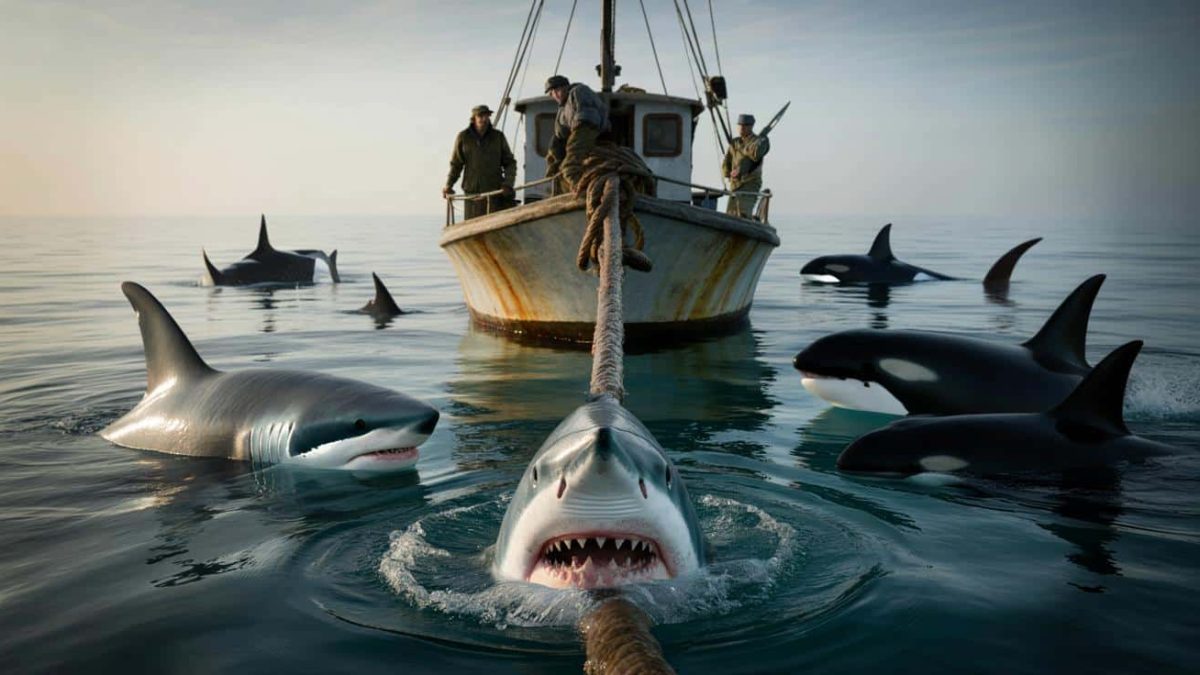
The ocean’s surface was deceptively calm that morning as the fishing vessel cut through moderate swells. The crew had been working since before dawn, preparing their lines and nets for what promised to be a productive day of fishing. What they didn’t anticipate was an encounter that would test their nerves and forever alter their understanding of marine predator dynamics.
The First Warning Signs
The morning started like any other day aboard the commercial fishing vessel. The crew maintained their routine, monitoring their equipment and ensuring all safety protocols were in place. But around mid-morning, one of the experienced deck hands noticed something unusual on the horizon. The distinctive tall dorsal fins of orcas, also known as killer whales, began appearing one by one on the water’s surface. What started as spotting a single fin quickly escalated into a coordinated appearance of multiple marine mammals.
The crew’s initial reaction was one of awe mixed with caution. Orcas are intelligent, powerful marine mammals with a well-documented reputation as apex predators. While attacks on fishing vessels are relatively rare, the presence of a pod surrounding their boat definitely warranted heightened awareness. The fishermen began monitoring the animals’ movements closely, adjusting their position slightly while keeping calm and maintaining a safe distance from the swimming mammals.
An Unexpected Turn of Events
As the orca pod circled the vessel with apparent curiosity, something far more dramatic was happening beneath the waves. The crew’s anchor lines, which extended deep into the water column, suddenly became the focus of attention. One by one, crew members reported hearing unusual sounds and noticing tension changes in the lines. What they soon discovered was shocking: large sharks were actively attacking and biting their anchor lines.
The situation quickly escalated from merely observational to genuinely dangerous. The sharks, likely attracted by the vibrations, activity, and general disturbance created by the orca pod’s presence, began targeting the fishing equipment with aggressive intent. Some fishing experts speculate the sharks were either competing for potential food sources in the disturbed water or reacting defensively to the presence of the orcas, viewing the boat as a neutral or favorable position relative to the larger marine predators.

Understanding Predator Behavior in the Wild
This extraordinary encounter provides valuable insight into the complex social and hunting dynamics of ocean predators. Orcas are known to hunt a wide variety of marine prey, including fish, seals, sea lions, and occasionally larger whales. Their presence in an area typically disrupts normal marine behavior patterns as other predators and prey species respond to the threat or opportunity they represent.
Sharks, despite their fearsome reputation, are opportunistic feeders that rely heavily on sensory input to locate food sources. The electromagnetic fields generated by muscle contractions, vibrations in the water, and chemical signals all contribute to shark hunting behavior. In this particular instance, the combination of orca activity and the fishing crew’s operations may have created an irresistible stimulus for the sharks in the vicinity.
The Crew’s Response and Safety Measures
The fishing crew demonstrated remarkable composure during this tense marine encounter. They understood that sudden movements or aggressive actions could escalate the situation and place themselves at greater risk. Instead, they focused on monitoring the situation, documenting what was occurring, and ensuring all crew members remained in safe positions aboard the vessel.
One of the critical decisions the crew made was to avoid attempting to retrieve their anchor lines while the predators were actively engaged with them. This decision reflected sound judgment—intervening in an active predator-prey or predator-object interaction could have attracted unwanted attention from either the orcas or the sharks. Instead, they maintained their position and allowed the situation to develop naturally.
What Science Tells Us About These Interactions
Marine biologists have documented various interactions between orcas and other shark species, though violent confrontations are not particularly common in open ocean settings. However, in situations where resources are concentrated or where there’s competition for food sources, aggressive interactions between apex predators can occur. The fishing vessel’s presence and the active fishing operation created exactly that type of concentrated activity zone.
Research into shark behavior has revealed that these animals demonstrate more complex social and predatory strategies than previously understood. Rather than mindless eating machines, sharks exhibit learning capabilities, territorial behavior, and sometimes coordinated hunting tactics. The presence of larger predators like orcas can either trigger avoidance behaviors or, in some cases, competitive feeding frenzies where sharks attempt to claim portions of available resources.
The Resolution and Aftermath
As suddenly as the situation had intensified, the marine predators eventually dispersed. The orca pod moved on to other areas, and the shark activity subsided. The crew was able to assess the damage to their equipment and secure their vessel. Remarkably, despite the intensity of the encounter, there were no injuries to crew members and the vessel itself sustained no significant damage.
The damaged anchor lines served as physical evidence of the shark attacks. The bite marks and torn sections of rope painted a vivid picture of the force and determination the sharks had demonstrated in their attempts to sever or manipulate the equipment. The crew documented everything carefully, recognizing the rarity and scientific value of what they had witnessed.
Lessons for Maritime Safety and Marine Conservation
This incident serves multiple important purposes for both fishing industry professionals and marine conservation advocates. For fishermen, it reinforces the importance of understanding marine wildlife behavior and knowing how to respond appropriately when encountering large predators. For marine scientists, it provides rare documented evidence of predator behavior and interaction patterns in real-world fishing scenarios.
The encounter also highlights the intricate interconnectedness of marine ecosystems. The presence of a commercial fishing vessel disrupts natural patterns, potentially attracting predators through various means. Understanding these dynamics helps inform better practices for sustainable fishing and marine safety.
Reflecting on Ocean’s Mysteries
Despite humanity’s extensive study of marine environments, the ocean continues to surprise us with complex interactions and behaviors we’re still working to fully understand. This fishing crew’s harrowing experience is a reminder of nature’s raw power and the remarkable creatures that inhabit our planet’s waters. Their calm response and willingness to document what occurred has contributed valuable observational data to our growing understanding of marine predator behavior and ocean ecosystem dynamics.











Leave a Comment