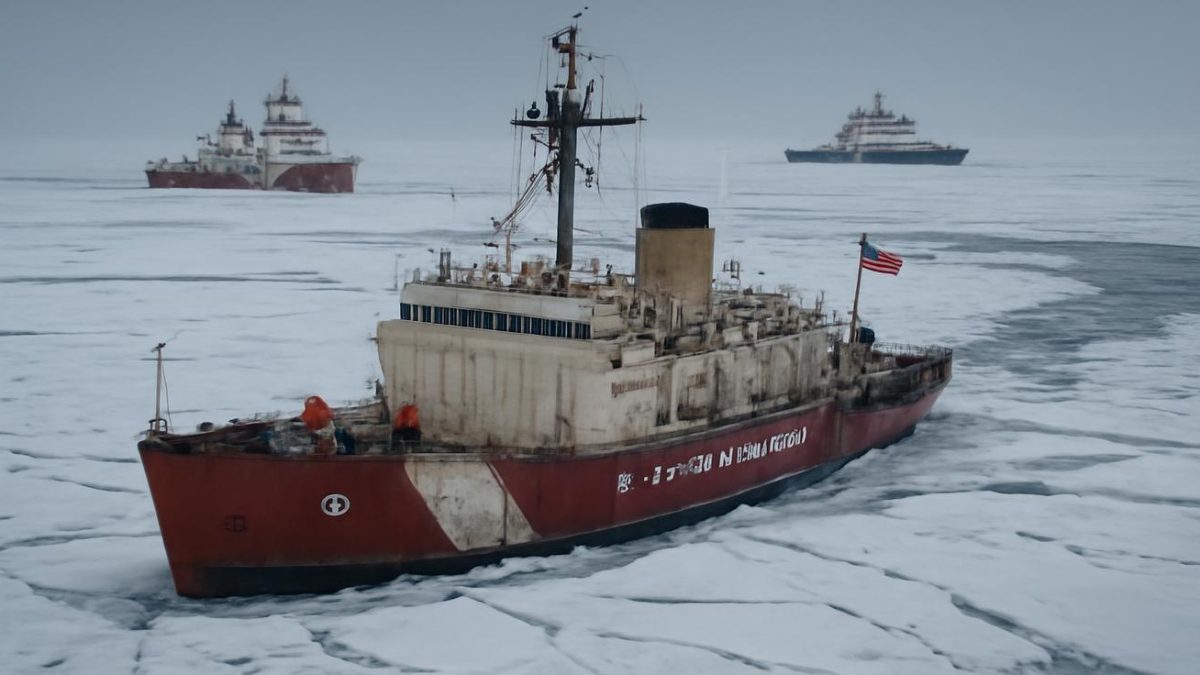
The Arctic Circle represents one of the final frontiers for global exploration and resource development, yet the United States finds itself in an unexpected position of weakness. While other nations have invested heavily in icebreaker technology and Arctic infrastructure, America’s fleet of polar-capable vessels has dwindled to a fraction of what’s needed to assert influence in these strategically vital frozen waters. This realization has prompted American leaders to look beyond their borders for guidance and partnership.
The Arctic’s Growing Importance in Global Strategy
The Arctic has transformed from a remote scientific curiosity into a geopolitical battlefield of considerable significance. Climate change has accelerated the melting of polar ice, opening new shipping routes and revealing vast mineral deposits previously locked beneath the frozen surface. Nations are racing to claim Arctic resources, establish territorial authority, and position themselves as dominant powers in these emerging economic zones.
The Northwest Passage, a maritime route connecting the Atlantic and Pacific Oceans through Canadian waters, represents millions of dollars in potential shipping savings. Similarly, the Northern Sea Route along Russia’s coast offers an alternative to traditional trade channels through the Suez Canal. These passages, once impossible to navigate, are becoming increasingly accessible—and economically attractive. Countries that control these routes gain enormous leverage over global commerce and energy markets.
Beyond commerce, the Arctic holds an estimated 13 percent of the world’s undiscovered oil and 30 percent of its natural gas reserves. Nations with strong Arctic presence can claim exclusive exploration rights and secure energy independence for decades. This combination of economic opportunity and resource wealth has transformed polar regions from scientific interest to strategic necessity.
America’s Icebreaker Deficit: A Strategic Vulnerability
Despite Arctic territorial claims and historical Arctic exploration heritage, the United States has allowed its icebreaker capacity to atrophy significantly. The U.S. Coast Guard currently operates only two heavy icebreakers capable of sustained polar operations. Compare this to Russia, which maintains the world’s largest and most modern icebreaker fleet with dozens of vessels, including nuclear-powered behemoths that can crash through meters-thick ice with ease. Even Canada, with fewer resources than America, operates more icebreakers than the United States.
This gap creates a troubling strategic imbalance. American naval and scientific expeditions to the Arctic face logistical constraints that their competitors do not. Research teams cannot access certain regions. Military presence is limited. Commercial interests struggle to develop Arctic resources. The nation that once pioneered Arctic exploration now finds itself unable to fully participate in the modern Arctic economy.
The consequences of this deficit extend far beyond embarrassment. Without adequate icebreaker capacity, the United States cannot effectively monitor Arctic waters, respond to environmental emergencies, protect American citizens and infrastructure in polar regions, or compete with rivals for resource development contracts. Each year of delay strengthens competitors’ positions and weakens America’s hand in future negotiations over Arctic governance and resource distribution.
Why Building Icebreakers Takes Time and Money
One might reasonably ask: why doesn’t America simply build more icebreakers? The answer lies in the specialized nature of polar vessel construction. Modern icebreakers represent the cutting edge of maritime engineering. They require reinforced hulls capable of withstanding extreme pressure from ice compression, specialized propulsion systems optimized for polar conditions, advanced navigation technology for operations in regions where conventional GPS struggles, and sophisticated life support systems for crews working in extreme environments.
Manufacturing these vessels demands expertise, specialized facilities, and significant capital investment. A single heavy icebreaker costs hundreds of millions of dollars and requires years to design and construct. American shipyards have largely abandoned polar vessel production, lacking both the expertise and infrastructure to rapidly manufacture icebreakers. Rebuilding this industrial capacity would require years of investment before the first ship could be launched.
Furthermore, trained crews for icebreaker operations represent irreplaceable human capital. Polar navigation demands unique skills developed through years of experience. The knowledge gap between American crews and those from nations with active icebreaker programs has widened considerably, requiring additional training time for American personnel.
The Strategic Partnership Solution
Recognizing these constraints, American policymakers have begun pursuing partnerships with nations that have maintained robust icebreaker capabilities and expertise. These collaborations take multiple forms. Joint research expeditions allow American scientists and military personnel to gain Arctic experience while working alongside experienced polar operators. Technology sharing agreements accelerate knowledge transfer in icebreaker design and operation. Coordinated resource development projects create economic incentives for partnership rather than competition.
Canada, America’s closest ally and Arctic neighbor, represents the most natural partnership opportunity. Canadian icebreaker operators possess decades of Arctic experience and understand North American Arctic conditions intimately. Cooperation between American and Canadian Arctic operations creates efficiencies, reduces duplication, and strengthens the position of both nations relative to other Arctic actors.
European nations with Arctic interests and icebreaker experience also offer valuable partnership opportunities. Scandinavian countries have invested in modern polar research and commercial Arctic operations. These partnerships can accelerate American learning and capability development.
Looking Forward: Rebuilding American Arctic Presence
The United States cannot indefinitely rely on partnerships to compensate for its icebreaker deficit. Long-term Arctic strategy demands rebuilding domestic capacity. This requires sustained congressional commitment to funding icebreaker construction, investment in shipyard infrastructure capable of polar vessel production, and development programs to train the next generation of Arctic-capable naval personnel.
Recent legislation has begun addressing these gaps, with appropriations for new icebreaker construction and modernization programs. However, the timeline for closing America’s Arctic capability gap extends decades. During this transition period, strategic partnerships become essential bridges between current weakness and future strength.
The Arctic’s emerging importance to global security and economics demands that America reclaim its historical role as a polar leader. Through combination of partnership and renewed domestic investment, the nation can rebuild the capabilities necessary to protect its interests and citizens in this vital frontier region.








Leave a Comment