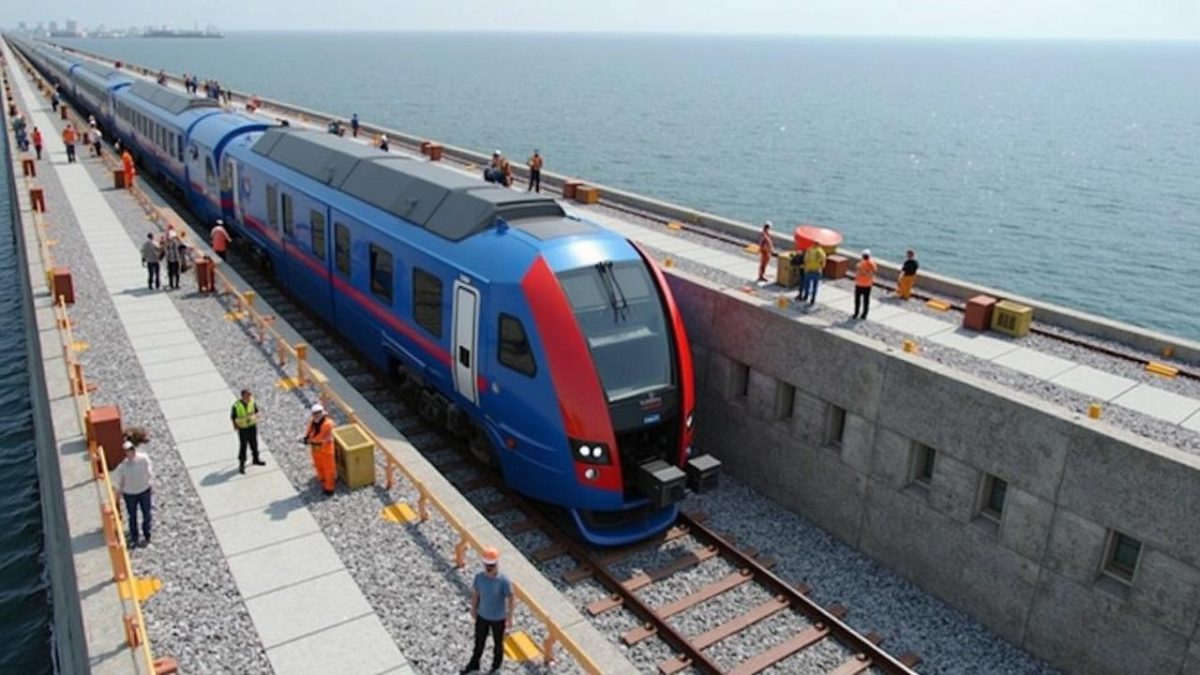
The world of transportation is on the brink of transformation. Engineers have officially commenced construction on what may be the most audacious infrastructure project ever attempted: a deep-sea rail tunnel that will thread beneath thousands of meters of open ocean to establish a permanent rail link between continents. This isn’t the plot of a science fiction novel—it’s an engineering reality that’s reshaping how we think about global connectivity.
The Vision Behind the Megaproject
For centuries, vast oceans have separated continents, forcing travelers and cargo to rely on ships, planes, and lengthy alternative routes. What if that geographical barrier could be eliminated entirely? This fundamental question drove engineers and planners to conceptualize something previously thought impossible: a submerged railway tunnel capable of safely transporting trains at remarkable speeds across intercontinental distances.
The tunnel represents far more than an engineering marvel. It symbolizes humanity’s determination to overcome natural limitations and connect our world in unprecedented ways. The economic implications alone are staggering—imagine reducing a 48-hour ocean voyage to a 12-hour train ride, eliminating fuel costs associated with maritime transport, and creating a land-based corridor that operates regardless of weather conditions.
Engineering Challenges That Push Boundaries
Constructing a tunnel nearly two kilometers below the surface of the ocean presents challenges that dwarf any previous tunnel project. Traditional undersea tunnels, like those connecting the United Kingdom to France, operated at relatively shallow depths. This new venture ventures into the abyssal zone, where pressure exceeds 300 atmospheres and environmental conditions remain virtually unexplored for construction purposes.
The engineering team must contend with several formidable obstacles. Deep-sea floor composition varies dramatically, ranging from soft sediments to solid rock formations. Seismic activity presents another critical concern—the tunnel must withstand earthquakes that could occur along its entire length. Water infiltration remains a perpetual threat, requiring revolutionary waterproofing technologies that far exceed current industry standards.
Temperature fluctuations at extreme depths, combined with the immense hydrostatic pressure, create material stress conditions never before encountered in construction. Engineers are developing specially formulated concrete and steel alloys designed specifically for these extraordinary conditions. The ventilation systems alone represent an engineering challenge equivalent to creating underground cities.
Technological Innovation on an Unprecedented Scale
To realize this vision, engineers have pioneered breakthrough technologies that will likely influence infrastructure development for decades to come. Advanced robotic tunneling machines have been specially modified to operate at extreme depths, equipped with sensors that provide real-time data about geological conditions, pressure fluctuations, and structural integrity.
The tunnel will incorporate pressure equalization chambers at regular intervals, allowing trains to gradually adjust to changing atmospheric conditions. Climate control systems must maintain consistent temperature and humidity levels throughout the entire structure. Communication systems capable of functioning reliably through thousands of meters of rock and water required entirely novel approaches to engineering.
Safety mechanisms are being built into every aspect of the design. Emergency evacuation protocols, redundant structural supports, and automated monitoring systems represent just the beginning of the safety infrastructure. Train control systems will utilize advanced AI technology to monitor track conditions continuously and adjust speed instantaneously in response to any detected anomalies.
Environmental Considerations and Ecological Impact
Any project of this magnitude demands careful environmental assessment. The construction process itself poses temporary risks to marine ecosystems along the tunnel route. Engineers have implemented comprehensive mitigation strategies, including timed construction schedules that avoid critical breeding seasons for marine species and sealed tunneling methods that prevent sediment disturbance.
Interestingly, the completed tunnel may actually benefit the marine environment. By reducing ocean-based cargo traffic, the project could decrease shipping-related pollution and maritime accidents. The tunnel itself creates a permanent geological feature that may become habitat for deep-sea organisms adapted to extreme conditions.
Timeline and Financial Investment
The project timeline spans two decades, with completion projected before 2045. The financial commitment exceeds previous estimates for any single infrastructure project, involving contributions from multiple international governments and private investors. The cost-benefit analysis, however, demonstrates compelling returns once operational—economists project the tunnel will pay for itself within 35 years through transport savings alone.
Funding arrangements involve innovative financial mechanisms, including public-private partnerships and international development bonds. Several governments have committed unprecedented levels of infrastructure investment, recognizing the transformative potential for their economies.
Geopolitical Implications
This tunnel represents more than transportation infrastructure; it’s a statement about global cooperation and shared vision for human progress. The project brings together nations that must coordinate on engineering standards, safety protocols, maintenance agreements, and operational procedures across political boundaries. Success requires unprecedented levels of international cooperation.
The tunnel will fundamentally alter trade patterns and economic relationships between continents. Regions previously isolated due to geographical distance will suddenly become neighboring economies. Port cities may experience economic shifts as maritime trade diminishes, while inland communities gain unexpected strategic importance.
Looking Forward: The Future of Global Infrastructure
This megaproject represents a turning point in how humanity approaches infrastructure challenges. If successful, it opens possibilities for additional underwater rail corridors, creating a genuinely interconnected global transportation network independent of seasonal weather patterns or maritime piracy concerns.
Engineers and planners are already conceptualizing similar projects for other strategic ocean crossings. The technological advances developed for this tunnel will inevitably influence submarine construction, oil rig engineering, and deep-sea research infrastructure.
The deep-sea rail tunnel stands as a testament to human ingenuity and determination. Yes, it’s risky. Yes, it’s unprecedented. But as construction officially begins, the world watches with a mixture of awe and anticipation. We’re witnessing the birth of something that will reshape global connectivity for centuries to come—a physical reminder that no barrier is insurmountable when innovation meets ambition.








Leave a Comment