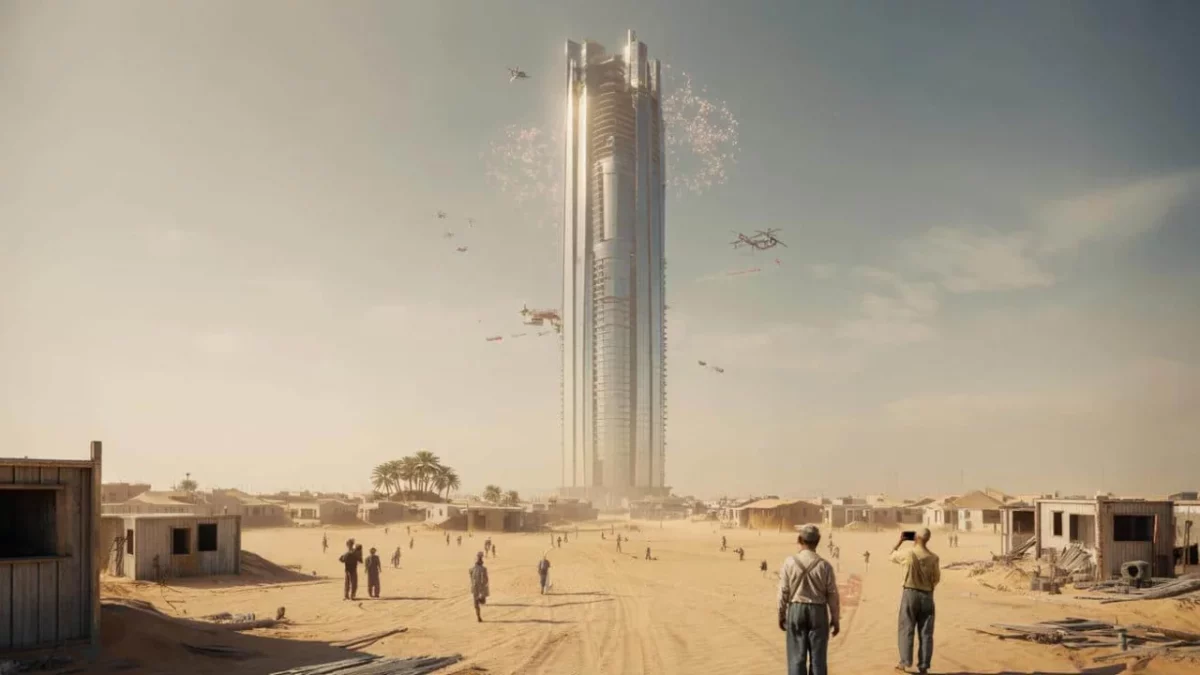
Picture this scenario: society mobilizes half a trillion dollars to erect a structure so astronomically tall it would generate its own weather patterns, complete with precipitation and wind dynamics never before witnessed at such altitudes. Meanwhile, in the same nation—or continent—water treatment facilities deteriorate beyond repair, highways fracture into unusable rubble, and millions lack reliable electricity. This isn’t science fiction. This is the logical endpoint of unchecked megaproject ambition divorced from practical necessity.
The Economics of Folly
When we examine projects that consume $500 billion in capital investment, we must ask a fundamental question: what alternative futures does this investment preclude? That figure doesn’t appear in a vacuum. Every dollar directed toward vanity construction is a dollar unavailable for water infrastructure, renewable energy systems, transportation networks, or healthcare facilities that directly impact human survival and dignity.
The mathematics of opportunity cost becomes staggering when articulated clearly. Half a trillion dollars could rebuild the aging water systems across entire continents, modernize electrical grids in developing regions, construct thousands of hospitals, or establish educational infrastructure serving hundreds of millions. Instead, these resources concentrate on a single structure that serves primarily as a monument to engineering ego.
This isn’t merely about numbers on spreadsheets. This represents a civilizational choice about what we value. Do we believe human flourishing depends on technological monuments, or on the unglamorous infrastructure that keeps people alive?
The Infrastructure Crisis Nobody Talks About
Throughout developed nations, infrastructure silently deteriorates. Water pipes installed in the 1960s rupture regularly, contaminating supplies and wasting treated water. Bridges rated as structurally deficient continue carrying daily traffic. Sewage systems overflow during rainfall, contaminating rivers and beaches. Power grids strain under capacity, leading to cascading blackouts that endanger lives.
These problems lack the glamour of futuristic desert towers. They don’t generate inspiring architectural renderings or attract international media attention. Replacing deteriorating pipes doesn’t create headlines. Yet this unglamorous work represents the true backbone of functional civilization.
The contrast reveals a disturbing priority inversion. Societies pour resources into projects designed primarily to impress rather than serve. Meanwhile, the systems that actually sustain modern life receive perpetual underfunding, deferred maintenance, and neglect. This isn’t progress—it’s a civilization constructing cathedrals while ignoring the foundation beneath them.
Environmental and Climatic Consequences
Desert environments represent some of Earth’s most fragile ecosystems. These regions evolved over millennia under specific conditions. Introducing massive infrastructure disrupts delicate balances that support specialized species and indigenous communities. The atmospheric effects of a kilometer-tall structure in desert regions would prove genuinely unpredictable.
Creating artificial weather systems through architectural intervention represents an experiment with unknown consequences. Precipitation patterns could shift, affecting agricultural regions hundreds of kilometers away. Wind patterns would be fundamentally altered. Thermal dynamics would change, potentially affecting local and regional climate systems.
This doesn’t constitute responsible stewardship of planetary resources. This represents playing dice with complex natural systems to satisfy architectural ambition. The potential environmental costs dwarf any theoretical benefits the structure might provide.
The Maintenance Nightmare
Construction represents merely the initial expense. A structure of this magnitude would require extraordinary maintenance systems. Cleaning surfaces, replacing weathered materials, repairing structural elements, and maintaining internal systems would consume enormous resources perpetually. The operational costs would likely exceed those of maintaining all water infrastructure for entire nations.
Consider the practical logistics. Windows at such heights couldn’t be cleaned by conventional methods. Materials would degrade at accelerated rates due to exposure. Elevator systems would require constant servicing. Safety systems would demand redundancy upon redundancy. This isn’t a one-time investment—it’s a permanent financial commitment that would drain resources for generations.
The Real Question: Why?
Fundamentally, these projects fail to answer basic necessity questions. Who benefits? What genuine problem does this solve? Beyond symbolic achievement, what practical advantage emerges from this structure that justifies its astronomical cost?
Defenders inevitably invoke tourism, technological advancement, or architectural boldness. But tourism revenue never approaches operational costs for such structures. Technological advancement doesn’t require monuments—it requires investment in research, education, and practical applications. Architectural boldness achieved at the expense of human welfare represents architectural recklessness.
A Farewell to Sensible Priorities
These megaprojects represent a farewell letter to common sense, signed by societies that have lost perspective on their actual challenges. They demonstrate how divorced decision-making can become from human need when concentrated among elites focused on legacy and ambition rather than welfare and sustainability.
The resources devoted to such projects could address genuine crises. Water scarcity affects billions. Energy poverty constrains development across continents. Healthcare infrastructure gaps cost countless lives. Transportation networks could be revolutionized. Educational systems could be transformed. These aren’t abstract challenges—they’re immediate, measurable, and solvable with proper investment.
The Path Forward
Rational societies must reassess their infrastructure priorities. Before approving any megaproject, fundamental questions require answers: What human need does this address? What existing critical infrastructure could be improved with these resources? What would citizens choose if surveyed directly? What environmental consequences are acceptable?
Engineering ambition needn’t vanish. Rather, it should redirect toward solving actual problems. Can engineers create more efficient water systems? Can they design resilient electrical grids? Can they build transportation networks that reduce emissions while improving connectivity? These challenges demand brilliant engineers working on urgent problems—not prestige projects in deserts.
The twentieth century demonstrated humanity’s capacity for monumental construction. The twenty-first century should demonstrate our capacity for wisdom—the ability to build what’s necessary rather than what’s possible, to serve human flourishing rather than architectural ego. Until we make that distinction, billion-dollar desert towers will remain monuments not to progress, but to our collective confusion about what truly matters.









Leave a Comment