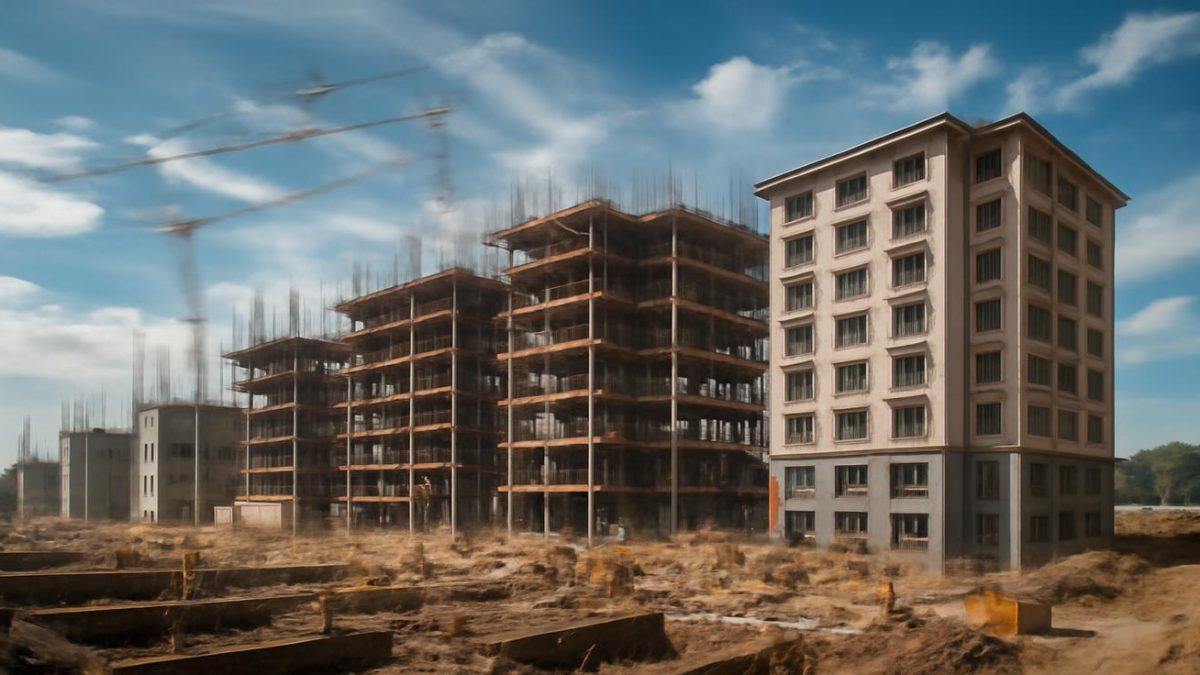
Imagine watching a building rise from an empty lot to completion in barely over a day. This wasn’t science fiction or architectural fantasy—it happened in 2015 when a Chinese company demonstrated an achievement that left the global construction industry astonished. While traditional methods measure building timelines in months or years, this groundbreaking project completed a 10-story structure in just 29 hours. What seemed impossible to generations of builders suddenly became reality, forcing engineers and architects worldwide to reconsider everything they knew about construction methodology.
The Traditional Construction Problem That Nobody Solved
For over a century, construction has operated like a slow-moving glacier. A typical residential or commercial building project spans months, often stretching into years. Weather delays, labor coordination challenges, material delivery schedules, and complex on-site assembly processes create inherent bottlenecks. Architects and construction professionals developed sophisticated project management systems to handle these constraints, but fundamental speed improvements remained elusive.
The construction industry has always operated fundamentally differently from manufacturing. While factories produce thousands of identical vehicles annually using assembly lines and standardized processes, construction sites remain stubbornly artisanal. Each building is custom-designed, requiring specialized coordination of numerous trades, weather-dependent activities, and site-specific challenges. This inherent complexity created a psychological barrier—most industry leaders simply accepted that buildings couldn’t be built quickly.
The gap between construction speed and manufacturing efficiency became increasingly obvious as technology advanced everywhere else. Smartphones that once took years to develop now launch in months. Automotive production methods continuously accelerated. Yet construction remained stuck in its traditional patterns, treating rapid assembly as either impossible or economically unfeasible.
When Manufacturing Met Architecture
The breakthrough came when Chinese construction firms began questioning fundamental assumptions about building methods. Rather than viewing construction as primarily site-based assembly work, they asked: what if we treated it like manufacturing? This philosophical shift led to exploring prefabrication and modular construction at unprecedented scales.
The winning strategy involved creating building components in controlled factory environments rather than assembling everything on-site. Entire wall sections, floor systems, and structural elements were manufactured to precise specifications in factories, then transported to sites where they were assembled like components in a production line. This approach mirrored how manufacturers produce complex products—precision factory work combined with efficient assembly processes.
This methodology addressed the core problems plaguing traditional construction. Factory production eliminated weather delays. Quality control became standardized and repeatable. Labor coordination simplified dramatically since assembly required fewer specialized trades than site-built construction. Transport and assembly timelines became predictable. Suddenly, the manufacturing speed principle that seemed impossible became achievable.
Inside the Record-Breaking 29-Hour Project
The 2015 project that shocked the industry involved constructing a 10-story residential building for a company seeking rapid solutions to housing challenges. The building stood approximately 40 meters tall and contained multiple residential units requiring full infrastructure integration including electrical, plumbing, and HVAC systems.
What made this project remarkable wasn’t just the final speed but how it was achieved. The construction company (which became known internationally through this achievement) had spent years perfecting modular building techniques. They manufactured hundreds of prefabricated components in their factories before breaking ground. These sections arrived at the site already incorporating internal systems and finishing materials.
The on-site work resembled assembly more than traditional construction. Prefabricated wall panels were positioned and connected with precision-engineered fastening systems. Floor assemblies locked into place quickly. Vertical structural elements aligned with mechanical efficiency. The work progressed floor by floor in a coordinated rhythm that would be impossible with site-built construction. Cranes operated on tightly choreographed schedules, moving components into position and immediately securing them, allowing subsequent components to progress without delay.
The entire process required meticulous planning and coordination. Every component had to arrive in the correct sequence. Worker teams were organized into specialized units handling specific installation tasks. Quality inspections occurred throughout assembly to catch any issues immediately. The compressed timeline meant problems couldn’t be deferred—everything had to function correctly the first time.
Why This Changed Global Perspectives
The 29-hour achievement resonated far beyond China because it answered a question the industry had avoided for decades: was rapid construction actually possible, or was it merely theoretical? The answer was definitively yes. A fully functional building with all necessary systems stood complete, proving the concept worked at scale.
This success sparked serious investigation into prefabrication and modular construction globally. Architects and engineers who previously dismissed these methods as impractical or inferior suddenly reconsidered their advantages. Universities began integrating prefabrication principles into architectural curricula. Construction companies worldwide invested in manufacturing facilities. Governments recognized potential benefits for affordable housing crises and disaster reconstruction.
The implications extended beyond simple speed gains. Factory production typically improves quality because manufacturing processes maintain tighter tolerances than site assembly. Prefabrication reduces on-site labor requirements, addressing chronic worker shortages. Environmental benefits emerge through reduced waste and optimized material usage in controlled environments. Project costs become more predictable when factory production provides cost certainty rather than variable site conditions.
The Broader Construction Revolution Underway
While the 29-hour building remains notable for its speed record, the real significance lies in validating rapid construction as a viable methodology. Today, multiple countries develop modular and prefabricated building solutions applying similar principles. Japan has pioneered advanced prefabrication techniques. Scandinavian countries have integrated modular construction into mainstream practice. American and European firms increasingly explore these methods.
The technology continues advancing. 3D printing and robotic manufacturing further enhance precision and speed potential. Building information modeling allows virtual assembly before physical construction begins. Supply chain optimization ensures components arrive in perfect sequence. The cumulative effect pushes construction toward manufacturing-speed efficiency.
Challenges remain. Building codes in many countries still reflect traditional construction assumptions, creating regulatory obstacles to prefabricated methods. Initial setup costs for manufacturing facilities are substantial. Designing buildings for modular construction requires architectural expertise different from traditional approaches. Labor transitions prove challenging in regions with construction-dependent economies.
What the Fast-Built Building Means for Future Construction
That 10-story building completed in 29 hours represents more than an impressive record. It demonstrates that construction doesn’t inherently require months or years. With proper methodology, technology, and planning, buildings can rise with remarkable speed while maintaining quality and safety standards.
This realization has begun transforming how the industry approaches its fundamental challenge: providing shelter efficiently. As urbanization accelerates and housing demands intensify globally, manufacturing-speed construction becomes increasingly valuable. The approach that seemed fantastic in 2015 now feels like practical necessity.
The construction industry stands at an inflection point. Traditional site-based assembly, which dominated for centuries, faces competition from manufacturing-inspired approaches. The 29-hour building didn’t just set a speed record—it validated an entirely different way of thinking about how buildings get built. As more projects embrace these principles, the pace of change will likely accelerate, ultimately transforming what’s possible in construction for generations to come.











Leave a Comment