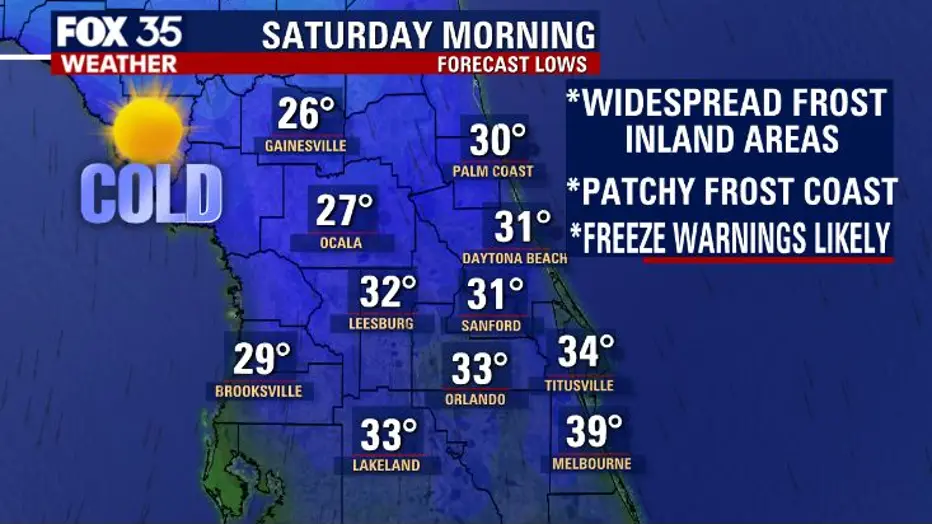
A sharp blast of winter cold has settled into Central Florida.
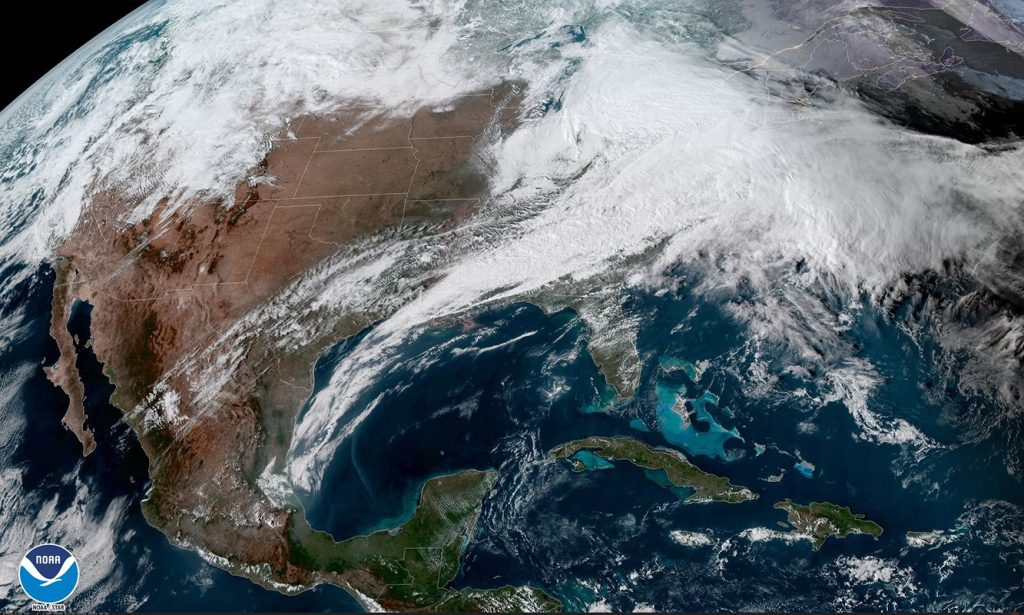
Freeze warnings are in effect for Wednesday as a powerful Arctic cold front sweeps across the state, bringing unusually cold temperatures and biting wind chills.
Forecasters say early morning wind chills could dip into the 20s, while afternoon highs are expected to remain in the 40s and 50s.
The cold snap poses risks for people, pets, plants, and exposed pipes, making preparation critical across the region.
Freeze Warnings Issued Across Central Florida
The National Weather Service has issued freeze warnings for much of Central Florida as a surge of Arctic air pushes south into the state.
The cold front moved through Florida earlier this week, replacing mild winter conditions with sharply colder air more typical of mid-winter outbreaks. Behind the front, clear skies and dry air are allowing temperatures to fall quickly overnight.
Wednesday morning is expected to be the coldest period, with widespread lows near or below freezing in inland areas.
How Cold Will It Get?
Wind Chills Drop Into the 20s
Despite actual air temperatures hovering near freezing, brisk winds will make it feel significantly colder.
Meteorologists say wind chills across parts of Central Florida could fall into the 20s during the early morning hours, especially before sunrise.
These conditions increase the risk of cold exposure for anyone outdoors for extended periods.
Daytime Highs Stay Below Normal
Even after sunrise, temperatures will be slow to recover.
Forecast highs for Wednesday are expected to reach only the 40s and low 50s across much of the region, well below average for late winter in Florida.
Timeline: How the Arctic Air Moved Into Florida
Cold Front Arrives
The powerful cold front entered Florida earlier this week, pushing out warmer air and triggering gusty winds.
Behind the front, Arctic air flowed southward, dropping temperatures rapidly overnight.
Freeze Warnings Issued
As confidence increased in the cold forecast, freeze warnings were issued for Central Florida, alerting residents to the potential for freezing temperatures and cold-sensitive impacts.
Coldest Conditions Wednesday Morning
Forecasters say the coldest temperatures are expected early Wednesday, with gradual improvement later in the day as winds weaken and sunshine returns.
Why Freeze Warnings Matter in Central Florida
Freeze warnings are particularly significant in Florida, where infrastructure, vegetation, and residents are less accustomed to prolonged cold.
Cold-sensitive plants and crops can suffer damage when temperatures fall below freezing, even for a short time. Unprotected outdoor plumbing may also be vulnerable.
People experiencing homelessness, elderly residents, and those without adequate heating face increased health risks during cold snaps.
Official Weather Guidance
Weather officials are urging residents to take precautions ahead of the coldest temperatures.
“Even brief exposure to these conditions can be dangerous,” forecasters said in a statement. “Residents should dress in layers and limit time outdoors during the coldest hours.”
Officials also recommend checking on neighbors, especially those who may need assistance staying warm.
Public Reaction Across Central Florida
Residents across the region have been preparing for the sudden chill.
Gardeners have been covering plants, while homeowners are taking steps to protect outdoor pipes. Pet owners are being reminded to bring animals indoors overnight.
In many communities, the sharp temperature drop has been a reminder that winter weather, though rare, can still pack a punch in Florida.
Who Is Most Affected by the Freeze
People and Pets
Cold temperatures and wind chills increase the risk of hypothermia, particularly for those without adequate shelter or heating.
Plants and Agriculture
Sensitive plants, citrus trees, and early-season crops may be damaged by freezing temperatures.
Homes and Infrastructure
Outdoor plumbing, irrigation systems, and exposed pipes are at risk if not properly insulated.
Key Facts at a Glance
| Event | Location | Date | Who Is Affected | Current Status | What Readers Should Know |
|---|---|---|---|---|---|
| Freeze warning | Central Florida | Wednesday | Residents, pets, plants | In effect | Overnight lows near freezing |
| Arctic cold front | Florida | This week | Entire region | Moved through | Bringing much colder air |
| Wind chill concerns | Central Florida | Early Wednesday | Anyone outdoors | Ongoing | Feels like 20s |
| Daytime temperatures | Central Florida | Wednesday | General public | Below normal | Highs in 40s and 50s |
| Cold safety impacts | Central Florida | Midweek | Vulnerable populations | Elevated | Prepare ahead of time |
What Happens Next
Temperatures are expected to gradually rebound later in the week as the Arctic air mass moves out of the region.
However, forecasters say another cold morning is possible in some areas before conditions moderate.
Residents are encouraged to continue monitoring local forecasts, especially if freeze warnings are extended or upgraded.
Frequently Asked Questions
What is a freeze warning?
A freeze warning means temperatures are expected to fall to or below freezing, posing risks to plants, pets, and pipes.
How cold will it feel Wednesday morning?
Wind chills could drop into the 20s across parts of Central Florida.
Will temperatures rise above freezing during the day?
Yes, but highs are expected to stay in the 40s and 50s.
Should plants be covered?
Yes. Sensitive plants should be protected or brought indoors if possible.
Is this normal for Central Florida?
Freezing temperatures are uncommon but not unheard of during strong Arctic outbreaks.
When will it warm back up?
Temperatures are expected to slowly rebound later this week.
Closing
Freeze warnings remain in effect across Central Florida as a rare blast of Arctic air brings some of the coldest temperatures of the season.
With wind chills plunging early and limited daytime warming expected, residents should take precautions to protect themselves, their pets, and their property.
The next few days will determine how quickly temperatures recover as the cold air mass moves out of the region.



Leave a Comment