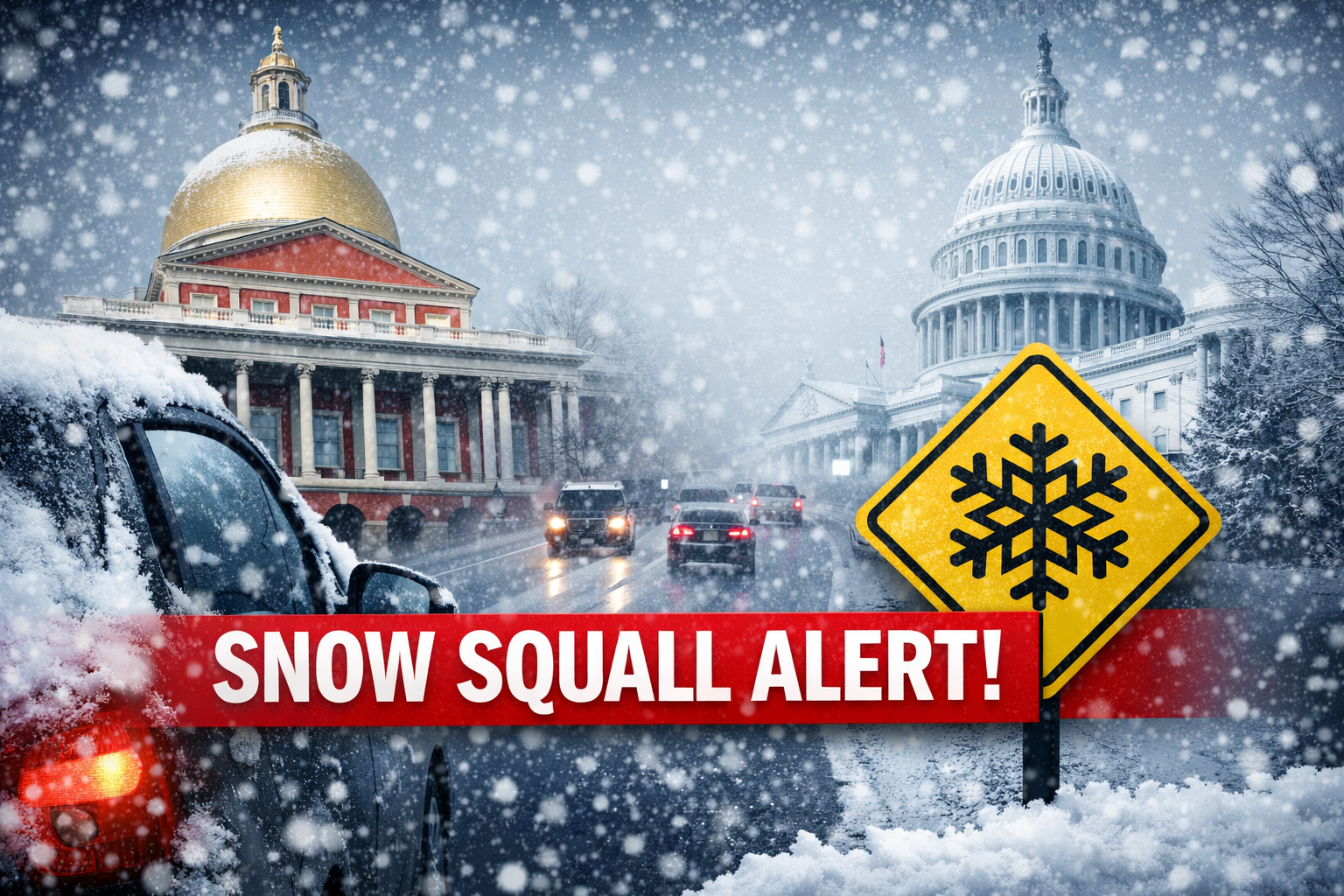
Residents across Massachusetts and the broader DMV region are being urged to stay alert as snow squalls trigger official weather warnings, creating potentially dangerous travel conditions with little notice. Forecasters warn that these fast-moving winter hazards could significantly disrupt commuting, road travel, and flight schedules through the region.
Snow squalls are particularly dangerous because they develop rapidly, often reducing visibility to near zero in minutes while coating roads with a thin but treacherous layer of snow and ice. Authorities stress that even experienced winter drivers can be caught off guard.
What Is a Snow Squall—and Why Is It So Dangerous?
Unlike long-duration snowstorms, snow squalls are short-lived but intense bursts of snowfall, typically lasting 15 to 45 minutes. During that brief window, snowfall rates can exceed one inch per hour, accompanied by gusty winds and sharply falling temperatures.
According to meteorologists, snow squalls can:
-
Cause whiteout conditions on highways
-
Rapidly freeze wet pavement
-
Lead to multi-vehicle pileups
-
Disrupt aviation with sudden runway icing
Because of their sudden onset, snow squalls often strike during otherwise “manageable” winter days, catching travelers off guard.
Areas Under the Greatest Risk
Massachusetts
Across Massachusetts, the threat is highest along:
-
Major interstates and state highways
-
Elevated roadways and bridges
-
Suburban and rural corridors where plowing may lag
Commuters traveling during early morning and evening hours face the greatest risk, especially as temperatures hover near freezing—perfect conditions for flash ice.
DMV Region
In the DMV region, which includes Washington, Maryland, and Northern Virginia, forecasters warn that snow squalls could impact:
-
I-95 and I-495 corridors
-
Airport access roads
-
Public transit routes
Urban traffic density means even a brief snow squall could ripple into hours of delays.
Travel Disruptions: What to Expect
🚗 Road Travel
Transportation officials caution that the first 10 minutes of a snow squall are often the most dangerous. Roads may appear merely wet before freezing suddenly, leading to loss of traction.
Drivers are advised to:
-
Reduce speed immediately when snow begins
-
Avoid sudden braking
-
Increase following distance
-
Pull off the road if visibility drops sharply
✈️ Air Travel
Snow squalls can also impact regional airports through:
-
Sudden runway snow accumulation
-
De-icing delays
-
Temporary ground stops
Travelers should check flight statuses frequently and allow extra time for airport security and boarding.
Weather Pattern Behind the Snow Squalls
Meteorologists explain that the current setup features:
-
Cold Arctic air sweeping south
-
A fast-moving frontal boundary
-
Strong upper-level winds
This combination creates narrow but powerful snow bands capable of dumping snow quickly before moving on—often leaving sunshine behind them, which can be misleading for drivers who assume conditions have improved.
Official Warnings and Safety Alerts
The National Weather Service has issued Snow Squall Warnings, a relatively new alert designed to grab public attention—similar in urgency to severe thunderstorm warnings.
When a Snow Squall Warning is issued, officials recommend:
-
Delaying travel if possible
-
Exiting highways safely
-
Turning headlights on
-
Avoiding cruise control
How Long Will the Threat Last?
Forecasters expect the snow squall threat to remain intermittent but impactful, with conditions changing rapidly from town to town. Some areas may see little more than flurries, while others experience brief but dangerous whiteouts.
Even after squalls pass, residual ice can linger, especially on shaded roads and overpasses.
How Travelers Can Prepare
To stay safe during snow squall conditions:
-
Monitor local weather alerts closely
-
Enable emergency alerts on mobile devices
-
Keep an emergency kit in vehicles
-
Plan alternate travel times if possible
Employers across the region are also being encouraged to allow flexible schedules where feasible to reduce peak-hour congestion during high-risk periods.
Why Snow Squalls Are a Growing Concern
Meteorologists note that snow squalls are becoming more prominent in winter forecasting due to improved radar detection and public awareness. While not new, their impact on modern traffic volumes makes them more dangerous today than in decades past.
A single snow squall can trigger chain-reaction accidents affecting dozens of vehicles within minutes—underscoring why officials are emphasizing caution even when snowfall totals appear minor.
Final Outlook
As winter weather continues to evolve across Massachusetts and the DMV, snow squalls remain a high-impact, low-duration threat. Travelers are urged to take warnings seriously, adjust plans when possible, and remain vigilant behind the wheel.
Even brief bursts of snow can have outsized consequences—turning routine commutes into hazardous journeys with little warning.





Leave a Comment