Latest Update
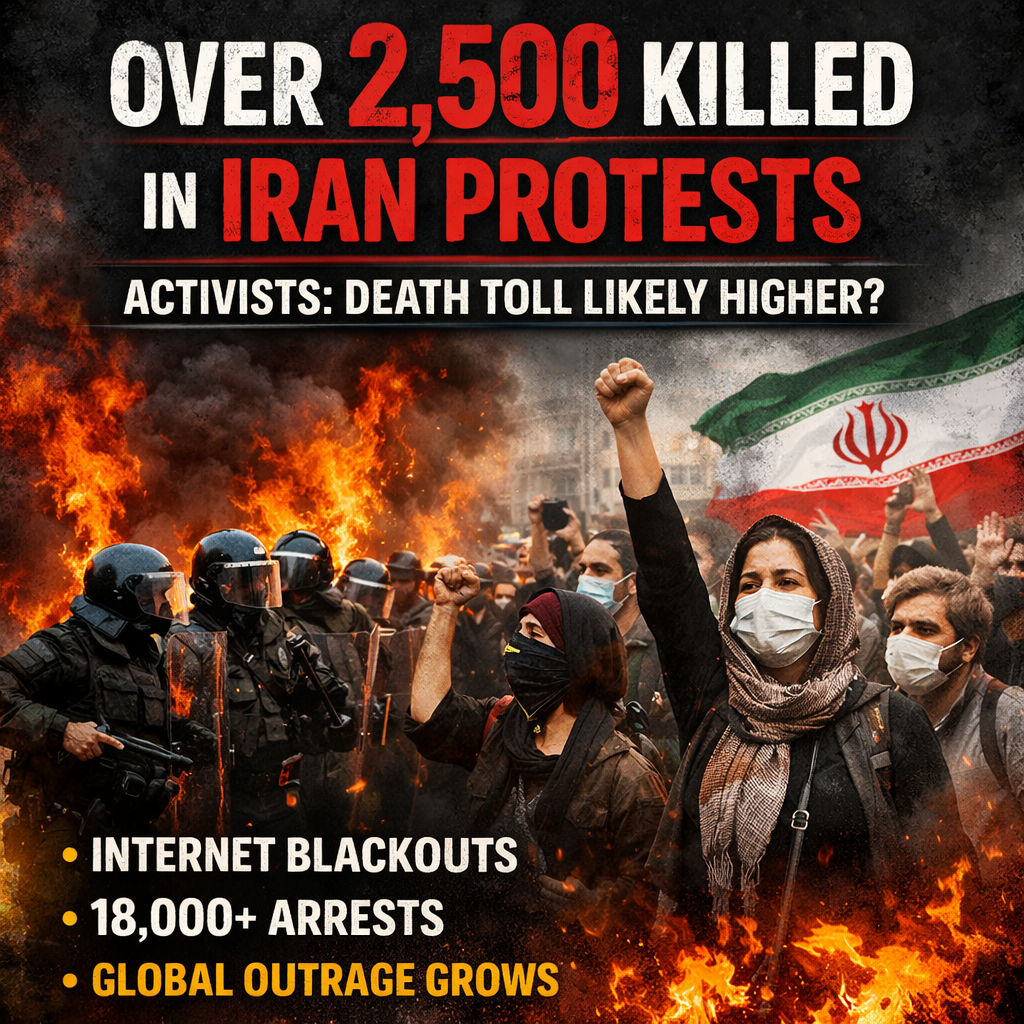
Activists monitoring nationwide unrest in Iran report that at least 2,571 people have been killed in the ongoing protests against the government’s crackdown, a figure some groups say is a conservative estimate amid intense information restrictions.
The protests, which began in late December 2025, were initially sparked by frustration over Iran’s worsening economic conditions. They have since escalated into widespread demonstrations against the country’s leadership, drawing comparisons to the scale of unrest last seen during major uprisings in Iran’s recent history.
Death Toll Figures and Source Discrepancies
According to the Human Rights Activists News Agency (HRANA)—a U.S.-based group that compiles reports from inside and outside Iran—the death toll has climbed to at least 2,571, including:
-
2,403 protesters
-
147 government-affiliated individuals
-
12 children and nine non-protesting civilians
More than 18,100 arrests have also been reported.
However, exact figures remain difficult to verify due to widespread communication blackouts and restricted media access inside Iran. Government figures released by Iranian officials have cited lower totals, while independent rights groups estimate that the true number may be even higher.
Communications Restrictions Hinder Outside Reporting
Until recently, Iran maintained a near-total internet and phone blackout, severely limiting outside access to real-time information from protest areas. Activists say that only in the past 24 hours have some mobile phone calls been permitted abroad, but internet access remains largely blocked.
The communications clampdown has made it nearly impossible for independent journalists and international agencies to confirm casualty numbers on the ground.
Global and U.S. Reactions
The intense crackdown has drawn international concern:
-
U.S. President Donald Trump publicly criticized Iranian authorities and urged protesters to “keep protesting” while warning of potential action if the violence continues.
-
Trump also canceled planned meetings with Iranian officials, citing the “senseless killing of protesters.”
European and other world leaders are also closely watching developments, with some calling for sanctions or diplomatic pressure on Iran to halt the violent repression.
What Sparked the Protests?
What began as demonstrations over economic hardship—including rampant inflation and declining living standards—quickly expanded into broader anti-government sentiment. Many protesters are calling for political change and reforms to Iran’s power structures.
Experts say the speed and scale of the protests reflect deep-rooted dissatisfaction and frustration among Iranians, especially the youth and urban populations.
Deadliest Unrest in Recent Years
If verified, this would represent one of the deadliest crackdowns in Iran in decades, challenging comparisons with the 2022 Mahsa Amini protests and signaling an escalation in state response to civil unrest.
Key Challenges for Reporting
-
Internet Blackouts: Continued restrictions make independent verification of fatalities extremely difficult.
-
State Media Silence: Iranian state media has offered limited death tolls, often framing casualties as “martyrs” without detailed breakdowns.
-
Conflicting Estimates: Different human rights groups and officials report varying figures ranging from several hundred to more than 2,500 deaths
Iran protests death toll surpasses 2,500 — Activists say number is conservative; communication blackouts and conflicting figures from authorities hinder verification. U.S. and global leaders voice concern as violence continues





Leave a Comment