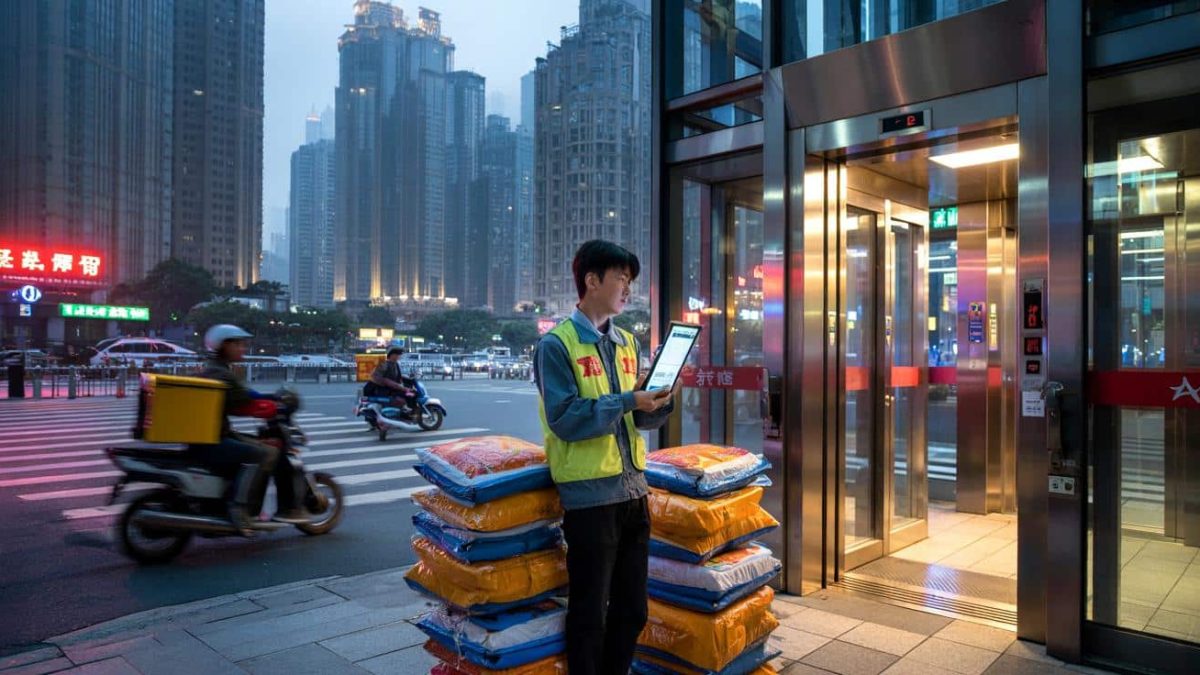
When Chinese cities began their vertical race toward the clouds, nobody anticipated the unconventional careers that would emerge. Yet here we are, in the age of supertall skyscrapers where a breed of fearless professionals has found their calling thousands of feet in the air. They are window cleaners, but not the kind you see in Western cities. These workers operate in an extreme niche, maintaining the glass facades of architectural giants that pierce China’s increasingly crowded skylines.
The Urban Vertical Revolution
China’s metropolitan landscapes have transformed dramatically over the past two decades. Cities like Shanghai, Shenzhen, and Guangzhou now feature dozens of supertall structures, with many exceeding 400 meters in height. These aren’t just buildings; they’re statements of economic power and technological achievement. The Burj Khalifa may hold the world record, but China hosts a significant portion of the planet’s tallest buildings, with more under construction each year.
This unprecedented vertical development has created infrastructure challenges that traditional maintenance methods cannot address. Standard window cleaning equipment maxes out at around 50 floors, leaving hundreds of meters of glass facade unattended. Dust, pollution, and weather create a grimy patina that obscures the carefully designed architectural statements these buildings represent. Someone needs to clean these windows, and conventional approaches simply won’t work.
When Traditional Methods Fall Short
Conventional window cleaning operations rely on hydraulic platforms, rope access teams, and building-integrated cleaning systems. These approaches work reasonably well for buildings up to 30 or 40 stories, but they encounter serious limitations at extreme heights. The wind speeds increase exponentially with altitude, making traditional platform work dangerous and often impossible. Equipment costs become astronomical, and insurance premiums reflect the genuine hazards involved.
Moreover, many of these supertall structures feature complex architectural elements—irregular shapes, protruding elements, curved surfaces—that resist standard cleaning methods. Architects have pushed creative boundaries, resulting in buildings that are stunning to behold but exceptionally challenging to maintain. The cleaning industry had to innovate or admit defeat.
The Birth of a Specialized Profession
Enter the specialized window cleaners who have developed techniques borrowed from mountain climbing, extreme sports, and industrial rope access work. These professionals undergo months of training that would seem excessive for a conventional cleaning job. They learn advanced rappelling techniques, master complex harness systems, and develop the psychological resilience required to work at dizzying heights for extended periods.
These workers typically operate in teams of three to four people. One person works on the facade while others manage ropes, equipment, and safety protocols from secured positions. The teams coordinate communication through headsets, monitoring weather conditions, equipment integrity, and physical condition throughout the workday. A single window cleaning job on a 400-meter building might take several weeks, requiring meticulous planning and perfect execution.
The Physical and Psychological Demands
The job description alone reveals its extreme nature: scaling glass facades while suspended by rope systems, often facing wind speeds that can exceed 80 kilometers per hour, temperatures that range from sweltering heat to freezing cold depending on the time of year. Workers must maintain focus despite the psychological pressure of being essentially dangling above a city containing millions of people.
Physical conditioning is paramount. Workers develop extraordinary core strength, grip endurance, and cardiovascular capacity. They must perform repetitive cleaning motions while suspended in a harness, which places immense strain on the legs, hips, and lower back. Injuries are occupational hazards, ranging from minor rope burns to catastrophic falls. The risk is never zero, despite the most rigorous safety protocols.
The psychological component cannot be overstated. Workers describe an intense period of adaptation, as the human brain gradually accepts the reality of working at these heights. Fear doesn’t disappear; rather, workers develop a compartmentalization technique that allows them to function effectively while maintaining healthy respect for the dangers. Meditation, visualization, and peer support systems help newcomers overcome the initial psychological shock.
Compensation and Career Prospects
Given the extreme nature of the work, compensation reflects the risk and specialized skills involved. High-altitude window cleaners in China’s major cities earn significantly more than conventional cleaners. Monthly salaries range from 15,000 to 30,000 yuan (approximately $2,200 to $4,400 USD), with experienced team leaders commanding premium rates. International assignments can push earnings even higher.
However, the career trajectory differs from traditional professions. Most workers remain in the field for 5 to 15 years before transitioning to less physically demanding roles, such as supervision or training. The cumulative physical toll—repetitive strain injuries, joint problems, and the psychological effects of prolonged extreme work—eventually limit career longevity.
Safety Innovations and Standards
The rapid expansion of this profession has driven innovations in safety equipment and protocols. Chinese manufacturers now produce specialized harnesses, rope systems, and anchoring devices specifically designed for extreme-height window cleaning. Building codes in major cities increasingly require permanent anchor points and safety systems built into new supertall structures, recognizing that these buildings will require specialized maintenance throughout their lifespan.
Industry organizations have emerged to establish training standards, certification processes, and safety guidelines. These organizations work with government regulators to ensure consistent standards across different regions and cities. The goal is to create a professionalized industry with recognized credentials and established best practices.
The Future of Extreme Maintenance Work
As China continues building even taller structures, the demand for specialized high-altitude workers will likely increase. Some experts predict that automation might eventually replace human window cleaners for routine cleaning tasks, utilizing robotic systems that could operate in conditions too dangerous for people. However, the irregular architectural features of many contemporary buildings suggest that human workers will remain necessary for many years.
This unexpected profession exemplifies how urbanization and architectural ambition create entirely new economic opportunities. What seemed impossible just decades ago—maintaining the glass facades of 400-meter buildings—is now accomplished regularly by skilled professionals who have adapted human capabilities to extraordinary circumstances.
China’s window cleaners represent a fascinating intersection of economic development, technological innovation, and human resilience. They work in an uncommon profession created by uncommon ambitions, proving that the limits of human capability continue expanding in unexpected ways.









Leave a Comment