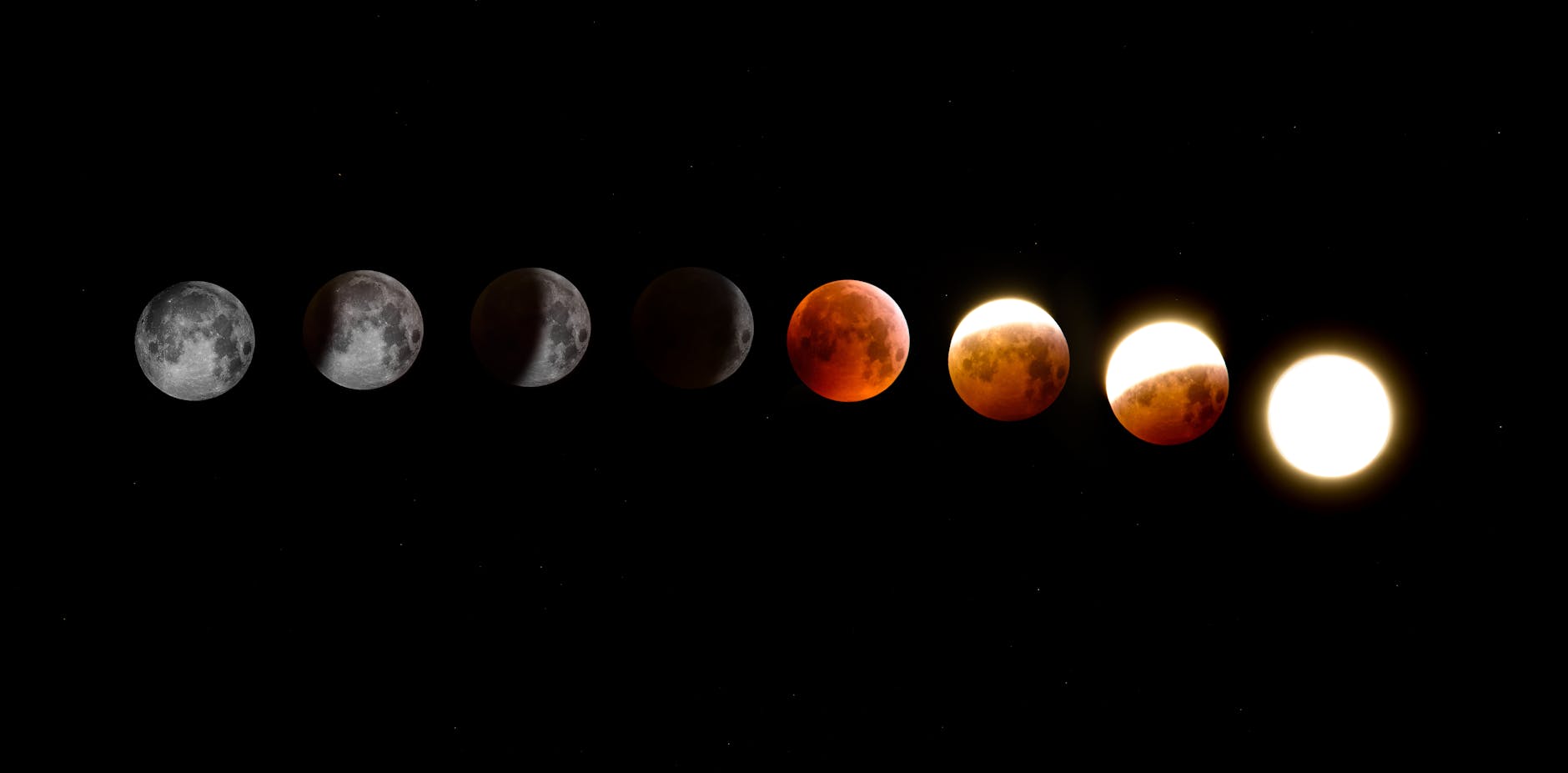
Picture a Tuesday morning in the year 2168. Children wake to a gradually darkening sky. Teachers wheel televisions into classrooms. Photographers check their equipment one final time. Across an enormous stretch of Earth’s surface, people pause their daily routines to witness something truly extraordinary: a solar eclipse so remarkably long that it will redefine our understanding of celestial mechanics and eclipse duration. This isn’t science fiction—it’s already scheduled, and the astronomical community is buzzing with anticipation.
The Event That Rewrites Eclipse Records
For centuries, humans have gazed upward during solar eclipses, marveling at the temporary darkness that sweeps across the landscape. Yet the eclipse approaching in the coming century promises to shatter all duration records. While typical total solar eclipses last between two and seven minutes, this forthcoming event will stretch considerably longer, with some projections suggesting durations approaching ten minutes or beyond in certain locations.
To understand why this eclipse will be extraordinary, we must examine the cosmic geometry that makes it possible. Solar eclipses occur when the Moon passes directly between Earth and the Sun, casting its shadow upon our planet’s surface. The duration of totality—when the Sun is completely blocked—depends on several factors: the Moon’s distance from Earth, Earth’s rotation speed, and the precise angle at which the Moon’s shadow traverses our planet’s surface.
When all these variables align perfectly, the result is an eclipse of remarkable length. The Moon, positioned at a specific distance from Earth, will appear just the right size to cover the Sun completely while moving slowly across our world’s surface. This rare geometric perfection is what will make the coming eclipse so exceptional.
Why Scientists Cannot Stop Talking About It
The astronomical community’s excitement isn’t merely romantic nostalgia for a spectacular natural phenomenon. Extended eclipse durations provide unprecedented scientific opportunities. During totality, researchers can observe the Sun’s corona—its outer atmosphere—in extraordinary detail. The longer the eclipse lasts, the more data scientists can collect about solar magnetic fields, solar prominences, and the complex physics governing our Sun’s behavior.
Climate researchers are equally intrigued. For those precious minutes of darkness, Earth’s atmosphere will cool noticeably. Instrumenting this extended period of dimmed sunlight will provide invaluable data about how quickly our planet’s atmosphere responds to sudden changes in solar radiation. Such information helps refine climate models and improves our understanding of atmospheric dynamics.
Additionally, the path of totality—the geographic region where observers will experience total eclipse conditions—will cover an enormous area. This breadth means that millions of people across multiple continents will have the opportunity to witness totality, rather than the typical scenario where eclipse paths are relatively narrow. The scientific instrumentation deployed across this vast region will generate unprecedented amounts of synchronized observational data.
A Timeline for Preparation and Wonder
Though more than a century separates us from this celestial event, preparation has already begun. Astronomers are calculating precise path predictions, determining which cities and regions will experience totality and for exactly how long. Engineers are designing specialized equipment that will withstand the demands of extended observations. Space agencies are considering whether satellite-based instruments should be deployed to complement ground-based observations.
Educational institutions are beginning to develop curricula around this event. Students born decades from now will grow up knowing that a spectacular eclipse awaits their generation. Some may even structure their careers around the opportunity to study it. Universities are already establishing research initiatives focused on understanding solar phenomena and developing observational techniques specifically suited for this extended eclipse.
International cooperation will be essential. Eclipse observations require coordination across borders, as the shadow path will cross multiple nations. Scientists from various countries are already establishing frameworks for data sharing and collaborative research. This eclipse will serve as a global scientific endeavor, uniting researchers across continents toward common observational goals.
The Extraordinary Darkness
When this eclipse occurs, observers in the path of totality will experience something profound. The gradual darkening—the partial phases—might last an hour or more before totality begins. The temperature will drop noticeably. The light will take on an otherworldly quality, with shadows becoming sharper rather than softer as the eclipse deepens. Birds will genuinely stop singing, confused by the sudden arrival of twilight when it should be midday.
During the extended minutes of totality, the solar corona will become visible to the naked eye—a remarkable sight that casual observers cannot fully appreciate without experiencing it. The day will transform into a genuine night, with stars and planets becoming visible despite the hour. The horizon will glow with the eerie light that occurs only during total solar eclipses.
For those outside the path of totality, a partial eclipse will still be observable, though less dramatic. But for those fortunate enough to position themselves within the totality zone, the experience will be transformative. Many people who witness total solar eclipses describe the moment as life-altering, profoundly connecting them to the cosmos.
Looking Forward to a Celestial Masterpiece
In an era of increased light pollution, climate uncertainty, and rapid technological change, the scheduled eclipse offers something increasingly rare: a guaranteed moment when millions of people worldwide will pause together to observe the natural universe. It’s a reminder that despite our technological sophistication, we remain inhabitants of a dynamic solar system governed by predictable celestial mechanics.
The longest solar eclipse of the century represents far more than an astronomical curiosity. It’s an opportunity for scientific discovery, a moment for global cooperation, and an event that will inspire countless individuals to look upward and contemplate their place within the cosmos. As the 22nd century approaches, humanity has the luxury of anticipation—knowing that an extraordinary spectacle awaits, and that when that Tuesday morning arrives, the entire world will pause as day briefly transforms into night.










Leave a Comment