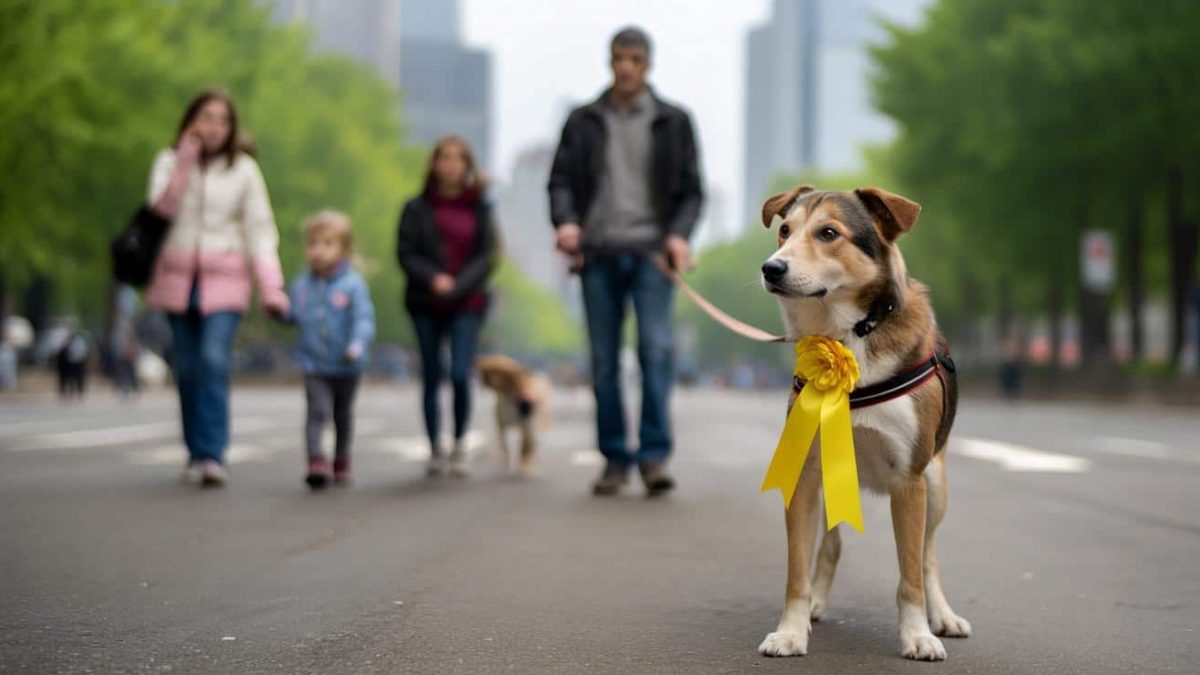
What looks like a simple ribbon tied to a leash is actually one of the most important safety signals in the dog world. Many pet owners remain completely unaware of what a yellow ribbon means, yet this small visual marker could be the difference between a peaceful park visit and a stressful or dangerous encounter. If you’ve ever noticed a golden or labrador retriever sporting a bright yellow accessory and wondered what it signified, you’re about to learn why this simple concept deserves everyone’s attention.
The Origin of the Yellow Ribbon Campaign
The yellow ribbon movement for dogs began in Sweden around 2012, created by Tone Fløgel, a dog trainer concerned about anxious and reactive dogs being approached by well-meaning strangers and their pets. What started as a local initiative has since become an international standard for communicating a dog’s emotional state and social needs. The concept is brilliantly simple: if a dog wears a yellow ribbon, please keep your distance.
Unlike breed-specific or size-based assumptions, the yellow ribbon system doesn’t judge a dog by appearance. A friendly-looking labrador might need space due to fear, aggression issues, or medical conditions. The ribbon eliminates guesswork and creates a universal language that transcends cultural or linguistic barriers. This grassroots solution has saved countless dogs from frightening or traumatic encounters in public spaces.
What the Yellow Ribbon Actually Means
When you see a yellow ribbon on a dog’s lead, harness, or collar, it signals that the dog requires space and should not be approached. This could mean several things depending on the individual dog. The dog might be recovering from surgery or illness and cannot handle excitement or physical contact. They might be in training for reactivity or aggression issues and are working on behavioral modification. Some dogs wearing yellow ribbons are anxious or fearful and experience stress when strangers or unfamiliar dogs approach them.
The beauty of the yellow ribbon system is that it doesn’t require anyone to know the specific reason. Respect the signal regardless of the underlying cause. A dog needing space is a dog needing space, period. This removes the burden from owners of having to explain their dog’s history, trauma, or behavioral challenges to every person they encounter.
Why This Signal Matters More Than You Think
Dog parks and public spaces bring together animals with vastly different temperaments, backgrounds, and experiences. Some dogs arrive well-socialized and confident, while others are there because they’re working through behavioral challenges with professional guidance. Without clear communication, innocent interactions can escalate quickly, causing injury, trauma, or worse.
For reactive dogs, even brief interactions with other dogs can trigger anxiety or aggressive responses, reinforcing their negative associations. This creates a cycle where the dog becomes increasingly difficult to manage, potentially leading to their isolation or, in severe cases, rehoming or euthanasia. A yellow ribbon helps prevent these negative experiences by creating a protective buffer.
Additionally, many dogs wearing yellow ribbons are undergoing professional training programs. Allowing random interactions undermines the trainer’s work and can set the dog’s progress back significantly. Respecting the ribbon means respecting the careful rehabilitation plan that could genuinely improve the dog’s quality of life.
Common Misconceptions About Yellow Ribbons
One widespread myth suggests that yellow ribbons only indicate dangerous dogs. This couldn’t be further from the truth. Many yellow-ribbon dogs are gentle, friendly animals dealing with anxiety rather than aggression. Some are elderly dogs recovering from procedures. Others are puppies still learning how to navigate social situations safely. The ribbon is purely about spatial boundaries, not character judgment.
Another misconception is that approaching slowly or from a distance somehow makes it acceptable. The point isn’t to approach cautiously—it’s to not approach at all. Even well-intentioned interactions can stress a dog who’s already feeling vulnerable. Some people believe their dog “just wants to say hello,” but that greeting could trigger an anxiety spiral for the yellow-ribbon dog.
What Responsible Dog Owners Should Do
If you see a dog wearing a yellow ribbon, the appropriate action is straightforward: keep moving. Don’t let your dog sniff the other dog, don’t attempt to pet them, and don’t assume the owner is being unfriendly by maintaining distance. In fact, owners of yellow-ribbon dogs appreciate when other people respect the signal without requiring explanation or conversation.
If your own dog approaches a yellow-ribbon dog, calmly and firmly redirect your pet back to you. This teaches your dog to respect boundaries and acknowledges the other owner’s efforts. If you’re at a park or trail and struggle to prevent your dog from approaching, that’s a sign you might need to work on recall training or choose quieter times and locations for walks.
Expanding the Conversation Beyond Yellow
While yellow is the most recognized color, some communities use other colors to indicate different needs. Red ribbons sometimes indicate aggression, blue ribbons may indicate foster dogs, and white ribbons can signify senior or deaf dogs. Check what’s standard in your area and teach your family to recognize these signals.
Beyond colored ribbons, observe other body language cues in dogs. Stiff posture, pulled-back ears, tucked tails, and closed mouths are all signs a dog wants space, whether or not a ribbon is present. The ribbon is simply a proactive way for owners to communicate these needs before negative situations develop.
Creating a Culture of Respect
For the yellow ribbon system to work effectively, it requires cultural shift. Dog owners must respect the signal unconditionally, and communities need awareness campaigns to ensure everyone understands what they’re seeing. Schools, veterinary clinics, and dog training facilities can all play roles in spreading this knowledge.
When you respect a yellow ribbon, you’re not just protecting that individual dog—you’re supporting their owner’s efforts and contributing to a safer environment for all dogs. You’re demonstrating that dog parks and public spaces can be welcoming without requiring every dog to be social with every other dog.
The Bottom Line
That bright yellow ribbon tied to a lead isn’t decoration or fashion statement. It’s a heartfelt request for space, a tool for preventing trauma, and a symbol of an owner’s commitment to their dog’s wellbeing. Recognizing and respecting this signal costs you nothing but a slight adjustment to your path and could mean everything to the dog wearing it. Next time you spot that yellow ribbon at the park, remember Sarah’s moment of realization and give the dog the gift of space.











Leave a Comment