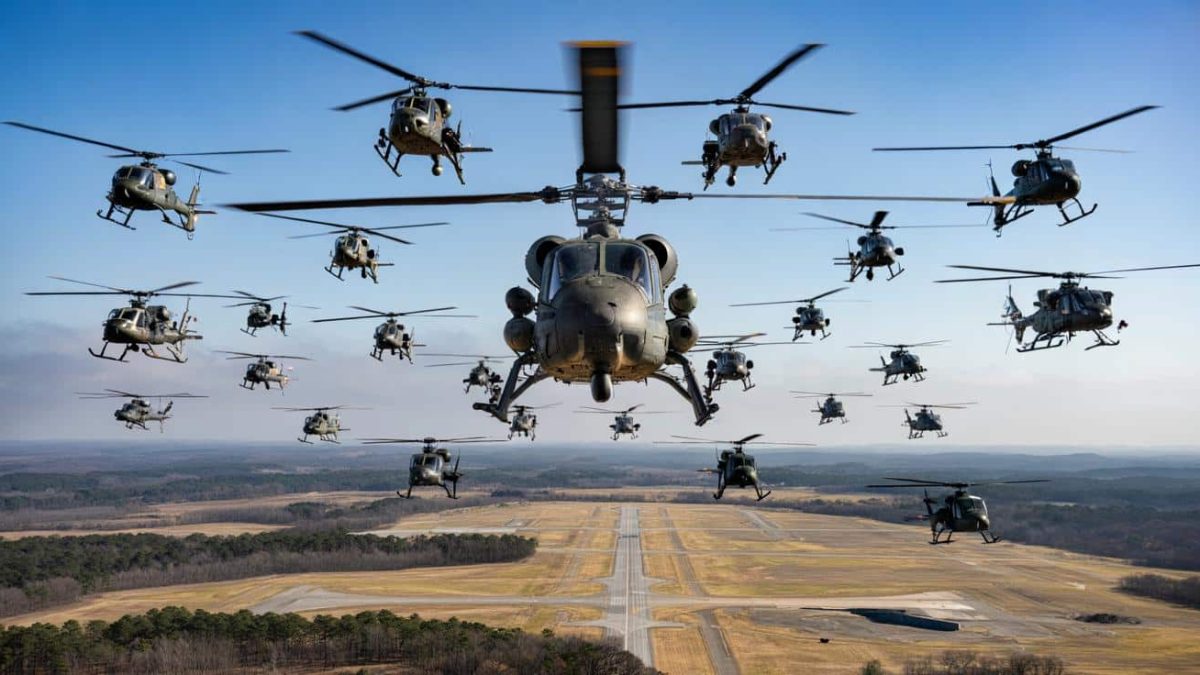
In an exceptional display of military coordination and technological capability, the United States armed forces recently orchestrated an operation that many defense analysts consider a watershed moment in modern warfare. On a single operational day, thirty-two helicopters took to the skies in perfectly synchronized maneuvers, creating an airborne armada that had never before been assembled in this manner. This achievement wasn’t merely a demonstration of numbers—it represented a complex convergence of advanced logistics, real-time communication systems, and decades of refined combat doctrine.
The Unprecedented Scale of the Operation
The deployment of thirty-two helicopters simultaneously across a contested region represented more than just a numerical accomplishment. Each aircraft required precise coordination with dozens of support personnel, sophisticated air traffic management systems, and flawless communication protocols. The sheer complexity of managing this many rotorcraft in the same operational theater cannot be understated. Pilots had to maintain specific altitude separations, coordinate entry and exit vectors, and ensure that weapons systems, fuel management, and personnel positioning aligned perfectly across all vessels.
To understand the magnitude of this achievement, consider that each helicopter platform carries its own crew, technical specialists, and support requirements. The logistical footprint of thirty-two simultaneous aircraft extends far beyond the flight deck or landing zones. Maintenance crews, fuel supply operations, ammunition handling, medical support, and intelligence personnel all had to function as a unified machine. This operational interdependence creates exponential complexity compared to smaller-scale deployments.
Technological Integration and Systems Management
Modern helicopter operations rely on integrated technology systems that would have seemed like science fiction mere decades ago. Each aircraft in this record-breaking formation maintained real-time communication with command centers, sister aircraft, and ground support elements. Advanced avionics packages provided pilots with unprecedented situational awareness, while GPS-guided navigation systems ensured that each helicopter remained precisely positioned within the formation parameters.
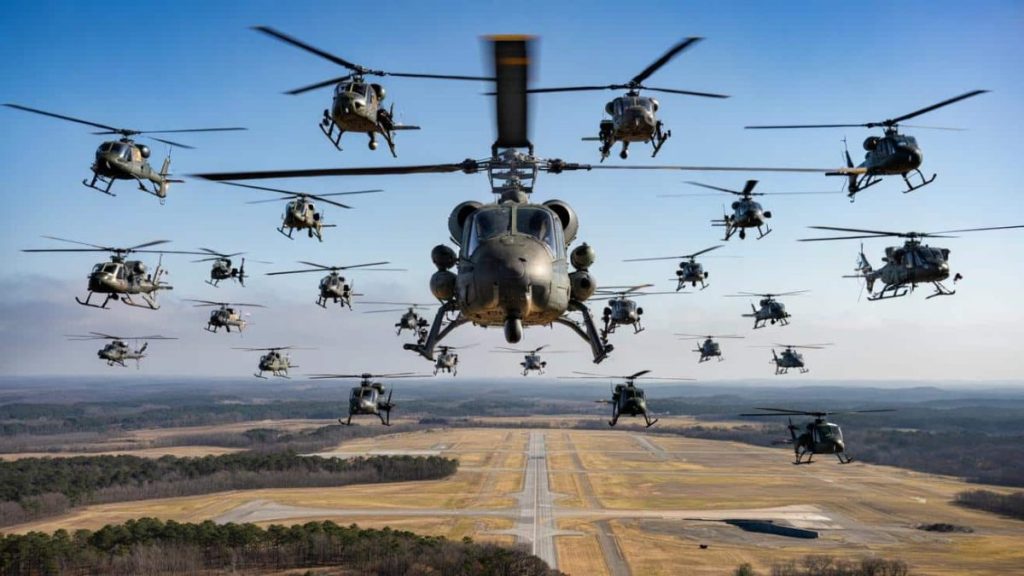
The tactical network infrastructure required to support this operation represents years of technological development and substantial investment in communications systems. Data links between aircraft, ground stations, and command centers created a digital nervous system that allowed split-second decision-making and adaptive tactics. This technological superiority has become a hallmark of American military operations, enabling smaller force concentrations to achieve disproportionate operational effects.
Operational Coordination and Strategic Significance
Conducting thirty-two helicopters in coordinated action requires more than technology—it demands exceptional leadership, training, and institutional knowledge. Flight commanders had to choreograph movements across multiple miles of airspace while maintaining combat readiness and situational awareness. The stratification of command authority, from individual aircraft pilots to flight leaders to overall operational commanders, had to function flawlessly to prevent confusion or safety incidents.
The strategic implications of this capability extend beyond the immediate operational zone. The ability to concentrate this much rotary-wing firepower on demand demonstrates deterrent value against potential adversaries. Many regional powers and near-peer competitors lack the logistical infrastructure, trained personnel, or technical systems to replicate such an operation. This capability gap translates directly into strategic advantage and reduced operational risk for American forces.
Personnel Training and Preparation
Behind every successful military operation stands months or years of rigorous training and preparation. The pilots who commanded these thirty-two aircraft represent the most elite aviators in the world, each accumulating thousands of flight hours and countless training scenarios. Beyond individual expertise, these aviators had to practice formation flying, tactical maneuvers, and emergency procedures until responses became instinctive.
Maintenance crews and support personnel underwent equally demanding preparation. Ground crews had to demonstrate the ability to service, fuel, and configure thirty-two aircraft within the timeframes required for operational deployment. Any single failure—a mechanical malfunction, a maintenance delay, a communication breakdown—could have compromised the entire operation. The institutional discipline and professional standards required to achieve this level of reliability reflect the very best of American military culture.
Historical Context and Evolution
The helicopter has evolved dramatically since its combat debut during the Korean War. From relatively simple platforms providing transport and observation, these aircraft have become sophisticated weapons systems incorporating advanced sensors, precision-guided weapons, and complex targeting systems. The trajectory of helicopter development in military service demonstrates the principle of continuous improvement and technological adaptation.
Previous records for helicopter deployment, while impressive in their own right, pale in comparison to this latest achievement. The progression from twenty helicopters to twenty-five to thirty-two represents not just incremental growth but a qualitative leap in operational capability. Each increase in scale brought with it new challenges in coordination, communication, and logistics that had to be overcome through innovation and persistence.
Implications for Future Military Operations
This record-setting operation provides valuable insights into the future trajectory of military aviation. It demonstrates that American forces possess the infrastructure, training, and technological systems to execute increasingly complex operations. As adversaries develop more sophisticated air defense systems and tactical capabilities, the ability to concentrate defensive assets and deliver overwhelming firepower becomes increasingly valuable.
The data gathered from this operation will inform future training regimens, doctrinal updates, and strategic planning. Military strategists and analysts will examine every aspect of the deployment—from fuel consumption rates to pilot performance metrics to system reliability under operational stress—to identify areas for improvement and optimization.
Conclusion: A Testament to Military Excellence
The deployment of thirty-two helicopters in coordinated operation stands as a testament to the professionalism, technological capability, and institutional excellence of American military forces. This record represents not merely an achievement to celebrate but a foundation for continued improvement and adaptation. As global military competition evolves, such capabilities will become increasingly important for maintaining strategic stability and protecting national interests.









Leave a Comment