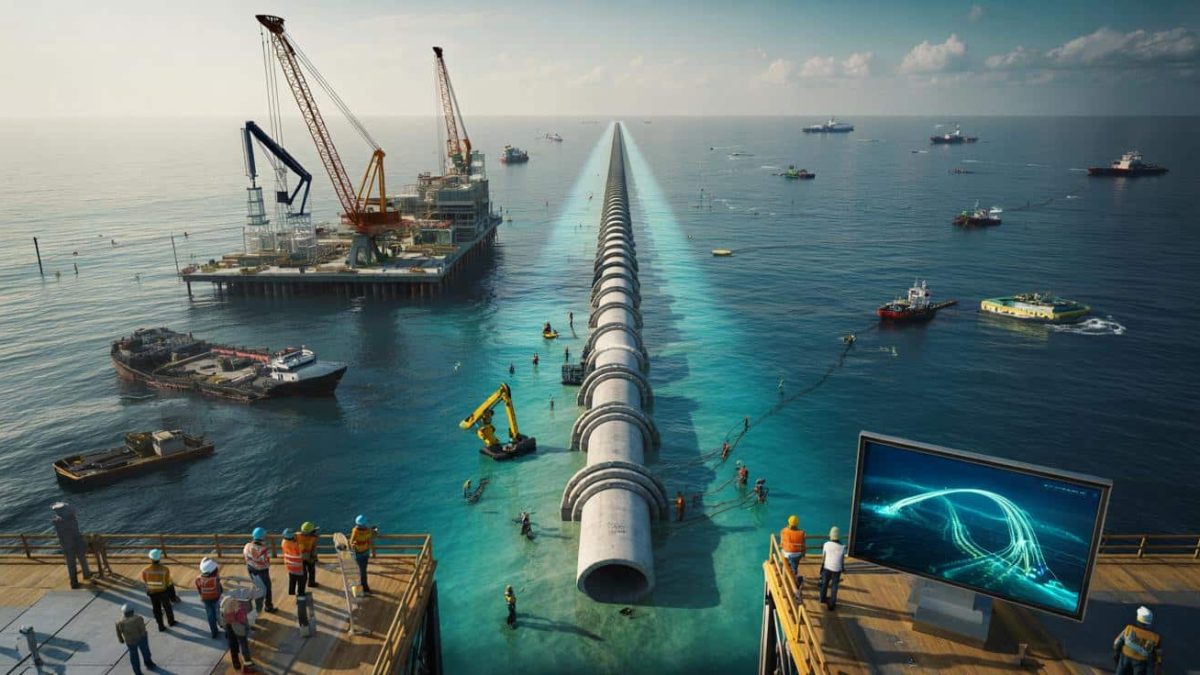
For generations, visionaries and engineers have pondered an audacious question: what if the world’s greatest cities could be connected without stepping foot on an airplane? The answer is no longer confined to boardroom sketches and theoretical blueprints. Construction has officially begun on a revolutionary underwater rail corridor that will fundamentally transform international transportation and connectivity.
A Vision Becomes Reality
What was once dismissed as an impossible dream has evolved into humanity’s most ambitious infrastructure undertaking of the 21st century. The underwater rail network represents more than just a transportation solution—it embodies our collective determination to overcome geographical barriers and create seamless connections between distant continents. Engineers, architects, and visionary planners have spent decades refining the concept, conducting extensive geological surveys, and developing cutting-edge technologies specifically designed for the extreme conditions found thousands of meters beneath the ocean surface.
The project’s formal commencement marks a pivotal moment in global infrastructure development. Multiple international consortiums have united their expertise, financial resources, and technological capabilities to bring this monumental vision to fruition. This collaborative approach ensures that no single nation bears the enormous responsibility alone, while simultaneously pooling the world’s finest engineering talent.
Technical Innovation at Unprecedented Depths
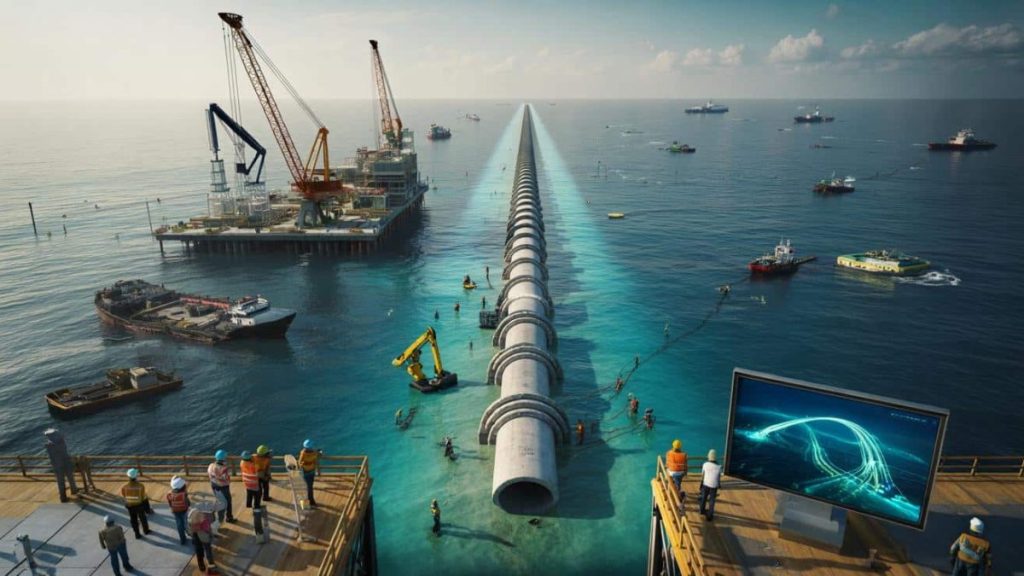
The engineering challenges associated with constructing tunnels at such extreme depths have necessitated revolutionary advances in multiple technological domains. Specialized tunnel-boring machines, specifically engineered to operate under crushing pressures and corrosive saltwater environments, will excavate through bedrock thousands of meters below the ocean floor. These machines represent a leap forward in construction technology, featuring enhanced pressure compensation systems, advanced materials resistant to corrosion, and autonomous navigation capabilities.
The tunnel’s structural integrity depends on innovations in submarine engineering and materials science. Engineers have developed reinforced concrete formulations and titanium-enhanced steel compounds that withstand the immense pressure differentials and saltwater exposure. Ventilation systems operate on principles adapted from deep-sea submersible technology, ensuring safe and breathable environments for both construction workers and future passengers.
Safety mechanisms incorporated throughout the tunnel system include multiple redundant pressure regulation stations, emergency escape routes designed at regular intervals, and real-time monitoring systems that track structural integrity and environmental conditions. These comprehensive safety protocols reflect lessons learned from decades of submarine exploration and deep-sea research.
Environmental Considerations and Sustainable Design
The project developers have prioritized environmental stewardship throughout the planning and construction phases. Extensive biological surveys mapped existing marine ecosystems along the proposed route, ensuring minimal disruption to underwater habitats and migration corridors. The construction methodology incorporates noise reduction technologies to prevent acoustic disturbance to marine life, and sediment management protocols protect water quality during excavation operations.
The completed rail system will operate using renewable energy sources, with regenerative braking systems capturing kinetic energy during train deceleration. Solar arrays and wind turbines positioned at terminal stations will power the extensive electrical infrastructure required for train propulsion and station operations. This commitment to sustainability positions the underwater rail network as a genuinely green transportation alternative to aviation and maritime shipping.
Transforming Global Commerce and Travel
The implications for international commerce and human mobility are extraordinary. Transport companies anticipate shipping goods between continents in a fraction of the time currently required through conventional maritime routes. Manufacturing hubs can redistribute production across multiple continents while maintaining tight supply chain efficiency. The reduction in shipping costs and transit times will ripple through global economies, potentially reshaping entire industries.
For passengers, the prospect of boarding a train in one continent and arriving in another within hours represents a paradigm shift in travel expectations. Business professionals could commute between major financial centers without the fatigue associated with long-haul flights. Cultural exchange and tourism will accelerate as accessibility between distant regions improves dramatically.
Construction Timeline and Phased Implementation
The project architects have developed a carefully sequenced construction timeline spanning fifteen years. Initial phases focus on establishing construction staging areas, deploying tunnel-boring equipment, and creating access shafts at strategic locations. Later phases involve installing rail infrastructure, electrical systems, and safety equipment within the completed tunnels. Extensive testing protocols will precede any passenger operations, ensuring absolute safety and reliability.
Multiple construction teams will work simultaneously across different sections, maximizing efficiency while maintaining rigorous quality control standards. Advanced project management software tracks every component and system, ensuring coordination among thousands of workers across multiple continents.
Economic Impact and Job Creation
The construction initiative will generate hundreds of thousands of employment opportunities across engineering, construction, manufacturing, and support services. Nations along the route anticipate significant economic stimulus through direct employment, supply chain development, and service sector growth. Universities worldwide are expanding engineering curricula to prepare the specialized workforce required for this unprecedented undertaking.
Upon completion, the operational phase will sustain permanent employment for tunnel maintenance crews, railway operators, station personnel, and technological specialists. Regional economies near tunnel terminals will experience transformation as these locations become major transportation hubs.
Looking Forward: A Connected World
The underwater rail tunnel project represents humanity’s determination to overcome natural barriers and create unity through infrastructure. As construction progresses and engineering challenges are systematically resolved, this ambitious vision grows increasingly tangible. Future generations will reflect on this moment as the beginning of a new era in global connectivity, remembering when we dared to imagine and construct the seemingly impossible beneath the world’s oceans.









Leave a Comment