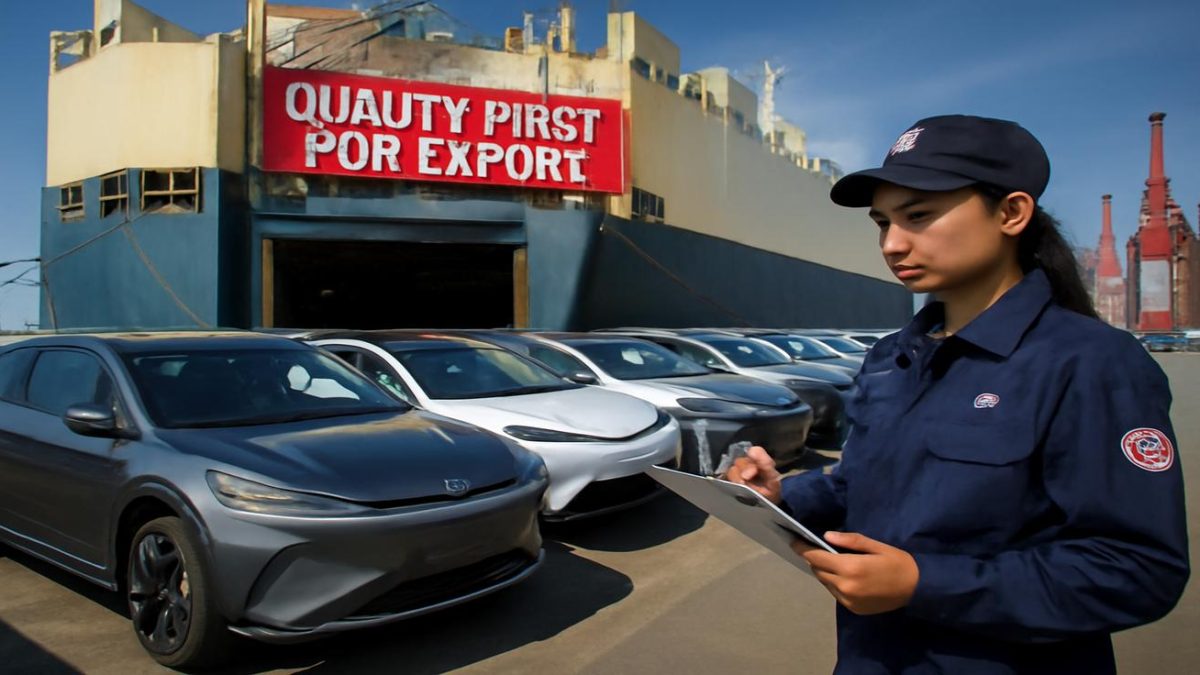
The Chinese automotive industry stands at a crossroads. For decades, vehicles bearing Chinese manufacturing stamps arrived at European ports with an unmistakable stigma attached. Cautious buyers questioned durability. Repair shops braced for complications. The reputation persisted, seemingly immovable. Now, Beijing has decided enough is enough.
The Long Shadow of Perception
The struggle with international perception hasn’t happened overnight. Chinese automakers entered the global market during a period when “made in China” carried connotations of affordability over quality. Early entrants focused on price competitiveness, sometimes compromising on durability, safety features, and long-term reliability. This strategy, while commercially viable in emerging markets, created lasting impressions among discerning European consumers who valued engineering precision and heritage.
What made matters worse was the spare parts ecosystem. Buyers discovered that procuring replacement components for Chinese vehicles could be frustratingly difficult. Dealership networks remained sparse in many European regions. Import processes for parts dragged on. Mechanics unfamiliar with Chinese vehicle architectures struggled to service them efficiently. These practical challenges reinforced negative narratives, transforming casual skepticism into institutional doubt.
The reputational damage extended beyond individual purchase decisions. Fleet managers hesitated to incorporate Chinese vehicles into corporate portfolios. Insurance companies approached them cautiously. Government procurement offices overlooked them in favor of established brands. The perception problem had evolved into a structural market barrier.
Strategic Shift: Quality Over Quantity
Recent announcements from Chinese regulatory authorities suggest a fundamental recalibration of export strategy. Rather than flooding international markets with volume, Beijing is implementing comprehensive quality assurance protocols. These measures target two specific vulnerabilities that plagued previous Chinese exports: manufacturing defects and inadequate aftermarket support systems.
The new framework establishes baseline quality thresholds that vehicles must meet before receiving export authorization. This isn’t merely regulatory theater. Manufacturers face genuine penalties for attempting to export substandard products. Financial incentives are being restructured to reward quality achievement rather than pure production volume. Government backing for export financing increasingly depends on meeting these stringent standards.
The Spare Parts Revolution
Perhaps most significantly, the new policy directly addresses the spare parts supply chain—historically the Achilles heel of Chinese vehicle exports. Export-destined vehicles now require manufacturers to establish comprehensive parts distribution networks before market entry. This means warehouses strategically positioned throughout receiving regions, supply agreements with authorized dealers, and digital inventory systems enabling rapid component sourcing.
Chinese manufacturers are investing heavily in creating parallel service infrastructure. Rather than relying on existing repair shops to handle unfamiliar vehicle architectures, companies are training technician networks and establishing dedicated service centers. Some brands are partnering with established European service chains, leveraging existing trust while introducing their vehicles through familiar channels.
The digitalization of parts tracking deserves particular attention. Modern supply chain software now enables Chinese manufacturers to predict component demand, maintain optimal inventory levels, and coordinate international shipping efficiently. What once required weeks of negotiation now takes days. This logistical transformation removes a major friction point that previously deterred European buyers.
Market-Specific Customization
Beijing’s approach reflects sophisticated market segmentation rather than one-size-fits-all thinking. Different European markets present distinct challenges and opportunities. Scandinavian countries prioritize environmental specifications and winter performance. Southern European markets emphasize design aesthetics and fuel efficiency. Eastern European regions focus on durability and cost-effectiveness.
Chinese manufacturers now adapt vehicle specifications to regional preferences before export, rather than shipping generic models requiring extensive customization. Testing occurs in climate-specific conditions. Compliance certifications precede shipment rather than following it. Design elements incorporate local aesthetic preferences established through market research.
Building Trust Through Transparency
Reputation recovery requires more than quality improvements—it demands transparency. Chinese manufacturers are increasingly publishing detailed specification documents, warranty information, and maintenance schedules available in local languages across European markets. Some brands now offer extended warranties specifically targeting skeptical European buyers, essentially betting on their improved quality standards.
Third-party testing and certification have become standard practice. Independent automotive research organizations now evaluate Chinese vehicles using identical criteria applied to established competitors. When these evaluations yield positive results—increasingly common—they provide credible validation that marketing departments alone cannot manufacture.
Economic Implications
This quality-focused strategy carries economic implications extending beyond reputational rehabilitation. Higher manufacturing standards increase production costs. Establishing spare parts infrastructure requires capital investment. Building service networks demands ongoing operational expense. These investments reduce short-term profitability but create sustainable competitive advantages.
The strategy also reflects confidence in Chinese manufacturing capabilities. Modern Chinese automotive facilities rival global standards for precision, automation, and quality control. The previous quality problems reflected choice rather than capability—deliberate cost-cutting to maximize profit margins. Current investments suggest manufacturers now believe long-term market penetration justifies quality investments.
Global Ramifications
China’s shift toward premium exports will reshape global automotive competition. Rather than competing primarily on price, Chinese manufacturers increasingly target market segments emphasizing reliability, technology integration, and customer service. This repositioning forces established competitors to compete on dimensions beyond heritage and brand recognition.
European manufacturers cannot simply rest on historical advantages. Chinese companies are investing heavily in electric vehicle technology, autonomous driving systems, and digital connectivity—areas where traditional manufacturers sometimes lag. Quality improvements combined with technological innovation create formidable competition.
The Long Road Ahead
Overcoming decades of reputational damage requires sustained effort. Single policy announcements, however well-intentioned, won’t instantly transform buyer perceptions. European consumers maintain institutional skepticism shaped by past experiences. Changing minds requires consistent delivery of superior products over years, not months.
Manufacturers must navigate the paradox of premium positioning while maintaining competitive pricing—the traditional Chinese automotive advantage. Balancing these objectives requires operational excellence and efficient production that previous cost-cutting approaches never necessitated.
Beijing’s decision to ban low-quality exports and require comprehensive spare parts infrastructure signals genuine strategic commitment to rehabilitation. Whether this commitment translates into measurable market success depends on execution excellence, sustained investment, and the patience required for international opinion to shift. The narrative surrounding Chinese automobiles may finally be changing—but only if manufacturers maintain unwavering dedication to quality standards in years ahead.










Leave a Comment