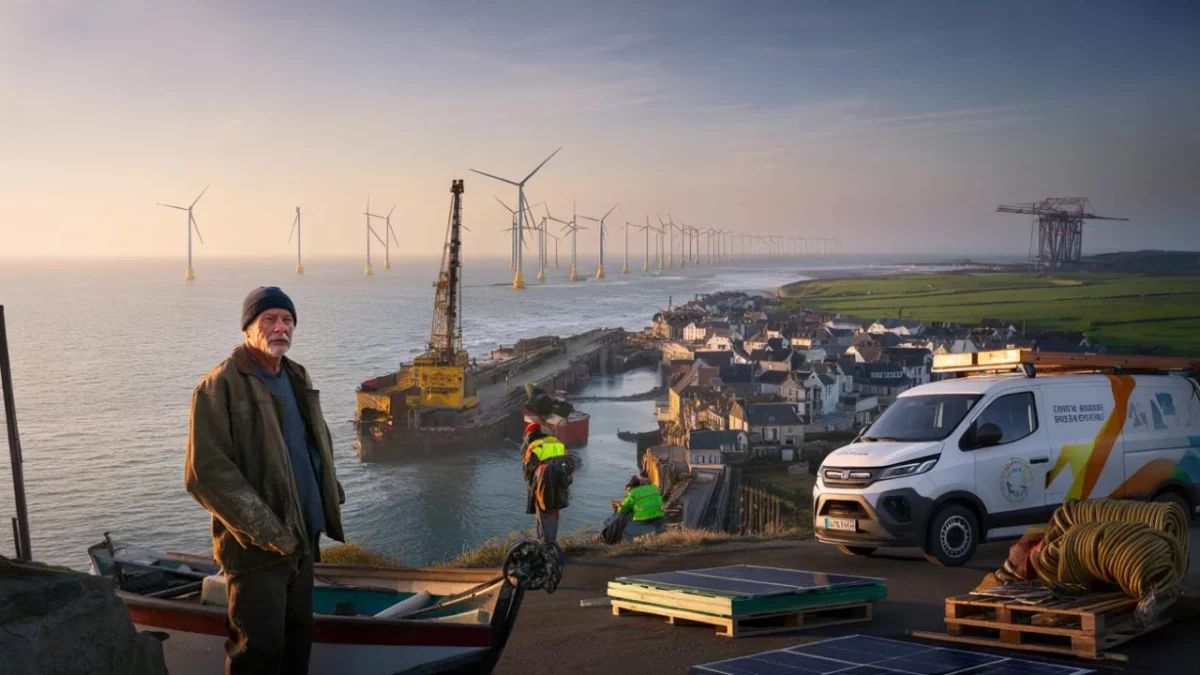
The European energy sector stands on the brink of transformation, and France is positioned to lead this seismic shift. While neighboring nations pursue incremental progress in renewable energy development, France has set its sights on a far more aggressive target: tripling its renewable energy capacity to become one of Europe’s most impressive clean energy performers. This isn’t merely another policy announcement—it represents a fundamental reimagining of how France will power its economy, industries, and homes for generations to come.
The Strategic Imperative Behind France’s Renewable Push
France’s commitment to accelerating renewable energy capacity stems from multiple converging pressures and opportunities. The European Union’s increasingly stringent climate directives demand that member states substantially increase their clean energy portfolios. Simultaneously, volatile energy markets and geopolitical uncertainties surrounding traditional energy supplies have created urgency around energy independence. France recognizes that renewable energy isn’t just an environmental imperative—it’s an economic and strategic necessity.
The nation’s existing nuclear fleet, while providing substantial low-carbon electricity, cannot single-handedly meet France’s growing energy demands or satisfy European climate commitments. Renewables offer the flexibility, scalability, and innovation potential that modern energy systems require. By tripling renewable capacity, France can diversify its energy mix, reduce vulnerability to external shocks, and position itself as a technology leader in clean energy solutions.
The Scale of Ambition: What Tripling Means
To understand the magnitude of France’s renewable energy acceleration, we must first grasp the current baseline. France’s existing renewable capacity, while respectable, remains modest compared to the nation’s total energy generation and relative to other European countries with extensive wind and solar programs. Tripling this capacity would fundamentally transform France’s energy landscape within a decade.
This expansion encompasses multiple renewable technologies, with wind power and solar energy leading the charge. Onshore wind development would accelerate dramatically, capitalizing on France’s diverse geography and wind resources across Brittany, the Atlantic coast, and inland regions. Solar deployment would surge in both utility-scale installations and distributed residential systems. Additionally, France would strengthen its position in emerging technologies like offshore wind, floating solar arrays, and advanced energy storage systems.
Infrastructure Investment and Industrial Transformation
Tripling renewable capacity requires unprecedented investment in grid infrastructure, manufacturing facilities, and distribution networks. France is strategically positioning itself not merely as a consumer of renewable energy technology but as a manufacturing hub for Europe. New factories will produce solar panels, wind turbine components, and battery systems, creating substantial employment opportunities across the country.
This industrial transformation extends beyond hardware manufacturing. France’s engineering expertise, research institutions, and technical workforce are mobilizing to develop next-generation renewable technologies. Universities and research centers are expanding programs in renewable energy engineering, grid modernization, and energy storage solutions. This vertical integration—from research through manufacturing to deployment—strengthens France’s competitive advantage in the European energy sector.
Grid Modernization: The Invisible Infrastructure Challenge
While solar panels and wind turbines capture public attention, the true complexity of France’s renewable acceleration lies in grid infrastructure. Modern renewable energy systems are intermittent by nature, requiring sophisticated management systems, demand response mechanisms, and substantial energy storage capacity. France’s existing grid, optimized for centralized nuclear power generation, must evolve into a dynamic, distributed energy network.
Smart grid technologies will enable real-time balance between generation and consumption. Advanced weather forecasting systems will predict renewable output with increasing accuracy. Battery storage facilities, both at grid scale and distributed throughout the network, will buffer fluctuations. Vehicle-to-grid technologies will leverage electric vehicle batteries as flexible storage assets. These interconnected systems represent the true infrastructure backbone of renewable energy acceleration.
Regional Deployment and Local Communities
France’s renewable energy expansion isn’t concentrated in a single region. Instead, the strategy emphasizes distributed deployment that leverages each region’s natural resources and industrial capacity. Coastal and Atlantic regions will lead in offshore wind development. Southern and central regions with superior solar resources will host utility-scale photovoltaic installations. Agricultural regions will integrate agrivoltaic systems, combining farming with solar energy generation, creating dual-use landscapes.
This distributed approach creates local economic benefits, with communities participating in renewable energy projects and sharing financial returns. Regional governments are developing expertise in renewable energy project management, creating career pathways for skilled workers throughout France’s diverse regions.
Timeline and Milestones for Achievement
France’s renewable energy acceleration follows a structured timeline with intermediate milestones. Initial phases prioritize fast-deployment solar projects and streamlined onshore wind development. Regulatory frameworks are being simplified to accelerate permitting processes that previously delayed projects. Subsequent phases introduce more complex infrastructure projects, including offshore wind farms requiring advanced engineering and substantial capital investment.
The entire acceleration plan targets completion within the next decade, though key capacity increases will materialize within five years. This aggressive timeline reflects the political commitment and resource allocation dedicated to this transformation. Unlike historically incremental energy transitions, France’s approach acknowledges the urgency of climate change and energy security imperatives.
European Leadership and Competitive Positioning
By tripling renewable capacity, France elevates itself into Europe’s renewable energy elite. This positions the nation competitively in an increasingly important global market for clean energy technology and expertise. French companies, institutions, and professionals will command premium positions in European and international projects. Export opportunities expand for French renewable technology, engineering services, and technical expertise.
Furthermore, France’s success generates demonstration effects across Europe. Neighboring nations observing successful renewable acceleration may accelerate their own programs, creating broader regional momentum toward decarbonization.
Looking Forward: The Transformation Ahead
France’s commitment to tripling renewable energy capacity represents more than incremental progress—it signals a civilizational shift in how the nation produces, distributes, and consumes energy. This transformation creates opportunities for innovation, employment, and technological leadership while addressing climate imperatives and energy security concerns.
The road ahead involves technical challenges, infrastructure complexity, and substantial capital requirements. However, France’s strategic positioning, technical expertise, and political commitment suggest this ambitious target is achievable. Within this decade, Europe may witness France emerge as a renewable energy powerhouse, fundamentally redefining the continent’s clean energy landscape and demonstrating that bold climate action and economic prosperity can advance together.








Leave a Comment