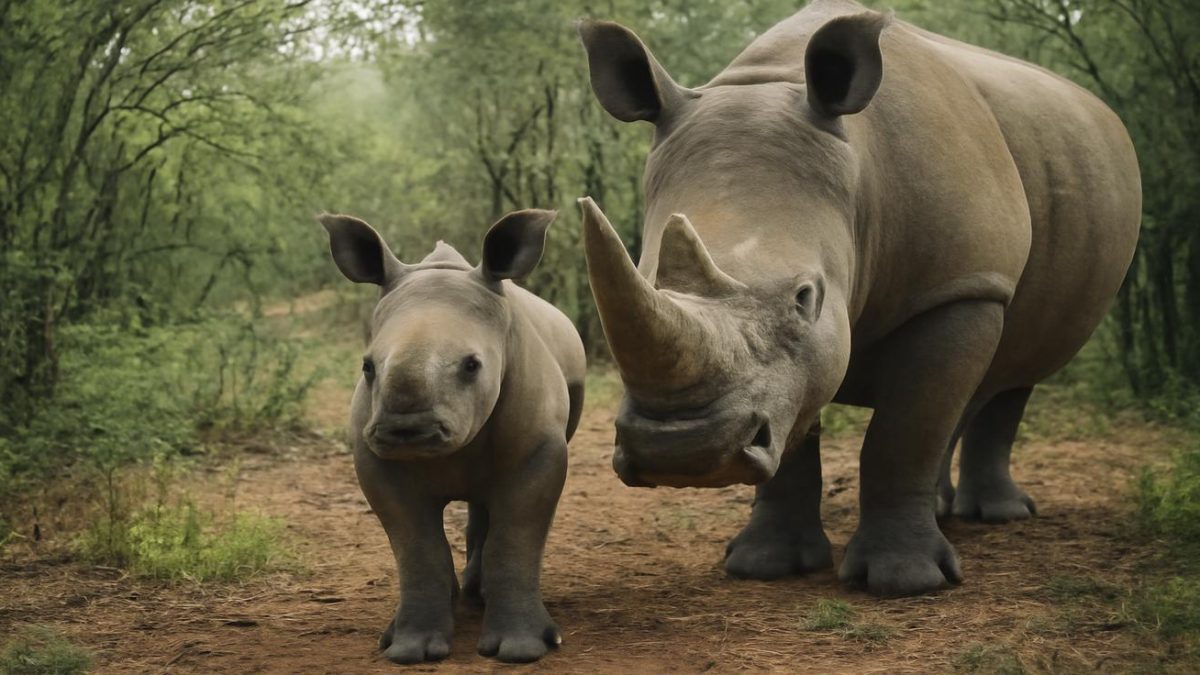
The moment that changed everything happened on an ordinary Tuesday morning in a remote forest sanctuary. A seasoned ranger, whose weathered face told stories of decades spent protecting vulnerable wildlife, stumbled upon something extraordinary nestled beneath a canopy of ancient trees. What began as a routine patrol became the most significant wildlife discovery in modern conservation history—a discovery that would rewrite the narrative of an entire species.
A Century of Silence Broken
For over one hundred years, the forests had remained quiet in one crucial respect. The species in question had not successfully reproduced in its natural habitat since the early twentieth century. Scientists, conservationists, and wildlife enthusiasts had watched helplessly as the population dwindled, maintained only through carefully controlled breeding programs in protected facilities far removed from the wild ecosystems these creatures were meant to inhabit.
The extinction of natural breeding represents one of the most devastating consequences of human interference with wildlife. When a species loses the ability to reproduce in its native environment, it loses more than just numbers—it loses its identity, its ecological role, and its connection to the landscape that shaped its evolution. The absence of new generations born under open skies meant that each passing year represented another chapter in a story of decline.
Yet persistent conservation teams refused to accept this narrative as inevitable. Through patient work, innovative techniques, and unwavering commitment, they engineered conditions they believed might support natural reproduction once again. The odds, however, remained staggeringly against them.
The Groundwork: Decades of Dedicated Effort
The journey to this singular moment began decades earlier, when a coalition of international conservation organizations recognized that the species faced not merely decline but potential total extinction. Rather than resign themselves to managing a population solely through human intervention, these visionaries set themselves an ambitious goal: restore the species to self-sustaining wild populations.
This mission required an extraordinary convergence of scientific expertise, financial resources, and political will. Habitat restoration projects spanned thousands of acres, recreating the ecological conditions that had vanished as human development encroached on wild spaces. Teams of ecologists worked meticulously to understand the specific environmental requirements of the species—the particular plants it required, the water sources it preferred, the climate conditions necessary for survival and reproduction.
Simultaneously, geneticists carefully managed breeding programs to maximize genetic diversity while minimizing the inbreeding that threatens small populations. Every individual born in captivity was tracked, documented, and evaluated for eventual release into the wild. The meticulous record-keeping alone would fill volumes, representing an extraordinary investment in understanding each animal’s lineage, health, and potential contribution to species recovery.
Protected release zones were established where animals could acclimate to wild conditions while remaining monitored by research teams. These transitional spaces allowed individuals to relearn the behaviors their captive-bred ancestors had lost—hunting, foraging, social interaction, and crucially, the complex mating behaviors necessary for successful reproduction.
The Moment of Discovery
When the ranger discovered the newborn, initial reactions centered on disbelief. The creature showed all the characteristics of a natural birth—presence of placental tissue, behavioral patterns consistent with immediate post-natal care, and most importantly, evidence that it had been born to a wild mother within the protected sanctuary rather than in captivity.
The discovery triggered an immediate cascade of activity. Veterinary teams rushed to the location to document the mother and infant without disturbing them more than absolutely necessary. Genetic samples were collected to confirm lineage and establish with certainty that this was indeed a naturally conceived offspring. News traveled through conservation networks globally, and what began as local excitement rapidly became an international celebration.
The birth itself was momentous, but the symbolic weight of the discovery extended far beyond the single animal. It represented validation of an entire approach to conservation—one that refused to accept extinction as inevitable, one that invested tremendous resources in restoring ecological systems rather than simply managing decline.
Why This Moment Matters
The appearance of a naturally born offspring transforms conservation from an exercise in preservation to one of genuine restoration. A species maintained only through human intervention remains forever dependent, forever vulnerable to institutional failure or funding disruption. A species that reproduces naturally has reclaimed its fundamental biological autonomy.
This success story offers profound lessons for conservation efforts worldwide. It demonstrates that even when species have been driven to the brink of extinction, recovery remains possible with sustained commitment and adaptive management strategies. It shows that ecological restoration can succeed if we’re willing to invest the time, resources, and expertise required.
The birth also highlights the interconnectedness of environmental challenges and solutions. Habitat restoration, climate stabilization, international cooperation, and scientific innovation all converged to create the conditions necessary for this species to reclaim its place in nature.
Looking Forward: Hope and Ongoing Work
While this single birth represents a remarkable milestone, conservationists emphasize that the work is far from complete. A species truly recovers only when populations reach sustainable numbers and demonstrate genetic health across multiple generations. One newborn, however significant symbolically, cannot guarantee long-term survival.
Nonetheless, this discovery offers something equally valuable as numerical success: it provides hope. In an era when environmental news often focuses on losses and declining populations, the emergence of a healthy newborn demonstrates that recovery is possible. It inspires continued investment in conservation efforts and validates the patience and persistence required for meaningful environmental restoration.
The forest ranger who made the discovery—whose astonished face reflected the emotional weight of that moment—became an unlikely symbol for an entire conservation movement. His discovery reminds us that nature, given the opportunity and protection it requires, possesses remarkable resilience and capacity for renewal.
As conservation teams continue monitoring this individual and the broader population, they carry forward the work begun a century ago. With each passing season, each additional birth represents another affirmation that even the most ambitious conservation goals remain achievable when humanity commits to protecting the wild world.










Leave a Comment