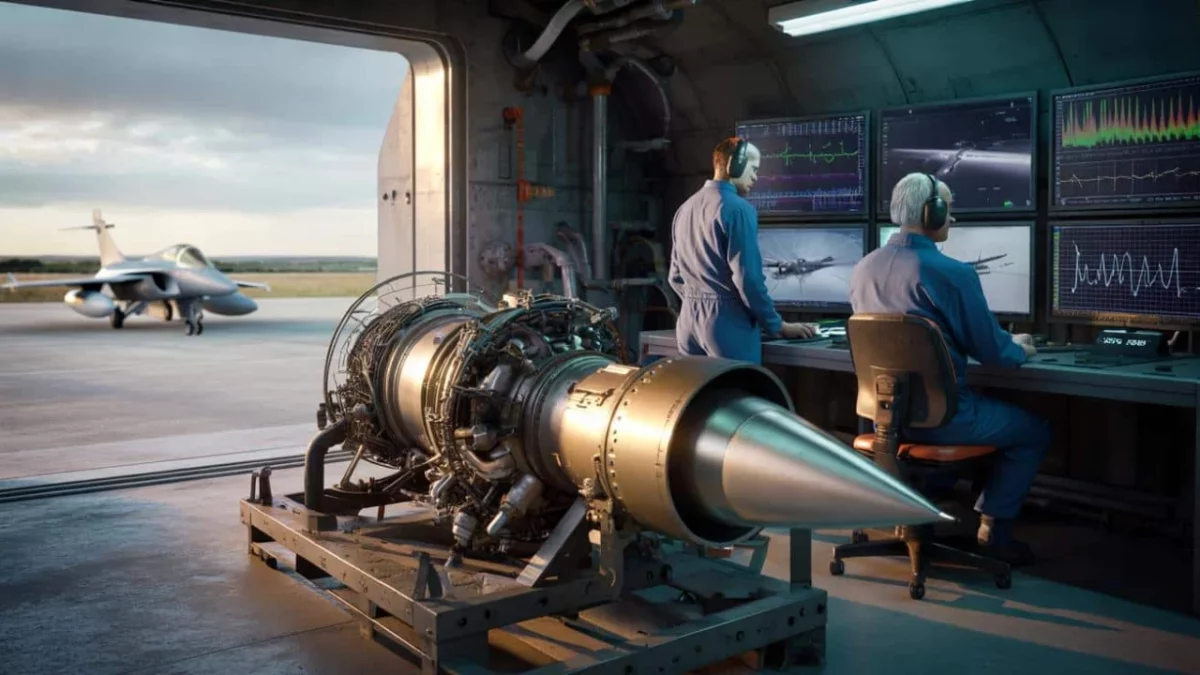
The global defense landscape has undergone dramatic shifts over the past three decades, with most nations consolidating their military-industrial capabilities through international alliances and partnerships. Yet one European country has defied this trend entirely, maintaining and strengthening its independent capacity to engineer some of the world’s most technologically demanding components: fighter jet engines. France’s achievement in this domain represents far more than a technical accomplishment—it embodies a strategic commitment to maintaining genuine national sovereignty in the aerospace sector.
The Quiet Revolution in European Aerospace
When military analysts discuss European defense capabilities, conversations typically revolve around collaborative platforms like the Eurofighter or international supply chain dependencies. However, the narrative surrounding propulsion systems tells a distinctly different story. France stands virtually alone among European nations in possessing the complete technological chain required to design, develop, and manufacture fighter jet engines to exacting military specifications.
This distinction cannot be overstated. Modern fighter jet engines represent the absolute frontier of engineering precision. These turbofan powerplants must operate at temperatures exceeding 2,000 degrees Celsius, withstand immense mechanical stresses, and deliver precise thrust characteristics that determine aircraft performance across diverse operational scenarios. The manufacturing tolerances required often measure in microns—thousandths of a millimeter—where even minute deviations can compromise aerodynamic performance or engine reliability.
Why This Capability Matters
For most European nations, acquiring advanced fighter aircraft means accepting dependency on external suppliers for critical components. Germany, Italy, Spain, and the United Kingdom all participate in collaborative aircraft programs, yet none manufactures the engines independently. This creates a vulnerability that extends beyond simple economics—it represents a fundamental constraint on military autonomy and strategic decision-making.
Consider the practical implications. A nation dependent on imported engines cannot rapidly modify aircraft specifications to meet emerging threats. It cannot develop specialized variants for unique operational requirements without negotiating with foreign suppliers. It cannot guarantee uninterrupted supply chains during international crises or political tensions. France, conversely, operates free from these constraints within its own military ecosystem.
The Engineering Heritage Behind French Excellence
France’s dominance in jet engine manufacturing didn’t emerge accidentally. It represents the culmination of deliberate strategic choices made beginning in the 1960s. When France pursued independent nuclear deterrence and maintained institutional distance from NATO’s integrated command structure, policymakers simultaneously invested heavily in developing autonomous aerospace capabilities. This wasn’t simply nationalist pride—it reflected clear-eyed assessment of how technological independence translates to geopolitical power.
The French government consolidated aerospace expertise under companies that eventually became part of the Safran Group, specifically Safran Aircraft Engines. This organization inherited decades of accumulated knowledge from earlier military programs while maintaining continuous investment in research, development, and production facilities. Unlike many European industrial sectors that fragmented during globalization pressures, French engine manufacturing remained strategically protected and continuously funded.
The Technical Excellence Factor
What separates French engine manufacturers from competitors extends beyond institutional history. The precision manufacturing processes required to produce military engines demand exceptional expertise in materials science, computational fluid dynamics, and quality control. France has cultivated specialized technical workforces that possess knowledge impossible to quickly replicate or transfer.
Modern fighter engines incorporate single-crystal turbine blades—components where material atoms align in uniform crystalline structures to maximize heat resistance and mechanical strength. Manufacturing these blades requires understanding of metallurgy at atomic scales, combined with precision casting techniques that represent state-of-the-art industrial practice. France’s manufacturers have achieved mastery of these processes through generations of continuous development.
Similarly, the compression stages of fighter engines demand extraordinary precision in compressor blade geometry. These components must achieve specific aerodynamic profiles while operating at rotational speeds exceeding 15,000 RPM and enduring temperatures that would vaporize most conventional materials. The computational design and manufacturing processes required demand world-class expertise concentrated in relatively few facilities worldwide.
Strategic Autonomy in the Modern Era
As geopolitical tensions increase and international partnerships become increasingly uncertain, France’s independent engine manufacturing capability has become strategically invaluable. The nation can equip its fighters without constraining diplomatic flexibility or risking supply chain disruptions. This independence extends to the Rafale fighter aircraft, which incorporates French engines exclusively, allowing complete national control over operational capabilities and technological evolution.
Meanwhile, other European nations face uncomfortable realities. Germany’s Eurofighter program depends on international collaboration, including engine components from multiple suppliers. The United Kingdom maintains engine manufacturing expertise but increasingly relies on collaborative arrangements. Italy and Spain participate in multinational programs where individual control over critical specifications proves limited. This fragmentation creates inefficiencies while distributing technological knowledge across borders in ways that complicate security considerations.
The Industrial Ecosystem Supporting Excellence
France’s fighter engine monopoly doesn’t exist in isolation. It depends on a supporting ecosystem of suppliers, research institutions, and testing facilities. The nation maintains world-class aerospace research universities, government laboratories dedicated to materials science and aeronautical engineering, and specialized suppliers capable of manufacturing critical subcomponents to exacting standards.
This ecosystem creates virtuous cycles where continuous demand from military programs drives innovation that subsequently finds applications in civilian aviation. French companies have leveraged their military aerospace expertise to become major suppliers for commercial engine manufacturers, creating additional revenue streams that fund further research and development investments.
Looking Forward: Sustaining Excellence
Maintaining technological leadership in such demanding fields requires continuous investment and strategic foresight. France demonstrates ongoing commitment through programs developing next-generation engines for future combat aircraft. These initiatives ensure that current expertise continues evolving rather than stagnating, guaranteeing sustained capability across coming decades.
Other European nations face different choices. Some pursue collaborative arrangements, accepting shared sovereignty in exchange for shared development costs. Others depend on American expertise and manufacturing capability, maintaining interoperability with allied systems while accepting external dependency. These represent legitimate strategic choices, but they differ fundamentally from France’s independent path.
Conclusion: A Hidden Dimension of European Power
Few observers appreciate the full significance of France’s monopoly on European fighter jet engine manufacturing. It represents something deeper than industrial capacity—it embodies genuine strategic independence within the European context. While other nations navigate complex international partnerships and foreign dependencies, France maintains an exclusive capability that directly translates to military autonomy and diplomatic flexibility.
This achievement reflects generations of deliberate investment, technical excellence, and strategic commitment to maintaining independence in critical domains. As global competition intensifies and technological complexity increases, France’s position becomes increasingly valuable—and increasingly difficult for other nations to replicate. Understanding this dimension of European defense capabilities provides essential context for comprehending how military-industrial strength shapes geopolitical influence and national strategic options.









Leave a Comment