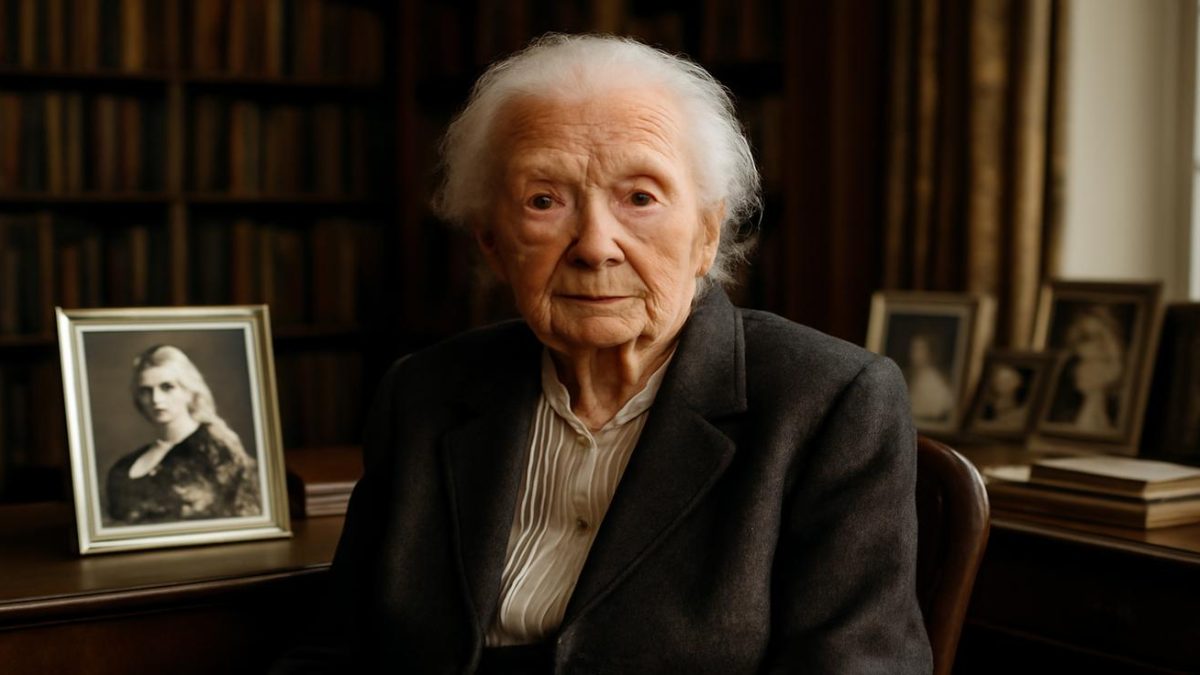
When Queen Victoria closed her eyes for the final time in 1901, the world mourned the loss of an era. Yet one member of her extended family would carry forward a direct link to that distant Victorian age for decades to come. Princess Alice, Countess of Athlone, emerged as one of history’s most fascinating royal figures, her remarkable lifespan of 98 years allowing her to witness transformations that would have seemed impossible to her illustrious grandmother.
Born Into Privilege, Destined for Impact
Princess Alice was born on February 25, 1883, to Prince Leopold, Duke of Albany, and Princess Helen of Waldeck and Pyrmont. As Queen Victoria’s youngest son’s daughter, she occupied a unique position within the royal hierarchy. Her early years were steeped in the formality and protocol that defined Victorian royal life, where strict etiquette governed every movement and social interaction remained bound by elaborate conventions.
The Victorian world into which Princess Alice was born was dramatically different from the one she would eventually inhabit in her later years. Electric lights were still a novelty, transportation relied primarily on horses and trains, and the British Empire stood at its zenith of global influence. The princess grew up surrounded by the trappings of imperial power, receiving an education befitting her station while experiencing the constraints that royal birth imposed upon women of that era.
A Strategic Royal Marriage and New Beginnings
In 1913, Princess Alice married Prince Alexander of Teck, who later became the Earl of Athlone. This union was typical of royal practice at the time, combining two distinguished bloodlines and creating diplomatic alliances through matrimony. The marriage proved to be a genuine partnership, and the couple would remain devoted to one another for over sixty years.
The First World War erupted just a year after their marriage, plunging Europe into unprecedented carnage. The royal family found itself navigating the complex challenges of wartime, including the controversial renaming of the royal house from Saxe-Coburg and Gotha to Windsor. Princess Alice and her husband adapted to these changes with the flexibility that would characterize much of her life. Through the war years, she became increasingly involved in charitable work and nursing efforts, demonstrating a commitment to service that would define her entire existence.
Witnessing a Transforming Century
What made Princess Alice’s life truly extraordinary was her longevity and the dramatic historical transformation she witnessed firsthand. She lived through the reign of five British monarchs, from her grandmother Queen Victoria through to Queen Elizabeth II. She saw the development of aviation transform from experimental wooden aircraft to supersonic jets. She witnessed the invention of television, the personal computer, and space exploration—technologies that would have seemed like pure fantasy to the young Victorian princess she once was.
The social transformations were equally staggering. Princess Alice grew up in a world where women had virtually no political rights and strict gender roles dictated every aspect of life. She lived to see women enter professions, earn university degrees, vote in elections, and occupy positions of significant power and influence. The rigid class structures that defined her youth gradually gave way to more democratic societies, though royal privilege endured throughout her lifetime.
Public Service and Royal Duty
Princess Alice embodied the traditional concepts of royal duty and public service that characterized her generation. She was appointed Governor-General of Canada in 1940, a position her husband held until 1946. This marked a significant period of her life, as she represented the Crown during critical wartime years and helped maintain morale and unity within the Commonwealth. Her time in Canada enhanced her reputation as a dedicated, intelligent, and approachable royal figure.
Throughout her adult life, Princess Alice maintained an extensive schedule of patronages, charitable events, and official appearances. She supported numerous organizations focused on healthcare, education, and social welfare. Her genuine interest in the causes she championed, combined with her gracious manner, made her beloved in communities across the Commonwealth.
A Living Connection to History
By her final decades, Princess Alice had become something of a living historical artifact. Journalists and historians sought her recollections of the Victorian age and her observations about the twentieth century’s rapid changes. She remained sharp-minded and articulate well into her nineties, offering unique perspectives on nearly a century of human progress and social evolution.
Her longevity meant she established relationships across multiple generations of her family. She knew great-great-grandchildren and maintained close bonds with younger family members who found her stories of the past both entertaining and enlightening. For many, she represented a tangible connection to a world that existed only in history books and old photographs.
Legacy and Lasting Impact
Princess Alice passed away on January 3, 1981, at the remarkable age of 97, just weeks short of her 98th birthday. Her death marked the end of an era in more ways than one. With her passing, the direct line of people who had personal memories of Queen Victoria’s reign essentially ended. She had been the last surviving grandchild of the great Victorian monarch.
Her legacy extends beyond merely living a long life. Princess Alice demonstrated how individual grace, intelligence, and dedication to service could create positive impact across an entire century. She adapted to changing times without losing her principles, embraced modern developments while respecting tradition, and remained relevant and engaged throughout her extraordinarily long life.
Princess Alice, Countess of Athlone, ultimately serves as a remarkable reminder of how profoundly the world can change within a single human lifetime. Her journey from the stiff formality of Victorian royal courts to the informal accessibility of modern celebrity culture reflects the transformation of society itself. She bridged worlds, connected eras, and left an indelible mark on the history of the British Royal Family and the Commonwealth nations she served with such distinction.











Leave a Comment