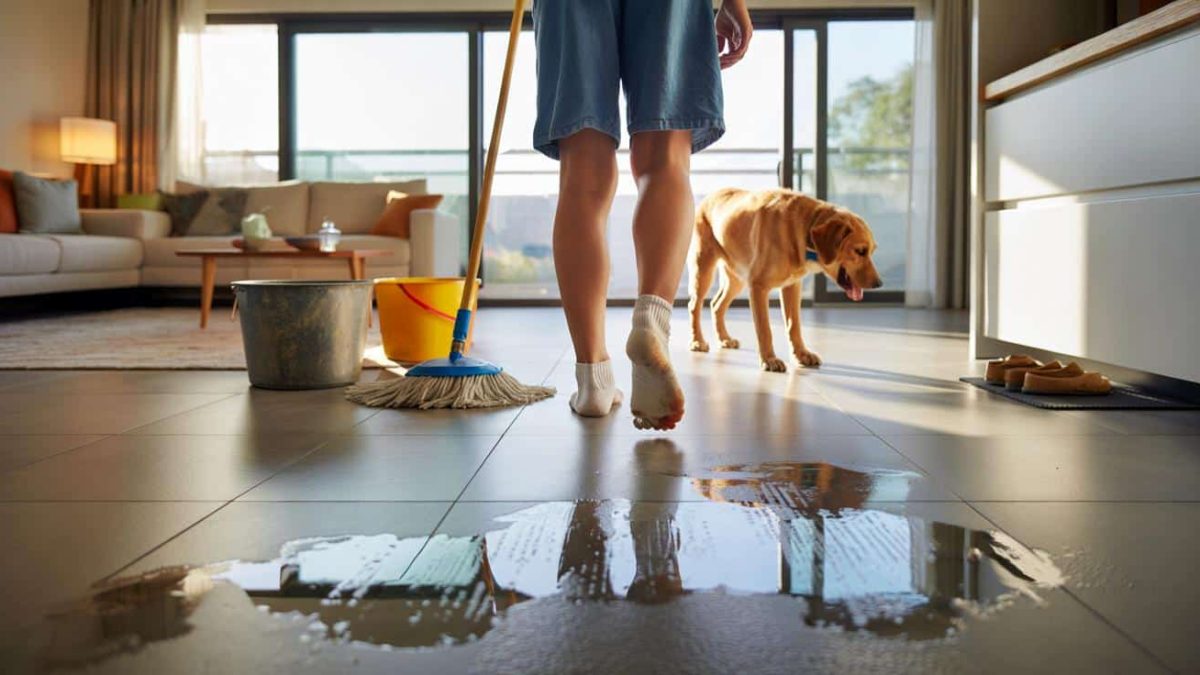
That satisfying moment when your freshly mopped floors gleam under the light quickly fades into disappointment. Within hours—sometimes even minutes—dust, dirt, and mysterious streaks reappear as if you never cleaned at all. If this scenario feels like your daily reality, you’re not alone. Millions of homeowners struggle with floors that refuse to stay clean, no matter how frequently they mop. But here’s the truth: your floor isn’t the problem. The way you’re cleaning it might be.
The Residue Problem Nobody Talks About
Most people assume that once water touches the floor, dirt magically disappears. Unfortunately, that’s not how cleaning actually works. When you mop, you’re not removing dirt—you’re moving it around. Traditional mopping methods leave behind a thin layer of moisture mixed with dissolved dirt, cleaning product residue, and minerals from your water.
This residue acts like a magnet for new dust and debris. As it dries, it creates a sticky film that attracts particles from the air, your feet, and your pet’s paws. This is why your floors look dirtier faster after mopping than they did before. You’re essentially creating an invisible adhesive surface that welcomes new contamination.
Your Cleaning Solution Might Be Your Worst Enemy
Those heavily scented floor cleaners smell amazing, but they’re often the primary reason your floors get dirty again so quickly. Commercial floor cleaning products contain oils, waxes, and emulsifiers designed to make floors shine. While this sounds beneficial, these ingredients accumulate over time.
Each mopping session adds another microscopic layer of product buildup. After several weeks, your floors develop a dull, sticky coating that traps dirt like flypaper. The irony is that you’re mopping more frequently trying to fight this buildup, which only makes it worse. It’s a vicious cycle that traps homeowners in an endless cleaning loop.
Water Quality and Mineral Deposits
If you live in an area with hard water, you’re fighting an additional battle that has nothing to do with dirt. Hard water contains high levels of calcium and magnesium minerals. When you mop with hard water, these minerals remain on your floor surface as the water evaporates.
Over time, mineral deposits build up and create a cloudy, dull appearance. This buildup also prevents your cleaning solutions from working effectively because they can’t penetrate through the mineral layer. Areas with particularly hard water might notice white, chalky residue on their floors that no amount of mopping seems to remove. Installing a water softener or using distilled water for mopping can make a dramatic difference.
The Bacteria and Mold Factor
Here’s something most people don’t consider: your mop bucket might be dirtier than your floors. Mops are breeding grounds for bacteria and mold, especially if they’re not properly dried between uses. When you dip your mop into a bucket that harbors microorganisms, you’re not cleaning your floor—you’re spreading contamination.
This biological growth creates odors and dark streaks that appear mysteriously on supposedly clean floors. The moisture trapped in mop fibers creates the perfect environment for bacterial growth, particularly if your mop sits in a bucket for extended periods. Many people reuse the same mop water multiple times, which exponentially increases the bacterial load being spread across the floor.
Improper Drying Techniques Leave Moisture Behind
Moisture is essential for mopping, but too much moisture is the enemy of clean floors. If you’re leaving your floors wet or damp after mopping, you’re creating conditions that promote dirt adhesion, dust accumulation, and mold growth. Water that lingers on the floor dissolves into air and dust, creating the perfect paste for spreading dirt particles across the surface.
Professional cleaning services understand that proper drying is as important as the actual mopping. The best results come from using minimal water and following up with thorough drying using clean, dry microfiber cloths or specialized drying equipment. Your floors should be dry enough to walk on within minutes, not hours.
Traffic Patterns and Soil Introduction
You can’t prevent dirt from entering your home, but you can significantly reduce it. Most household dirt enters through entryways, and concentrated foot traffic in certain areas carries more soil than others. If you’re mopping the entire floor with the same level of effort, you’re wasting resources on low-traffic areas while high-traffic zones quickly accumulate new dirt.
Strategic cleaning that focuses on entry points and frequently traveled routes is more effective than full-floor mopping every time. Using quality doormats and establishing a shoes-off policy in your home can dramatically reduce the amount of dirt that needs cleaning.
The Wrong Tools Make Everything Worse
Not all mops are created equal. String mops, while traditional, are notoriously difficult to clean and dry properly. Microfiber mops are significantly more effective because they genuinely trap dirt instead of just moving it around. Microfiber also requires less water to be effective, which directly addresses the moisture problem.
Additionally, mop bucket design matters. Many standard buckets don’t properly wring out mops, leading to overly wet cleaning. Bucket systems with built-in wringers that squeeze out excess water help maintain optimal moisture levels.
Breaking the Cycle: What Actually Works
To finally achieve floors that stay clean, you need to address the root causes rather than just cleaning more frequently. Start by using minimal water, microfiber mops, and either distilled water or a water softener solution. Reduce product dependency by using simple vinegar solutions or specialized microfiber-friendly cleaners. Ensure your mop is thoroughly dried between uses, and replace it regularly.
Most importantly, focus on drying. After mopping, go over floors with dry microfiber cloths or allow proper air circulation to dry them quickly. This single change eliminates the sticky residue that attracts new dirt. By understanding the real reasons your floors get dirty after mopping, you can finally escape the cleaning trap and enjoy genuinely clean floors that stay clean longer.








Leave a Comment