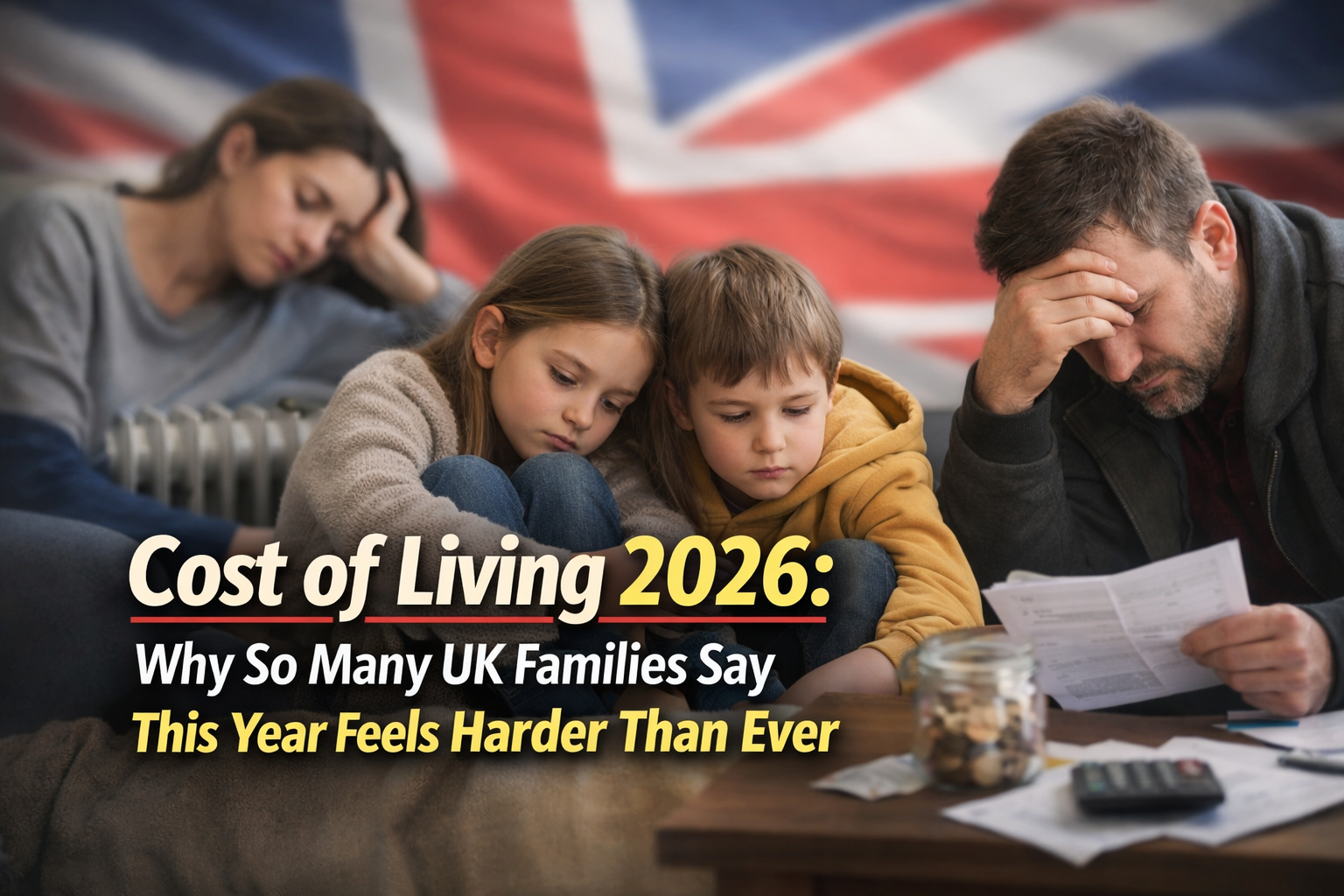
The cost of living crisis in the UK is not over. As the country moves into 2026, households across England, Scotland, Wales, and Northern Ireland are once again bracing for higher everyday costs. From food and rent to energy bills, transport, and council tax, many essentials are expected to become more expensive — stretching family budgets even further.
After several turbulent years marked by inflation spikes, interest rate pressure, and global uncertainty, the question many people are asking is simple: why is the cost of living still rising in the UK, and what does 2026 actually look like for ordinary households?
This article breaks down what is driving the cost of living increase in 2026, which expenses are rising the fastest, who is most affected, and what support or coping strategies may help households manage the pressure.
Why the UK Cost of Living Is Rising in 2026
Although headline inflation has eased compared with earlier peaks, prices have not fallen back to pre-crisis levels. Instead, higher costs have become the new normal.
Several long-term factors continue to push prices up in the UK:
-
Persistently high housing costs
-
Energy market volatility
-
Food supply pressures
-
Wage growth failing to match living costs
-
Higher taxes and local charges
-
Ongoing global economic uncertainty
In United Kingdom, these pressures combine to create a situation where even modest price increases feel severe — especially for low- and middle-income households.
UK State Pension 2026 Latest Update: What Retirees and Future Pensioners Need to Know
UK Cost of Living 2026: Key Areas Getting More Expensive
1. Housing and Rent Costs
Housing remains the single biggest cost for most UK households, and 2026 is expected to bring further increases.
-
Private rents continue to rise due to limited supply
-
Mortgage holders face higher monthly repayments after refinancing
-
Social housing rents are also increasing in many areas
Average Housing Cost Trends
| Housing Type | Expected Trend in 2026 |
|---|---|
| Private rent | Continued increase |
| Mortgage repayments | Higher for re-mortgaging households |
| Social housing | Annual rent rises |
| First-time buyer costs | Deposit and affordability pressure |
Renters are among the hardest hit, particularly in London, the South East, and major cities.
2. Food Prices and Groceries
Food inflation has slowed but prices remain high, meaning weekly shopping costs are still far above pre-2022 levels.
Key drivers include:
-
Higher energy and transport costs
-
Labour shortages in food production
-
Import costs and currency pressure
Even basic staples such as bread, milk, fruit, and vegetables remain significantly more expensive than just a few years ago.
Grocery Cost Comparison
| Item Category | 2024–25 | 2026 Outlook |
|---|---|---|
| Fresh food | High | Still elevated |
| Meat & dairy | High | Moderate increase |
| Packaged goods | High | Gradual rise |
| Budget alternatives | Limited relief | Still costly |
For families, food remains one of the most noticeable areas of cost pressure.
3. Energy Bills in 2026
Energy prices are no longer rising at emergency levels, but they are not returning to cheap rates either.
Households are expected to face:
-
Higher standing charges
-
Seasonal price volatility
-
Increased costs for heating during winter
While government interventions have helped in previous years, long-term affordability remains uncertain.
Energy Cost Outlook
| Energy Type | 2026 Expectation |
|---|---|
| Electricity | Moderately high |
| Gas | Volatile |
| Standing charges | Elevated |
| Winter bills | Financial pressure |
Energy remains a major risk factor for household budgets, especially for older and low-income residents.
4. Transport and Travel Costs
Transport costs continue to rise due to fuel prices, maintenance costs, and service funding gaps.
-
Rail fares are expected to increase
-
Bus services face funding pressure
-
Fuel prices remain unpredictable
Transport Cost Trends
| Transport Type | Cost Direction |
|---|---|
| Rail fares | Upward |
| Bus fares | Increasing |
| Fuel | Volatile |
| Car insurance | Higher premiums |
For commuters, transport costs are becoming a larger share of monthly spending.
5. Council Tax and Local Charges
Council tax rises are expected across many local authorities as councils struggle with funding pressures.
In addition to council tax, households are also facing:
-
Higher parking charges
-
Increased waste and service fees
-
Reduced local services despite higher costs
Local Cost Pressures
| Local Charge | 2026 Trend |
|---|---|
| Council tax | Rising |
| Parking fees | Rising |
| Service charges | Rising |
| Local benefits | Limited expansion |
These increases are particularly difficult for pensioners and fixed-income households.
Who Is Most Affected by the Cost of Living Increase?
While nearly everyone feels the pressure, some groups are disproportionately impacted.
Groups Hit the Hardest
-
Low-income households
-
Renters
-
Single parents
-
Pensioners
-
Disabled individuals
-
Young adults and first-time renters
For many, wages have not increased enough to offset rising costs, leading to reduced savings and higher debt reliance.
Wages vs Living Costs: The Growing Gap
Although wages have grown in nominal terms, real earnings often lag behind living costs.
Wage vs Cost Comparison
| Factor | Trend |
|---|---|
| Average wages | Gradual increase |
| Living costs | Faster increase |
| Disposable income | Shrinking |
| Savings capacity | Reduced |
This gap explains why many households feel worse off even when employed full-time.
Government Support and Relief Measures in 2026
The UK government continues to face pressure to support struggling households, but large-scale relief programs are more limited than in previous crisis years.
Possible forms of support include:
-
Targeted cost-of-living payments
-
Winter fuel assistance
-
Council tax support schemes
-
Benefits uprating in line with inflation
However, many households fall just above eligibility thresholds, leaving them exposed.
Regional Differences Across the UK
The cost of living crisis does not affect every region equally.
Regional Impact Snapshot
| Region | Cost Pressure |
|---|---|
| London | Very high |
| South East | High |
| Midlands | Moderate |
| North of England | Moderate |
| Scotland | Mixed |
| Wales | Moderate |
| Northern Ireland | Rising |
Housing costs remain the key driver of regional inequality.
How UK Households Are Coping in 2026
To manage rising costs, many households are:
-
Cutting non-essential spending
-
Switching supermarkets and brands
-
Reducing energy use
-
Delaying major purchases
-
Taking on extra work or side income
However, long-term coping strategies are becoming harder to sustain.
What Experts Say About the UK Cost of Living Outlook
Economists warn that while inflation may remain lower than crisis peaks, price levels are unlikely to fall significantly.
Instead, the challenge for 2026 and beyond is:
-
Making wages keep pace
-
Improving housing supply
-
Reducing energy vulnerability
-
Strengthening targeted support
Without structural change, cost pressures may persist.
What to Watch Next in 2026
Key indicators to monitor include:
-
Rent and housing supply data
-
Energy price movements
-
Government budget decisions
-
Wage growth trends
-
Interest rate policy
Each of these will directly influence household affordability.
Final Thoughts: Is the UK Cost of Living Crisis Over?
The short answer is no.
In 2026, the UK is facing a high-cost reality rather than a temporary spike. While the pace of increases may slow, everyday expenses remain elevated, and many households continue to struggle.
For millions of people, the issue is no longer about luxury spending — it’s about covering basics like rent, food, energy, and transport.
Understanding where costs are rising and why is now essential for navigating life in the UK in 2026.







Leave a Comment