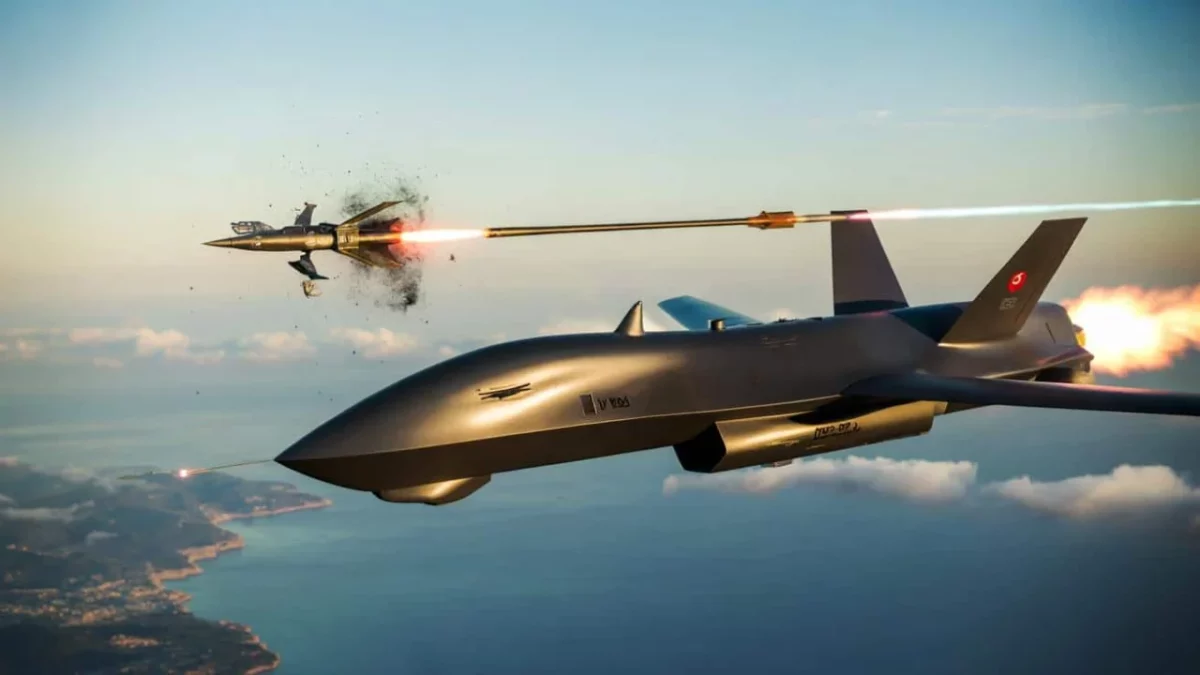
The skies above Turkey witnessed a moment that will forever reshape the landscape of modern aerial warfare. What was once considered the realm of imagination and Hollywood blockbusters has become undeniable reality. A domestically-developed unmanned aerial vehicle successfully tracked, locked onto, and neutralized a supersonic aircraft in flight. This isn’t merely another weapons test—it’s a watershed moment that challenges everything the global defense community thought possible.
Breaking Through the Sound Barrier of Impossibility
For generations, aviation experts maintained a seemingly ironclad rule: supersonic speeds created an insurmountable challenge for unpiloted systems. The physics alone appeared to work against such an achievement. Supersonic aircraft, traveling faster than 761 miles per hour, generate complex aerodynamic phenomena that traditional sensors struggle to process. The transonic buffeting, shock waves, and extreme velocity gradients created detection and tracking complications that seemed impossible to overcome with existing drone technology.
Yet Turkey’s engineering teams systematically dismantled these assumptions. The nation’s commitment to developing indigenous defense capabilities meant investing heavily in artificial intelligence, sensor fusion, and advanced targeting systems. Rather than accepting the conventional wisdom that supersonic interception required piloted fighter aircraft, Turkish aerospace engineers asked a different question: why couldn’t unmanned systems do it better?
The Technology Behind the Achievement
The drone responsible for this historic feat represents the culmination of sophisticated technological integration. Multiple advanced systems work in concert to achieve what was previously thought impossible. First, the detection architecture relies on advanced radar systems capable of predicting supersonic aircraft trajectories with remarkable accuracy. These systems don’t simply track present locations—they calculate future positions based on velocity vectors and flight patterns.
The guidance systems represent another critical component of this achievement. Traditional autopilot systems move too slowly for supersonic interception. Turkey’s solution employs machine learning algorithms that make real-time adjustments at speeds matching the target aircraft. The drone’s processor must calculate intercept points, account for air resistance, weather conditions, and the target’s evasive maneuvers simultaneously.
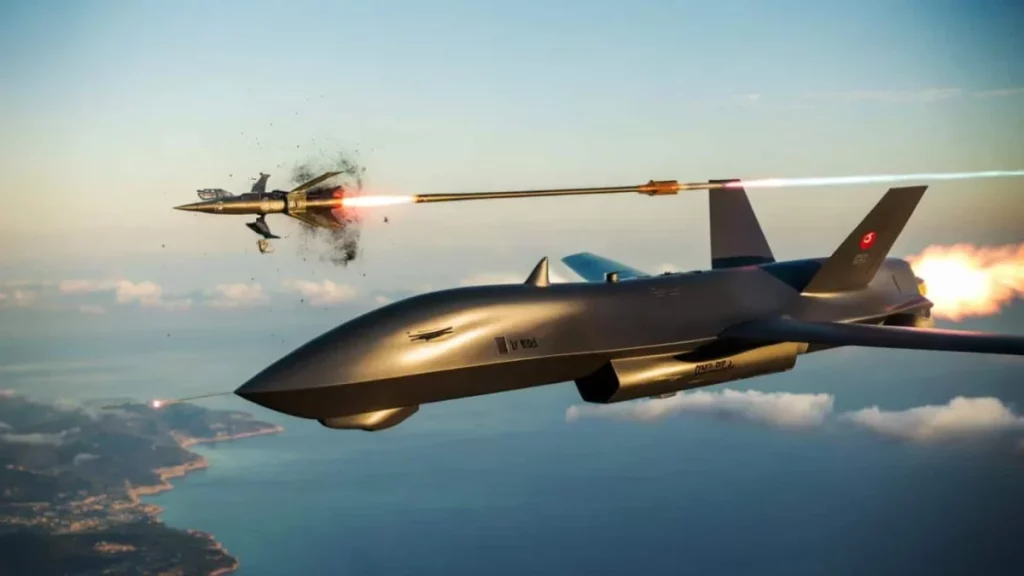
Propulsion technology proved equally challenging. The interceptor drone required sufficient speed to close on a supersonic target while maintaining maneuverability. Engineers developed hybrid propulsion systems combining traditional jet engines with electrical systems, allowing the drone to sustain high speeds while preserving agility during the final intercept phase.
Perhaps most impressively, the weapons system itself had to be reimagined. Traditional air-to-air missiles struggle with supersonic targets due to tracking challenges at extreme velocities. Turkey’s approach incorporated advanced kinetic interception technology, allowing the drone to physically intercept the target with precision despite the incredible speeds involved.
What This Means for Global Defense Dynamics
This achievement doesn’t simply represent a technical milestone—it fundamentally reshapes strategic calculations worldwide. Nations that relied on supersonic speed as an ultimate defense mechanism must reconsider their security architectures. Fighter jets have always maintained advantages over slower aircraft through sheer velocity. That advantage has now been neutralized by unmanned systems.
The implications extend beyond military hardware. This accomplishment suggests that with sufficient investment in artificial intelligence and sensor technology, unmanned systems can match or exceed capabilities previously thought exclusive to piloted aircraft. It validates the strategic pivot toward autonomous systems that several nations have pursued over the past decade.
Economically, this shift matters tremendously. Supersonic fighter jets cost billions of dollars to develop and operate. Drone systems, while sophisticated, typically require substantially lower investment. Nations with smaller defense budgets can now contemplate advanced air defense capabilities previously reserved for wealthy powers with extensive aerospace industries.
The Race for Technological Supremacy
Turkey’s success will inevitably trigger a global acceleration in drone development programs. Intelligence agencies worldwide are already analyzing footage and data from the test, attempting to reverse-engineer the systems involved. Aerospace companies in America, Russia, China, and Europe have certainly expanded their own supersonic interception programs.
This competitive dynamic could accelerate innovation dramatically. When one nation demonstrates a capability gap, rivals typically mobilize enormous resources to close that gap. We may witness rapid advancements in autonomous systems, artificial intelligence, and sensor technologies over the next several years as nations rush to develop comparable capabilities.
Engineering Challenges Overcome
The engineering teams deserved recognition for solving problems that seemed intractable just years ago. The challenge of reliable communication between ground operators and the drone at supersonic speeds created issues with signal latency and bandwidth. Teams developed quantum-encrypted communication systems capable of transmitting targeting data with microsecond precision.
Thermal management presented another significant hurdle. Sustained high-speed flight generates extreme heat. The drone’s components must remain functional despite temperatures exceeding those experienced by conventional aircraft. Advanced materials science, including ceramic composites and specialized alloys, enabled the system to survive these conditions.
Looking Forward: The Future of Air Superiority
This breakthrough raises fascinating questions about the future of aerial combat. If drones can successfully intercept supersonic targets, what role remains for traditional fighter jets? Some defense analysts suggest piloted aircraft will transition toward specialized missions where human judgment provides advantages. Others envision completely autonomous air forces, with human operators controlling strategic decisions while artificial intelligence manages tactical execution.
Turkey’s achievement will echo through military academies, defense ministries, and engineering laboratories worldwide. It represents a confirmation that technological barriers once deemed absolute can be overcome through determination and innovation. The question now becomes not whether drones can defeat supersonic aircraft, but how quickly other nations can develop and deploy comparable systems.
This moment in aviation history demonstrates humanity’s remarkable capacity to surpass self-imposed limitations through technology and ingenuity. What seemed impossible yesterday has become today’s reality and tomorrow’s baseline expectation.










Leave a Comment