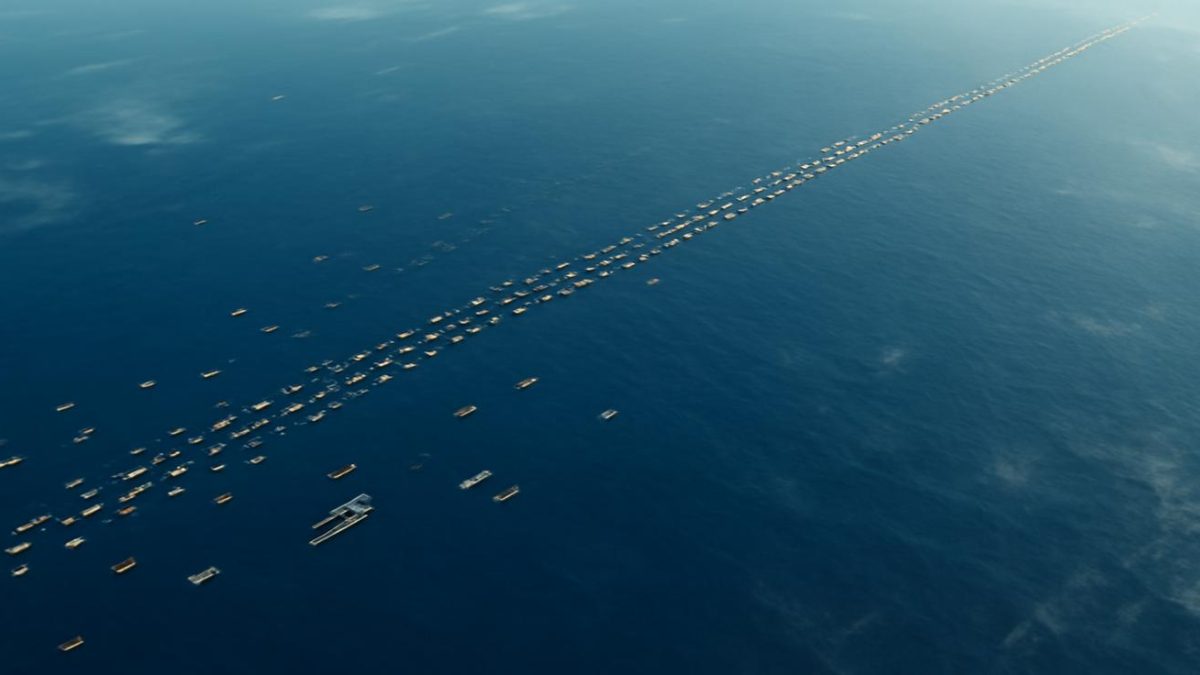
The waters off the continental shelf seemed ordinary that spring morning, yet something extraordinary was unfolding beneath the surface of routine maritime activity. Thousands of fishing vessels, coordinated through networks both visible and invisible, began positioning themselves in deliberate patterns across vast oceanic expanses. What appeared to be ordinary commercial fishing operations masked a sophisticated strategy that would reshape perceptions about modern territorial claims and maritime power projection.
The Unconventional Approach to Maritime Presence
Traditional geopolitical competition has historically relied on military deployments, diplomatic negotiations, and formal territorial declarations. However, emerging strategies have begun exploiting the ambiguous space between civilian and state activity, between commercial enterprise and strategic positioning. The mobilization of fishing fleets represents a fascinating case study in this evolving landscape.
Fishing vessels operate within legal frameworks that differ substantially from military assets. They are entitled to occupy international waters for legitimate commercial purposes, yet when deployed in coordinated patterns, they serve purposes extending far beyond economic activity. This creates a unique operational advantage—the ability to maintain sustained presence in contested waters while maintaining plausible deniability regarding strategic intent.
The sheer scale of such operations transforms their character entirely. When individual boats operate independently, they represent ordinary commerce. When thousands coordinate their movements, they become instruments of statecraft, projecting power and asserting presence through sheer numerical density.
Coordination and Logistics at Unprecedented Scale
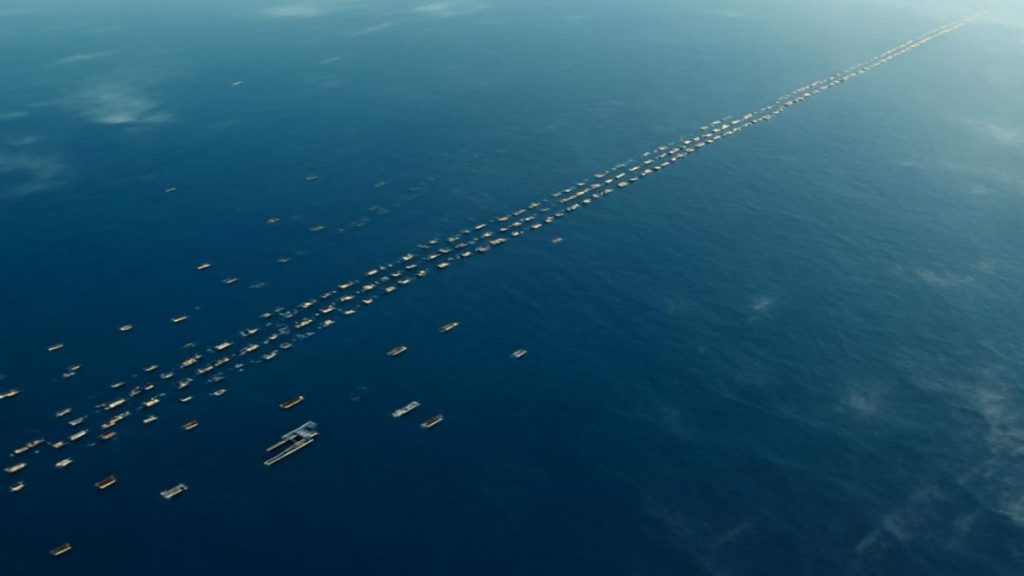
Managing fourteen hundred vessels across hundreds of miles of ocean requires extraordinary logistical coordination. The planning infrastructure supporting such operations involves communication networks, resource distribution systems, and command hierarchies rivaling military operations. Fuel supplies must be staged at strategic intervals. Crews require provisions, weather intelligence, and navigation guidance. Mechanical breakdowns demand rapid response capabilities.
This level of organization doesn’t emerge spontaneously. It reflects deliberate governmental planning, substantial financial investment, and integration with existing maritime infrastructure. Fishing cooperatives, port authorities, supply companies, and regional governments must coordinate seamlessly. The operation represents not merely the movement of boats, but the mobilization of entire maritime ecosystems.
Communication systems connect vessels through multiple channels—radio networks, satellite systems, and digital platforms. Positioning data flows continuously to coordination centers where fleet movements are monitored and adjusted. Weather patterns are analyzed collectively. Fuel consumption is optimized. Individual captains receive guidance that appears to reflect local conditions but actually implements broader strategic objectives.
The Strategic Ambiguity of Civilian Operations
International law permits fishing activities in international waters with certain restrictions. These regulations were developed assuming independent commercial operators pursuing economic interests. They didn’t anticipate coordinated state mobilization of civilian fleets as instruments of territorial assertion.
This creates a significant strategic advantage. Military vessels announcing presence through official channels trigger formal diplomatic responses and international scrutiny. Fishing boats, by contrast, operate within established commercial frameworks. Individual vessels can claim mechanical problems, weather avoidance, or legitimate fishing opportunities as justifications for their positions. Collectively, however, they communicate unmistakable messages about presence, resolve, and capability.
The ambiguity is intentional and strategically valuable. Responding militarily to fishing vessels creates perception problems—military powers attacking civilian fishermen faces significant international criticism. Yet ignoring the deployment tacitly accepts the assertion of presence and influence. This asymmetry favors the deploying nation substantially.
Economic Incentives Aligned with Strategic Objectives
Sustaining thousands of vessels in specific areas for extended periods requires compelling economic justifications for participating fishing crews. This isn’t simply conscription of civilian assets—it requires alignment between strategic objectives and economic incentives.
Fishing grounds in contested waters often contain legitimate stocks worth pursuing commercially. Certain seasons produce reliable catches that reward fishing effort substantively. Organizing fleets during optimal fishing periods means crews generate real income while pursuing strategic positioning. Subsidies can enhance returns, making participation economically rational for individual operators.
This integration of economic and strategic incentives creates sustainability that purely military deployments cannot match. Sailors crewing patrol vessels serve fixed terms before rotation. Fishermen, by contrast, can maintain sustained presence indefinitely if economic conditions support participation. A fishing boat earning healthy profits while anchored in a particular location will remain there as long as fishing remains productive.
Signaling Without Confrontation
The deployment communicates multiple messages simultaneously. To domestic audiences, it demonstrates governmental capacity, economic support for fishing industries, and assertion of national interests. To international observers, it signals commitment to maritime claims, willingness to invest resources, and confidence in strategic positioning.
Competing nations receive the message clearly: this maritime space is being actively occupied, monitored, and claimed. Establishing permanent presence through fishing fleets creates facts on the ground that diplomatic negotiations must acknowledge. Years of continuous occupation generate stronger claims than occasional military patrols or formal declarations.
The message avoids direct military confrontation while remaining unambiguous. Unlike military exercises, which can be temporary and reversible, sustained fishing operations suggest permanent intent. Unlike naval patrols, which can be redirected elsewhere, fishing fleets rooted in economic viability establish enduring presence.
Precedent and Proliferation
This strategy’s success creates powerful incentives for proliferation. Other maritime nations controlling fishing industries can replicate similar approaches in their own contested waters. The technique requires no advanced weaponry, no technological breakthroughs, merely organizational capacity and economic investment.
As this approach spreads, maritime spaces become increasingly crowded with coordinated civilian fleets, each projecting territorial claims through sheer presence. International waters transform from relatively empty expanses into densely populated zones of competing claims, each supported by mobilized fishing industries.
The approach also reveals gaps in international maritime law. Frameworks developed for independent commercial operators operating according to individual economic calculations don’t accommodate coordinated state mobilization of civilian fleets. Future international negotiations will likely address these gaps, but presently they remain open territory for creative strategic exploitation.
Implications for Modern Geopolitical Competition
This maritime strategy exemplifies broader evolution in geopolitical competition beyond traditional military frameworks. Economic assets, civilian infrastructure, and ostensibly non-military organizations become instruments of state strategy. The boundary between civilian and military activity blurs intentionally.
As nations compete for maritime resources, territorial claims, and strategic positioning, creativity in deploying civilian capabilities offers advantages over conventional military approaches. The strategy transforms ordinary fishing vessels into instruments of statecraft while maintaining plausible civilian character.
The implications extend beyond maritime competition. Similar approaches could mobilize other civilian resources—merchant fleets, transportation networks, communication infrastructure—toward strategic objectives. Competition increasingly operates across multiple domains simultaneously, integrating economic, civilian, and military dimensions into unified strategies.
Understanding these emerging approaches becomes essential for policymakers navigating an increasingly complex geopolitical landscape where traditional distinctions between civilian and military activity, between economic enterprise and strategic positioning, continue dissolving.









Leave a Comment