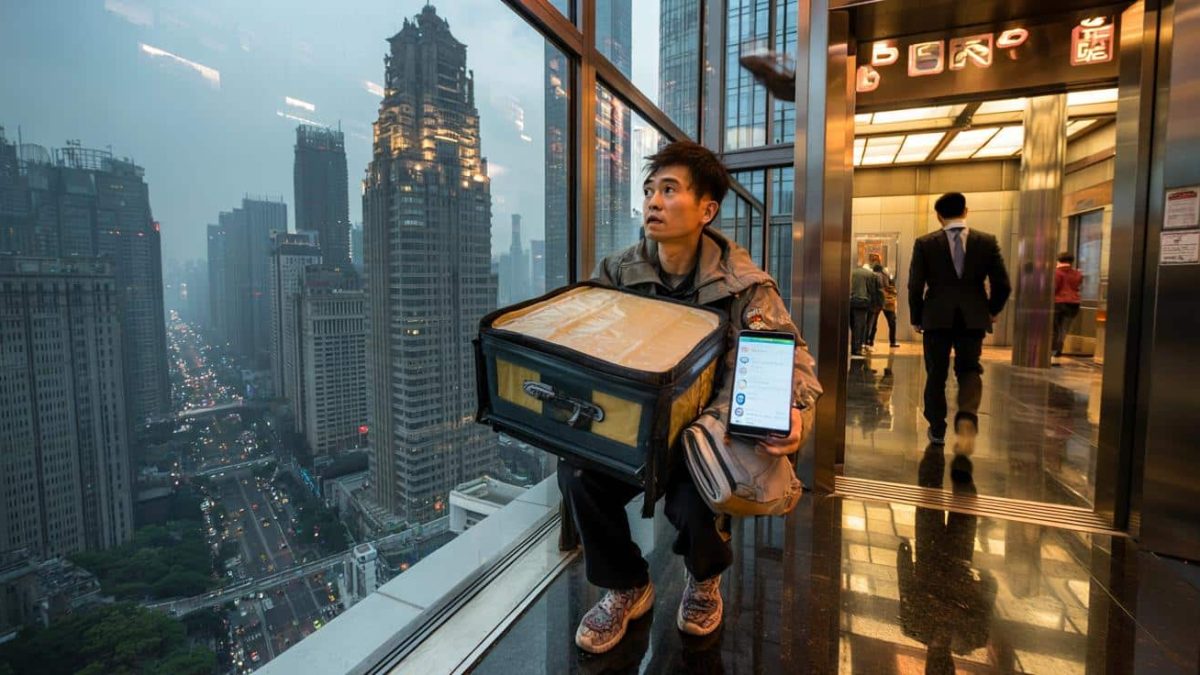
In the gleaming skylines of Shanghai, Shenzhen, and Beijing, a remarkable transformation has occurred within the food delivery industry. While most delivery professionals navigate street-level congestion and sidewalk obstacles, a specialized workforce has emerged that tackles perhaps the ultimate logistical challenge: bringing hot, freshly prepared meals to residents living hundreds of meters above ground level in some of the world’s tallest residential buildings.
The Vertical City Phenomenon
China’s unprecedented urban expansion over the past two decades has fundamentally reshaped how cities function. With land becoming increasingly scarce and property values skyrocketing, developers turned their attention skyward. The result is a collection of megacities where residential towers frequently exceed 50, 80, or even 100+ stories. Shanghai alone boasts more than 5,500 buildings taller than 100 meters, making it a vertical metropolis unlike anywhere else on Earth.
This architectural boom created unprecedented living situations for millions of urban residents. Families found themselves calling penthouses home, office workers commuted to cloud-based offices, and students lived in dormitory complexes that rivaled small towns in their vertical dimensions. With this came a predictable challenge: how to feed a population scattered across dozens of stories when traditional delivery models prove inadequate?
When Elevators Become Unreliable
Many assume that modern elevators would solve the problem of reaching high-rise residents. However, the reality proves far more complicated. During peak hours, elevator systems in massive residential complexes can be overwhelmed by hundreds of residents moving simultaneously. Adding delivery personnel to this congestion creates bottlenecks that frustrate both residents and building management. Some buildings restrict elevator access for delivery workers, implementing separate freight elevators that may move slowly or operate on limited schedules.
Additionally, some premium residential complexes and office buildings maintain strict security protocols that make conventional delivery problematic. Building management concerns about package theft, contamination, and building traffic have led some facilities to implement complex entry procedures that can delay food delivery by 15 to 30 minutes—an eternity when someone has ordered hot soup or freshly grilled items.
The Emergence of Specialized Vertical Logistics
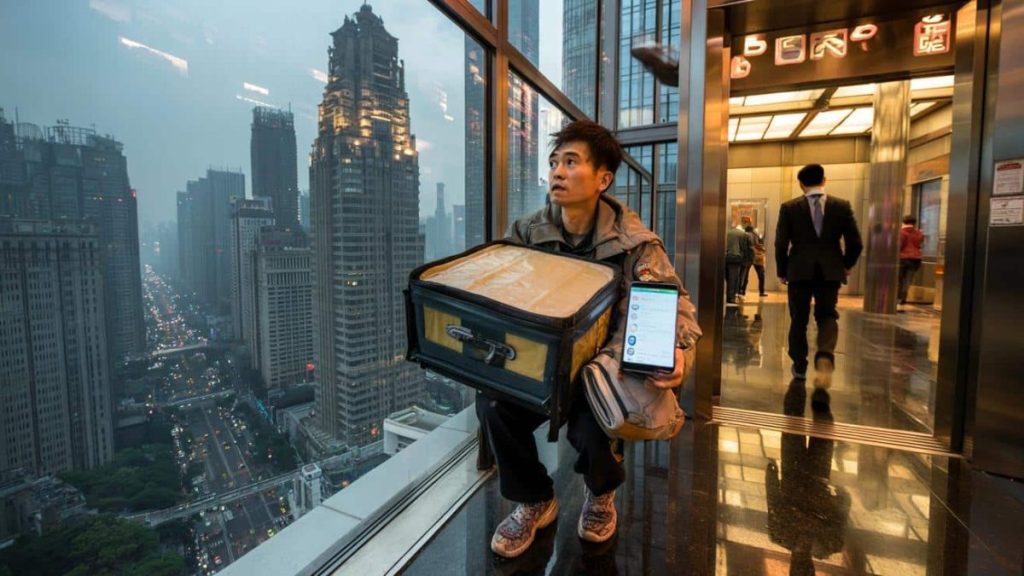
In response to these challenges, a new service category has emerged among China’s gig economy workers. Specialized delivery personnel, sometimes called “vertical couriers” or “sky floor runners,” have begun offering premium delivery services specifically designed for ultra-high-rise buildings. These workers possess unique skill sets, physical conditioning, and problem-solving abilities that distinguish them from standard food delivery professionals.
The job typically involves accepting orders through dedicated apps or direct building contacts, collecting meals from ground-floor restaurants or specialized food stations, and then using various methods to reach elevated destinations. Some take advantage of service staircases, while others have developed relationships with building staff who grant them access to expedited elevator systems. The most dedicated workers have even been known to use external stairs, building maintenance access points, and rooftop connections to complete deliveries efficiently.
The Physical and Mental Demands
This profession demands exceptional physical conditioning. Workers frequently ascend 30 to 60 flights of stairs multiple times during a single shift, carrying insulated meal containers that can weigh 5 to 15 kilograms. The cardiovascular demands alone would exhaust average workers, yet these professionals maintain consistent performance throughout their workdays. Beyond physical endurance, the job requires mental resilience—navigating unfamiliar building layouts, managing pressure from customers waiting for meals, and handling the psychological strain of working at extreme heights.
Safety concerns are paramount. Workers navigate narrow stairwells, sometimes poorly lit or inadequately maintained, while carrying substantial loads. The risk of falling or sustaining injuries while rushing to meet time-sensitive delivery expectations remains a constant occupational hazard. Progressive companies have begun implementing safety protocols, providing workers with appropriate footwear, visibility gear, and comprehensive training in injury prevention.
Economic Implications and Job Satisfaction
Interestingly, many vertical delivery workers report higher earnings than their ground-level counterparts. The premium nature of this service allows for higher delivery fees, and customers often provide generous tips in recognition of the physical exertion required. Some workers in premium districts of major cities can earn 30 to 50 percent more than standard delivery personnel, making the demanding work economically attractive to capable individuals.
However, job satisfaction remains mixed. While earnings appeal to workers, the sustainability of such physically demanding work over decades remains questionable. Most vertical couriers view this as a transitional employment opportunity rather than a lifelong career. Workers typically remain active in this role for 3 to 7 years before transitioning to less physically demanding delivery management positions or entirely different career paths.
Technological Integration and Future Solutions
As with many aspects of China’s logistics sector, technology continues evolving to address vertical delivery challenges. Drone delivery trials have begun in select cities, with autonomous aerial vehicles potentially circumventing the need for human stair climbing. Some premium residential buildings have invested in robotic delivery systems and autonomous elevator networks that prioritize meal deliveries during off-peak hours. Furthermore, building-integrated solutions like food lockers at strategic levels are reducing the need for delivery personnel to reach individual units.
Despite these technological developments, human delivery workers remain essential. The flexibility, problem-solving ability, and personal touch that human couriers provide continues to be valued by customers and building operators alike. Many expect vertical logistics to remain a hybrid model combining human workers with technological innovations for the foreseeable future.
Broader Economic and Social Significance
The emergence of skyscraper delivery workers exemplifies how rapid urbanization creates entirely new employment categories that previous generations never anticipated. This phenomenon reflects broader trends in China’s gig economy, where traditional employment structures give way to specialized, flexible roles responding to unique urban challenges. It demonstrates how vertical cities generate vertical solutions, employing thousands of individuals in roles that barely existed a decade ago.
Furthermore, this occupation has begun attracting research interest from urban planners, economists, and labor scholars examining the human dimensions of vertical urbanism. Academic institutions have started documenting these workers’ experiences, physical health outcomes, and economic patterns—contributing valuable data about how human communities adapt to extreme architectural environments.
Conclusion
China’s skyscraper meal delivery workers represent a fascinating case study in urban adaptation and economic innovation. As cities continue growing upward, the human logistics solutions supporting these vertical communities will likely become increasingly sophisticated and specialized. Whether through continued human workers, technological augmentation, or hybrid approaches, the challenge of feeding populations at extreme heights will continue generating creative professional solutions. This unique occupation stands as testament to human ingenuity in addressing the unprecedented challenges posed by 21st-century megacities.









Leave a Comment