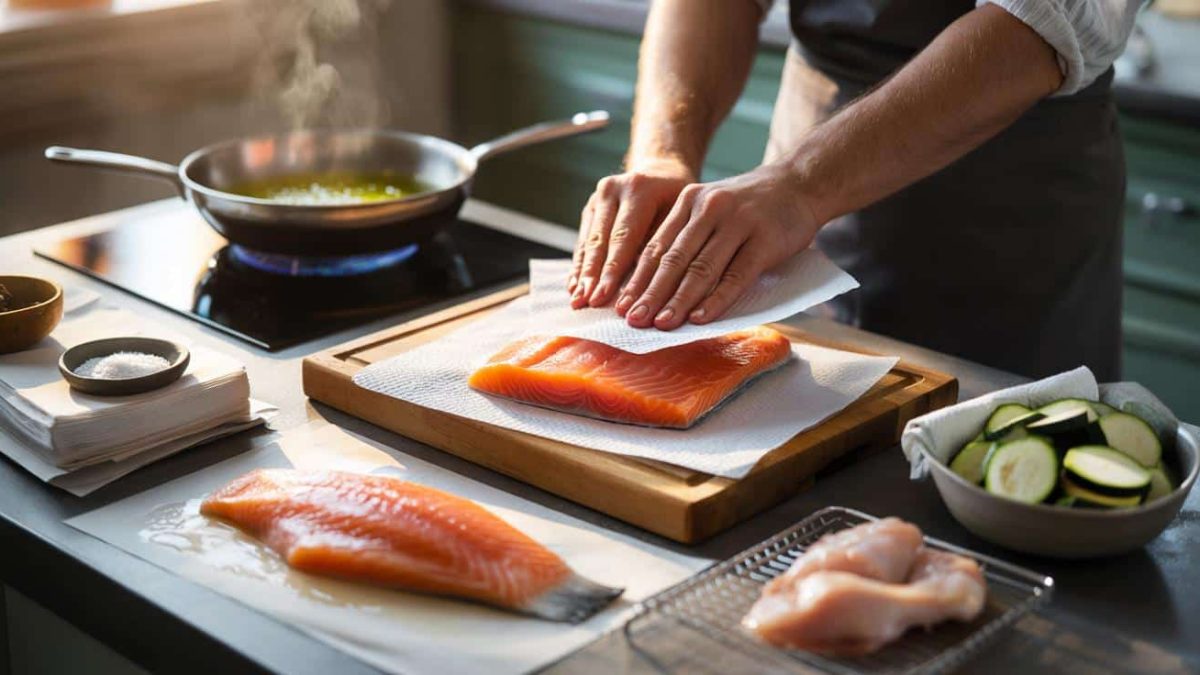
That disappointing moment when your carefully selected salmon fillet transforms into a pan-clinging disaster has happened to nearly every home cook. You’ve researched the recipe, gathered quality ingredients, and cranked up the heat just right—yet your beautiful protein still refuses to release from the cooking surface. The frustration is real, and the instinct is immediate: blame the heat. But what if the real villain in this kitchen tragedy isn’t the temperature at all? What if the answer lies in a preparation step that happens long before anything touches the hot pan?
The Heat Isn’t Always the Culprit
Conventional cooking wisdom tells us that sticking is a heat problem. Too low, and food doesn’t develop that coveted crust. Too high, and everything burns. So we obsess over thermometer readings and flame adjustments, completely missing the actual issue. The truth is far more nuanced and, frankly, far more controllable than temperature management alone.
Professional chefs understand something that home cooks often overlook: the surface of your food is just as important as the surface of your pan. That delicate salmon fillet, that chicken breast you’re planning to sear, that beautiful vegetable slice—they’re all arriving at the pan with invisible moisture clinging to them. This moisture is the actual adhesive forcing your food to bond with the cooking surface.
Moisture: The Hidden Enemy
When food contains surface moisture, it creates steam. This steam acts as a barrier between the food and the hot pan, preventing the Maillard reaction—that chemical process responsible for beautiful browning and crust formation. But here’s the really problematic part: this moisture also causes the food to stick. As the water heats up, it creates suction that pulls the food directly onto the pan’s surface.
Think about it logically. Dry surfaces slide and move freely. Wet surfaces grab and cling. This principle applies to cooking just as much as it applies to moving furniture across a floor. The difference is that most cooks never consciously apply this knowledge to their meal preparation.
The Preparation Step That Changes Everything
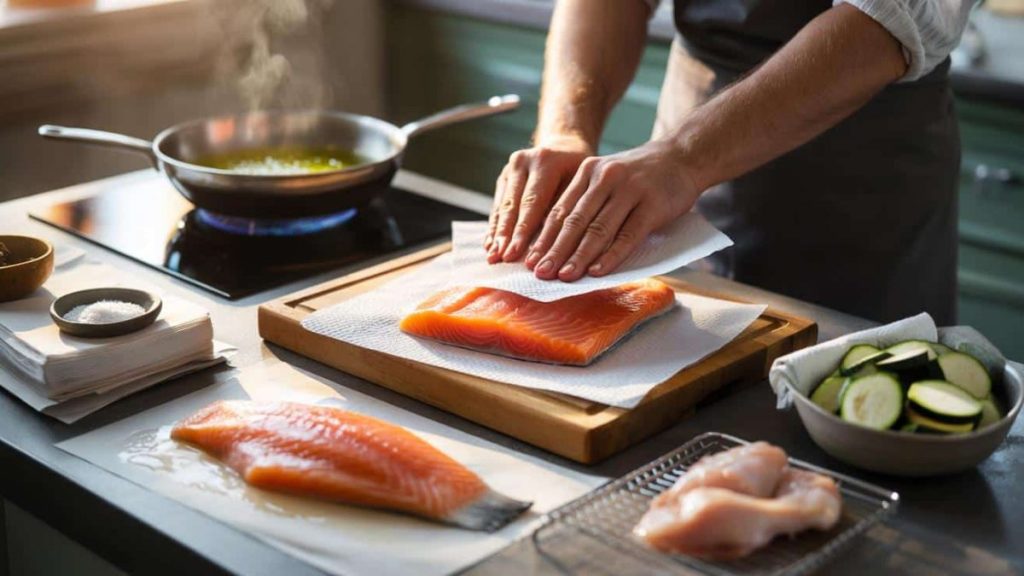
Before your food touches any pan—before you even think about turning on the heat—you need to thoroughly dry its surface. This isn’t a gentle dab with a paper towel. This isn’t a casual wipe-down. This is serious, intentional drying that removes virtually every trace of surface moisture.
For proteins like fish and poultry, this means patting them dry with paper towels, pressing firmly to absorb moisture from the surface. Many professional kitchens use several paper towels, replacing them as they become damp, until the protein’s surface appears completely dry to the naked eye. For vegetables, the same principle applies. Those zucchini rounds, eggplant slices, or mushroom caps that will stick to your pan? They’re likely holding onto residual moisture from washing or storage.
This preparation step is so fundamental that it directly impacts every subsequent cooking decision. Once your food is truly dry, the heat level becomes secondary. A properly dried piece of fish will develop a gorgeous crust at moderate-to-high temperature without clinging to the pan. A properly dried chicken breast will brown beautifully without any sticking drama. The food naturally releases once that crust forms because there’s no steam-based suction holding it in place.
Why This Matters More Than Temperature Control
Temperature is important, certainly, but it’s a secondary concern when dealing with sticking issues. Here’s why: even if you have the perfect pan temperature, moisture will still cause problems. Conversely, properly dried food will cooperate with you across a wider range of temperatures. You gain flexibility and reliability by addressing the moisture issue first.
Professional chefs prioritize drying because they understand the relationship between preparation and outcome. They know that spending an extra thirty seconds ensuring food is completely dry saves them from the embarrassment and waste of a failed dish. This isn’t about perfectionism; it’s about physics and basic chemistry.
The Bonus Benefits of This Approach
Beyond preventing sticking, thoroughly drying your food offers additional advantages. Dry surfaces brown more effectively, creating that restaurant-quality crust that makes food taste exponentially better. The Maillard reaction happens more readily and more completely on dry surfaces, developing complex flavors that moist surfaces simply cannot achieve.
Additionally, you’ll find that your pan stays cleaner. When food doesn’t stick and burn, less charring occurs. Your kitchen smells better, your pan maintenance becomes easier, and your results become more consistent. This single preparation habit transforms your entire cooking experience.
Implementing This Knowledge in Your Kitchen
Starting today, make surface drying your first cooking step, even before seasoning. Get your proteins or vegetables, and genuinely dry them. Use multiple paper towels if needed. For items that are especially moist, like freshly washed mushrooms, consider letting them air-dry on a paper towel for a few minutes while you prepare other ingredients.
Once you’ve mastered this foundation, you’ll notice immediate improvements in your cooking results. That salmon will release confidently. That chicken will develop a golden crust without sticking drama. Those vegetables will caramelize beautifully without clinging to your cookware. The heat level you use will matter far less because you’ve already solved the real problem.
Conclusion: Small Steps, Significant Results
The sticky food mystery that has plagued your cooking isn’t complicated. It’s not about investing in expensive non-stick pans or obsessing over exact temperature readings. It’s about understanding that preparation precedes execution in cooking, just as it does in every other aspect of life. By prioritizing the simple act of thoroughly drying your food before it touches the pan, you eliminate the biggest obstacle standing between you and better cooking. This invisible step matters more than almost anything else because it addresses the root cause rather than treating symptoms. Tomorrow, when you’re cooking dinner, remember this: dry your food first, then adjust everything else accordingly. Your future meals will thank you.









Leave a Comment