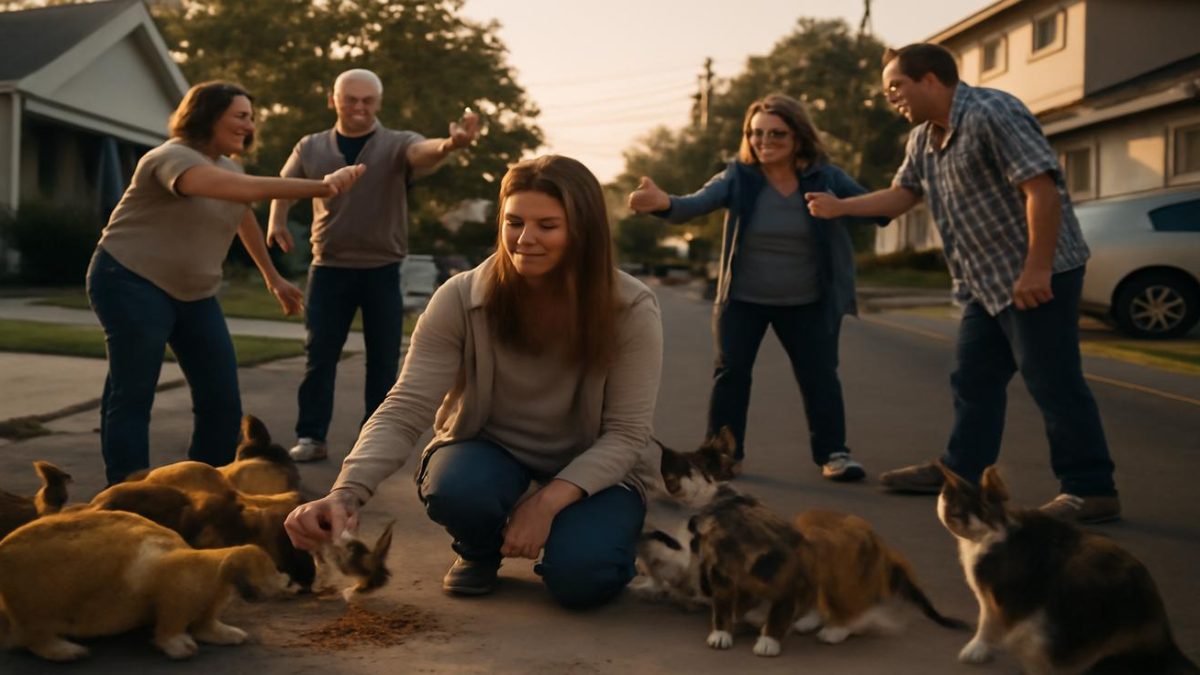
Maria had always been an animal lover. When she noticed a skinny tabby cat prowling her neighborhood’s alleyways, she couldn’t resist leaving out a small bowl of dry kibble on her back porch. Within weeks, that single act of compassion had attracted a dozen cats to the area. Within months, Maria’s neighborhood had transformed from a quiet residential street into what some residents called “ground zero for the stray cat crisis.” What started as one woman’s heartfelt attempt to help hungry animals had ignited a community war that would test friendships, challenge assumptions about compassion, and reveal deep divides in how neighbors viewed their shared responsibility.
The Initial Spark: Good Intentions Meet Reality
The story of neighborhood cat feeding conflicts isn’t unique to Maria’s situation. Across residential communities worldwide, well-meaning individuals who provide food, shelter, and medical care for stray cats often find themselves at the center of escalating tensions. What makes this phenomenon so intriguing is that it rarely stems from malice. Instead, it represents a genuine collision between different ethical frameworks, legitimate health concerns, and competing visions of what constitutes responsible community living.
When someone begins feeding stray cats, they typically operate from a place of genuine compassion. They see suffering—hungry animals foraging through garbage cans, skeletal frames, maternal cats struggling to feed litters. The act of providing food feels unambiguously good. It addresses an immediate need. It requires minimal coordination and costs only a modest amount of money. For the feeder, it’s straightforward moral action.
The Cascade Effect: Why One Bowl Becomes a Crisis
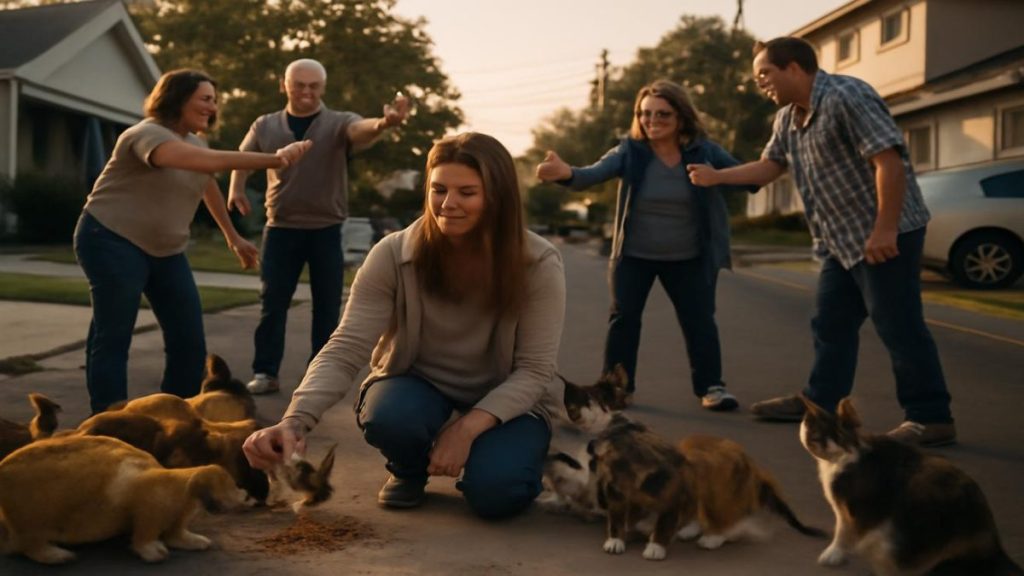
What cat feeders often don’t anticipate is the cascade effect their actions trigger. A single bowl of food acts as a beacon to every stray cat within a several-block radius. Cats possess remarkable sensory abilities and can detect food sources from surprising distances. Within days, what was one cat becomes three. Within weeks, a neighborhood might host a colony of fifteen or twenty animals. The feeder, initially feeling virtuous, suddenly finds themselves managing an expanding population they never intended to support.
This population explosion creates the first layer of conflict. Neighbors who never agreed to participate in animal welfare efforts suddenly find their properties invaded by cats. Some residents discover cats in their gardens, under their decks, or lounging on car hoods. For people with cat allergies, the situation becomes genuinely problematic. For those with outdoor entertainment spaces, the constant presence of animals can feel invasive. The implicit social contract—that individuals maintain exclusive control over their own properties—feels violated to many residents.
The Health Dimension: Legitimate Concerns or Fearmongering?
Beyond property concerns, genuine health and safety questions emerge. Stray and feral cats can carry diseases transmissible to humans, including toxoplasmosis, cat scratch fever, and various parasites. They produce feces in community spaces, potentially contaminating soil and groundwater. Unneutered males spray territorial markers with powerful, persistent odors. Female cats in heat create noise disturbances that disrupt sleep and quality of life. For families with immunocompromised members, young children, or pregnant women, these concerns aren’t hypothetical—they’re concrete health considerations.
However, the discussion of disease and health risks often becomes polarized. Some residents weaponize health concerns, exaggerating dangers to bolster their position. Others dismiss legitimate health worries as fearmongering against animals. This polarization prevents rational discussion about actual risk levels and appropriate mitigation strategies. The conversation stops being about finding workable solutions and becomes about determining who cares more—about animals or about human wellbeing.

The Friendship Fracture: When Values Collide
Perhaps the most painful consequence of neighborhood cat feeding conflicts is the damage to long-standing relationships. Neighbors who’ve lived on the same street for years, who’ve shared meals and celebrated milestones together, find themselves on opposite sides of an increasingly heated dispute. The cat feeder feels morally superior, believing they’re the only one showing basic compassion. Other residents feel their legitimate concerns are being dismissed as cruelty. Both sides dig in.
Passive-aggressive behaviors emerge. Someone leaves anonymous notes. Another resident calls animal control repeatedly. The feeder retaliates by increasing food portions, feeling that their compassionate mission is being persecuted. What was a manageable difference of opinion metastasizes into genuine animosity. Friendships that survived disagreements about politics, parenting styles, and property maintenance crumble under the weight of the cat conflict.
Finding Middle Ground: The TNR Solution
Interestingly, a solution exists that many communities never fully explore: Trap-Neuter-Return (TNR) programs. TNR involves humanely trapping stray cats, having them spayed or neutered by veterinarians, vaccinating them against rabies, and returning them to their territory. This approach prevents population explosion—the root cause of many community problems—while avoiding the ethical dilemmas of euthanasia. It addresses legitimate health concerns by ensuring animals receive medical care. It respects both animal welfare and neighborhood quality of life.
Yet even TNR programs become battlegrounds. Residents who dislike having any stray cats in their neighborhood oppose TNR because it allows cats to remain. Some animal rights advocates oppose TNR, believing all strays should be rehomed or that maintaining outdoor cat colonies is inherently problematic. The solution that could unite the community becomes another dividing line.
The Deeper Conversation: What Communities Really Need
The real issue underlying cat feeding conflicts isn’t actually about cats. It’s about community decision-making, shared responsibility, and how we navigate competing values in shared spaces. When one person unilaterally decides to feed stray animals, they’re making a choice that affects everyone—yet no one else had input. This violates principles of collaborative community living.
Sustainable solutions require neighborhoods to have structured conversations about animal welfare, to establish community agreements about feeding practices, and to support evidence-based programs rather than ad-hoc individual actions. Some communities establish official TNR programs with neighborhood oversight. Others create designated feeding stations in appropriate locations with clear maintenance responsibilities. A few decide collectively to discourage feeding strays entirely, focusing instead on supporting municipal animal control and adoption services.
Moving Forward: Compassion Without Conflict
Maria’s neighborhood eventually found peace not through one side winning, but through residents acknowledging that both compassion for animals and concern for community wellbeing were legitimate values worth respecting. They established a neighborhood TNR program, funded collectively. They created guidelines about feeding practices. Most importantly, they rebuilt relationships through honest conversation rather than entrenched opposition.
The lesson isn’t that feeding stray cats is wrong or that animal welfare concerns are overblown. Instead, it’s that individual actions in shared spaces require community consideration. True compassion extends not just to hungry animals but to neighbors whose lives are affected by our choices. The kindest path forward often requires the most difficult step: sitting down with those who disagree and finding solutions together.











Leave a Comment