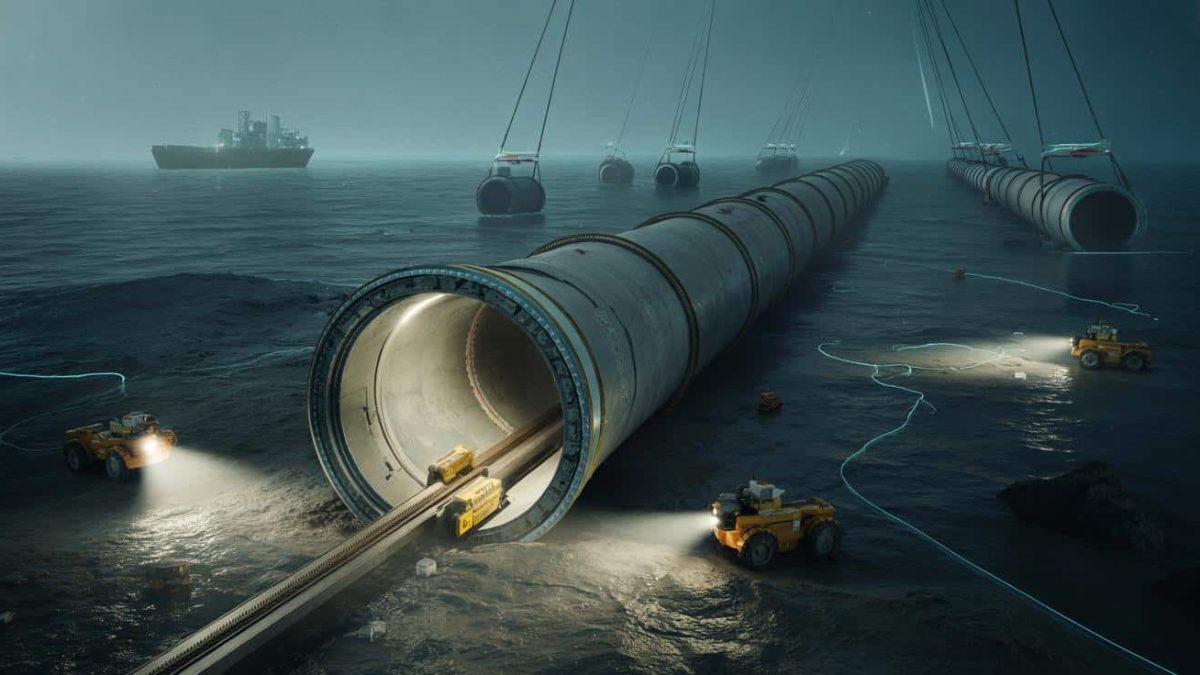
Imagine boarding a streamlined train in one of Europe’s most vibrant capitals and disembarking in Asia’s bustling metropolis after a peaceful fourteen-hour journey beneath the ocean’s surface. What once belonged entirely to the realm of science fiction is rapidly becoming reality. A consortium of leading structural and civil engineers from twenty-three nations has officially confirmed the technical feasibility and construction timeline for what may be humanity’s most ambitious transportation infrastructure project to date: a continuous underwater rail corridor spanning approximately 8,500 kilometers across the seabed.
The Vision Behind the Megaproject
The concept of connecting continents through submerged tunnels has captivated engineers and visionaries for over a century. However, only recent advances in deep-sea engineering, autonomous drilling technology, and material science have made such an undertaking practically achievable. The approved route would traverse the Atlantic Ocean floor, avoiding major geological fault lines and navigating around existing submarine infrastructure including telecommunications cables and petroleum pipelines.
Project architects emphasize that this isn’t merely about transportation convenience. The tunnel system promises to generate substantial economic benefits by reducing travel time between major economic zones, potentially creating millions of jobs in construction, maintenance, and related industries. Environmental advocates also note that removing millions of flights and long-haul truck journeys from transportation networks could meaningfully reduce global carbon emissions.
Engineering Challenges and Innovative Solutions
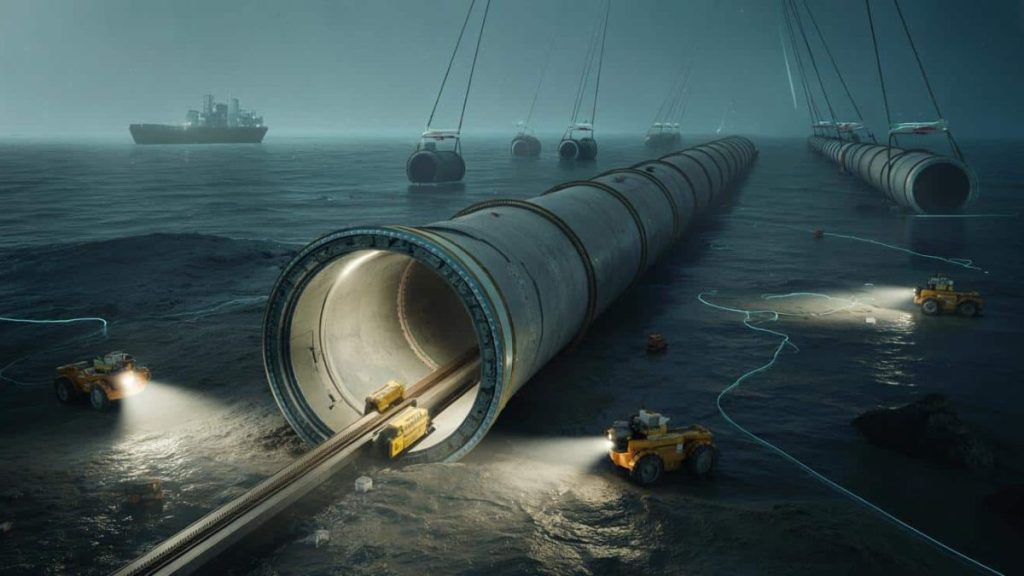
Constructing a tunnel through thousands of meters of ocean water presents engineering challenges of staggering complexity. The deepest portions of the Atlantic reach nearly 8,000 meters, where water pressure exceeds 800 times atmospheric pressure at sea level. The tunnel would need to maintain structural integrity under these extreme conditions while accommodating trains traveling at speeds up to 320 kilometers per hour.
Engineers have proposed utilizing cutting-edge materials including reinforced composite structures and specialized titanium alloys capable of withstanding prolonged exposure to ultra-high pressure environments. The tunnel’s internal diameter would measure approximately 7.5 meters, accommodating double-track rail systems with pressurized passenger and freight cars. Internal atmospheric pressure would be maintained artificially to enable comfortable passenger conditions regardless of external ocean pressures.
The construction methodology represents an innovation itself. Rather than traditional tunnel-boring machines, engineers plan to employ remotely operated deepwater excavators working in concert with submersible construction units. A series of intermediate ventilation and access chambers spaced roughly every 200 kilometers would facilitate maintenance and emergency operations. These chambers would themselves represent engineering achievements, essentially functioning as reinforced underwater stations capable of supporting human workers during maintenance procedures.
Timeline and Phased Implementation Strategy
The official engineering report outlines a phased approach spanning approximately thirty years from initiation to full operational capacity. The initial five-year phase focuses on extensive seabed surveying, geological mapping, and regulatory approval processes. This preparatory period allows engineers to refine tunnel routes based on detailed oceanographic and geological data.
Construction proper would commence in phase two, beginning with the western terminus near London and progressing eastward. The strategic decision to begin construction from the European side capitalizes on existing infrastructure and established supply chains. Initial tunnel boring would operate at conservative speeds, establishing proven methodologies before scaling up operational capacity.
Remarkably, engineers project that passenger service could begin on a limited basis within fifteen years, connecting London and Dublin initially through a shorter 300-kilometer undersea section. This pilot corridor allows project managers to validate systems, troubleshoot operational procedures, and secure funding for subsequent expansion phases extending toward continental Asia.
Economic and Geopolitical Implications

The financial scope rivals the Panama Canal in complexity and investment magnitude. Current estimates place total construction costs between 1.2 and 1.8 trillion euros, with potential cost overruns anticipated given the project’s unprecedented nature. However, economic analyses suggest that operational revenues from passenger and freight services could recoup construction expenses within fifty to seventy years of full commercial operation.
Perhaps more significantly, the project reshapes geopolitical relationships and economic interdependencies. Nations along the tunnel corridor gain unprecedented transportation advantages. Tokyo, Delhi, Istanbul, Moscow, and London would effectively move closer together economically, potentially reducing the commercial appeal of air freight corridors and maritime shipping routes for time-sensitive cargo.
The governance structure involves unprecedented international cooperation. A new international authority, established through treaty and modeled after existing multinational infrastructure agencies, would oversee design standards, safety protocols, and operational management. This governance framework itself represents diplomatic innovation, requiring consensus among dozens of sovereign nations regarding construction standards, security procedures, and revenue sharing mechanisms.
Safety Systems and Operational Protocols
Given the extreme environment, safety systems incorporate multiple redundancies exceeding those found in conventional rail infrastructure. Continuous structural monitoring through embedded sensors would detect microscopic stress patterns before they develop into critical failures. Ventilation systems maintain oxygen levels and remove carbon dioxide throughout the tunnel network, with emergency oxygen reserves stored strategically along the route.
Evacuation procedures account for the unique challenge of helping passengers exit a tunnel beneath thousands of meters of ocean water. Emergency protocols direct passengers to pressurized refuge chambers rather than attempting external evacuation. These chambers, maintained at safe atmospheric pressures, provide protected environments while rescue operations are coordinated.
Looking Forward to Global Transportation Transformation
While full realization remains decades away, the official engineering confirmation represents a watershed moment. What was dismissed as fantasy a generation ago now has detailed technical specifications, realistic timelines, and structured implementation plans. The project embodies human capacity to reimagine infrastructure and transcend natural barriers through ingenuity and perseverance.
As construction crews eventually begin excavating the deepest transportation tunnel ever conceived, they will literally be laying foundations for a more interconnected world. The underwater rail corridor stands as testament to engineering progress and international cooperation, ultimately serving billions of future passengers who will traverse continents beneath the waves.









Leave a Comment