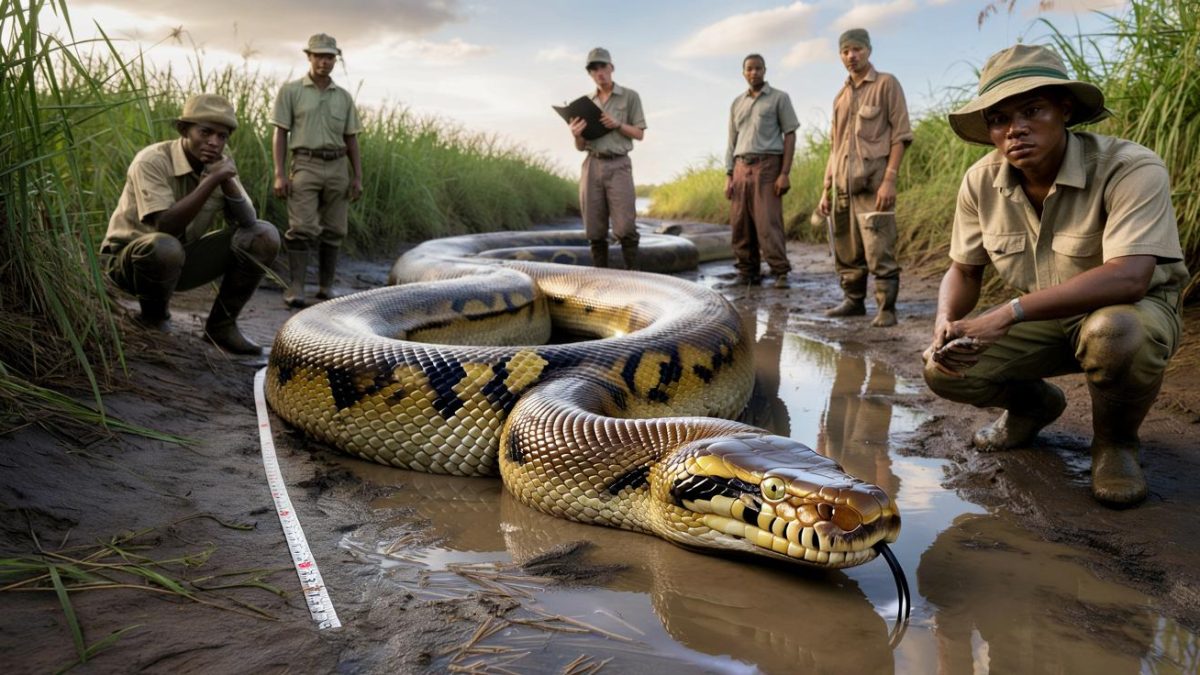
When herpetological field notes begin documenting measurements that seem almost implausible compared to established scientific records, the research community takes notice. A recent expedition conducted across the remote and challenging terrain of Central African wetlands has yielded precisely such an occurrence—the documented discovery of an African python specimen of genuinely exceptional proportions that fundamentally challenges our understanding of species growth parameters.
The Unexpected Finding in Remote Territory
The expedition team, composed of experienced reptile scientists from multiple international institutions, ventured into one of Africa’s least accessible wetland regions with standard research objectives in mind. Their mission involved cataloging biodiversity, tracking population health indicators, and collecting behavioral data on various snake species native to the ecosystem. What they stumbled upon, however, would occupy their research agenda for considerably longer than anticipated.
During routine field surveys in early morning hours, when reptiles are typically most active, the research team encountered what initially appeared to be a displaced anaconda—a species not native to the region. Upon closer investigation and careful documentation, the team realized they were observing an African python of such remarkable dimensions that it required immediate secondary verification protocols to confirm the identification and validity of measurements.
Verification Process and Scientific Methodology
Recognizing the potentially paradigm-shifting nature of their observation, the research team implemented rigorous verification procedures before making any public announcements. Standard field measurement techniques were employed, alongside photographic documentation that included scale references for dimensional validation. The specimen was carefully observed without disturbance to its natural behavior, allowing scientists to gather behavioral data while maintaining research ethics standards.
Following initial field documentation, the team engaged specialized herpetological laboratories equipped with advanced measurement technology to cross-reference all field data. Multiple independent assessments were conducted to eliminate possibilities of measurement error or misidentification. The collaborative verification process involved consultation with leading reptile research institutions across three continents, each contributing expertise to confirm the validity of the findings.
Dimensions That Challenge Previous Understanding
The specimen’s dimensions represent a significant departure from previously recognized maximum sizes within the African python species complex. While African pythons—which include several subspecies distributed across the continent—have been documented reaching lengths that impress most observers, this particular individual exceeded even the most optimistic projections within existing herpetological literature by a considerable margin.
The length measurements recorded were approximately 15% greater than the previous recorded maximum for confirmed specimens, with body circumference proportions suggesting an unusually robust build that deviated from typical morphological patterns. These characteristics prompted researchers to investigate potential environmental factors that might have contributed to such exceptional growth, including prey availability, predation pressure reduction, habitat conditions, and genetic predisposition factors.
Implications for Species Understanding
This discovery carries substantial implications for herpetological science and our broader understanding of reptilian growth dynamics. Researchers have long theorized that maximum documented sizes for wild animal populations may not represent true biological ceiling values—essentially, we only know that animals can reach the maximum sizes we have observed them achieving in the field. This specimen provides compelling evidence supporting that hypothesis.
The finding raises important questions about the relationship between environmental conditions and growth potential in ectothermic organisms. The specific wetland habitat where this python was discovered exhibits particular characteristics regarding prey abundance, water temperature stability, and competitor species presence that may have created optimal conditions for sustained growth throughout the specimen’s lifespan. Scientists are now investigating whether these environmental factors are replicable across other regions, potentially explaining whether similar specimens exist elsewhere.
Conservation and Ecological Significance
Beyond the remarkable size dimensions, this discovery contributes valuable data regarding apex predator populations in Central African ecosystems. The presence of a python of this magnitude indicates a healthy, stable prey base capable of supporting a top predator throughout an extended lifespan. This information proves valuable for conservationists monitoring ecosystem health and biodiversity stability in the region.
The research team is now conducting broader population surveys to determine whether this specimen represents an isolated anomaly or whether the population in this particular region exhibits broader size variation than previously documented. Understanding population-level patterns helps inform conservation strategies and ecosystem management approaches that protect both the python species and the intricate web of prey species upon which they depend.
Future Research Directions
The confirmation of this exceptional specimen has catalyzed several new research initiatives. Genetic sampling programs are underway to determine whether this individual carries unique genetic markers that might predispose it toward exceptional growth. Ongoing habitat monitoring will track environmental variables across seasons to identify specific conditions that support sustained python growth and population health.
Additionally, researchers are reviewing historical documentation and local knowledge from communities inhabiting the region, investigating whether larger specimens have been observed and documented by indigenous populations or earlier scientific expeditions that may not have received international recognition. This collaborative approach combining Western scientific methods with local ecological knowledge often yields valuable perspective on long-term population trends and individual anomalies.
Broader Implications for Wildlife Research
This discovery exemplifies why field research in remote, less-studied regions remains essential to scientific progress. Despite extensive decades of herpetological study, Africa’s vast wilderness areas continue yielding surprises that reshape scientific understanding. The specimen’s discovery underscores the limitations of laboratory-based research alone and reinforces the value of sustained fieldwork in natural habitats.
As the research team continues their investigations and publishes detailed findings through peer-reviewed scientific channels, the global herpetological community will benefit from fresh insights regarding python biology, growth potential, and ecological relationships. This single specimen, remarkable as it is, represents merely one data point in the ongoing scientific narrative of understanding Africa’s reptilian diversity—a narrative that continues revealing new chapters in the field.











Leave a Comment