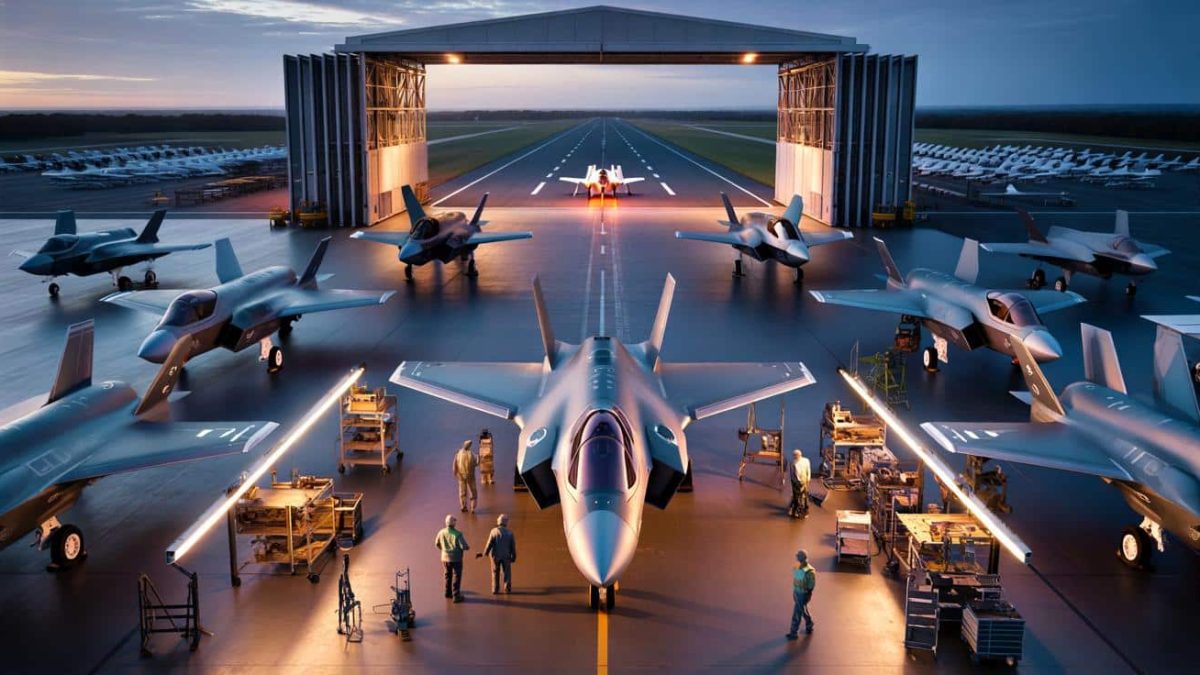
The defense industry continues to watch Lockheed Martin’s F-35 Lightning II program with considerable attention. Recently, company executives have reaffirmed their commitment to maintaining production schedules at current levels, signaling confidence in the program’s trajectory and the sustained global demand for fifth-generation fighter aircraft. This announcement carries significant implications for defense budgets, allied nations, and the broader aerospace manufacturing sector.
Understanding the F-35 Production Landscape
The F-35 Lightning II represents one of the most ambitious military aircraft programs in modern history. Since its inception, this versatile fighter jet has evolved into a cornerstone of air defense strategies for numerous nations worldwide. Lockheed Martin, as the primary contractor responsible for production, faces the complex challenge of balancing manufacturing capacity with consistent delivery schedules while maintaining quality standards.
The production rate conversation has always been nuanced. Various stakeholders—including government procurement offices, allied nations awaiting deliveries, and industry analysts—have continuously assessed whether Lockheed Martin could achieve higher output or should adjust current targets based on market conditions and supply chain realities. The company’s decision to maintain steady production rates reflects a calculated approach to sustainability and reliability rather than aggressive expansion.
Executive Perspectives on Manufacturing Strategy
Recent statements from Lockheed Martin leadership underscore a philosophy centered on quality assurance and operational efficiency. Rather than pursuing aggressive production increases that might compromise aircraft quality or strain supply chains, the company’s executives have emphasized the importance of consistent, reliable delivery schedules. This perspective aligns with lessons learned from previous defense procurement challenges where accelerated production timelines led to quality issues and cost overruns.
The decision to hold steady on production rates also reflects pragmatic considerations about workforce stability, supplier relationships, and manufacturing facility utilization. Rapid fluctuations in production targets create cascading effects throughout the industrial base, affecting employment, inventory management, and long-term partnerships with component suppliers. By maintaining predictable production schedules, Lockheed Martin supports a more sustainable aerospace manufacturing ecosystem.
Global Demand and International Commitments
The F-35 program operates within a complex international framework. Multiple allied nations have committed to acquiring F-35s, creating a queue of orders that extends well into the coming decades. Countries spanning Europe, Asia, and the Middle East have invested heavily in F-35 acquisition programs, viewing the aircraft as essential to their national defense strategies. This international commitment provides a stable foundation for Lockheed Martin’s production planning.
The sustained demand from allied nations actually supports the company’s decision to maintain current production rates. Rather than experiencing demand volatility, the F-35 program benefits from multi-year commitments and long-term procurement agreements. This predictability enables manufacturers to optimize production processes, negotiate favorable supplier contracts, and plan workforce requirements with greater confidence.
Supply Chain Considerations and Manufacturing Efficiency
Modern fighter jet production depends on an intricate network of suppliers providing components ranging from engines to avionics systems. The global supply chain disruptions experienced in recent years have highlighted the importance of sustainable production planning. By maintaining steady production rates rather than pursuing volatile spikes and valleys, Lockheed Martin supports supply chain stability and reduces the risk of bottlenecks.
Manufacturing efficiency improvements continue to benefit F-35 production. As the program matures, production processes become increasingly streamlined. Lockheed Martin has invested significantly in advanced manufacturing technologies, automation, and lean production methodologies. These improvements enhance output quality while maintaining competitive unit costs, creating a win-win scenario where current production rates generate more value than equivalent rates might have achieved a decade earlier.
Cost Per Unit and Program Economics
One of the most scrutinized aspects of the F-35 program involves unit costs. Lockheed Martin has made considerable progress in reducing the cost per aircraft over the program’s lifetime. This reduction reflects both manufacturing improvements and the declining costs of components as production volumes accumulate. The company’s decision to maintain production rates supports this downward cost trajectory by allowing suppliers to achieve economies of scale without the disruption of frequent production adjustments.
The stable production approach also influences defense budgets worldwide. When procurement offices can depend on consistent delivery schedules and predictable unit costs, they can plan military modernization programs more effectively. This reliability becomes especially important for allied nations managing limited defense budgets and competing priorities.
Workforce Development and Skills Preservation
The aerospace manufacturing industry faces ongoing challenges attracting and retaining skilled workers. Lockheed Martin’s commitment to steady production rates supports workforce stability, enabling the company to invest in employee training and development. Experienced manufacturing professionals, engineers, and technicians represent invaluable assets that take years to develop. Stable production schedules allow these skilled workers to maintain proficiency and deepen expertise.
This workforce stability extends throughout the supplier network. Small and medium-sized manufacturers providing specialized components depend on predictable orders to maintain their operations and invest in capabilities. Volatile production schedules can force suppliers to reduce staff or close facilities, creating skill gaps that become difficult to remedy when demand recovers.
Future Implications and Program Prospects
Lockheed Martin’s steadfast commitment to current production rates positions the F-35 program well for the coming decades. As allied nations complete their initial procurement phases and transition to potential sustainment and upgrade contracts, the program’s foundation remains solid. The company’s disciplined manufacturing approach suggests confidence in long-term demand and the program’s technical viability.
The decision to maintain production rates rather than pursue aggressive expansion also reflects realistic assessments of market capacity and competition. Other nations continue developing alternative fifth-generation fighter platforms, creating a competitive landscape that encourages focused execution rather than overexpansion. By delivering F-35s consistently and reliably, Lockheed Martin reinforces the aircraft’s value proposition and maintains customer satisfaction.
Conclusion: Steady as She Goes
Lockheed Martin’s determination to maintain F-35 production rates at current levels represents a strategic choice prioritizing sustainability over aggressive growth. This approach serves multiple constituencies: defense departments receive reliable delivery schedules, allied nations can plan military modernization programs with confidence, and the aerospace industrial base benefits from workforce stability and supply chain predictability. As global security challenges continue evolving, the consistent availability of F-35 aircraft reinforces allied air defense capabilities while supporting economic stability across the defense manufacturing sector.











Leave a Comment