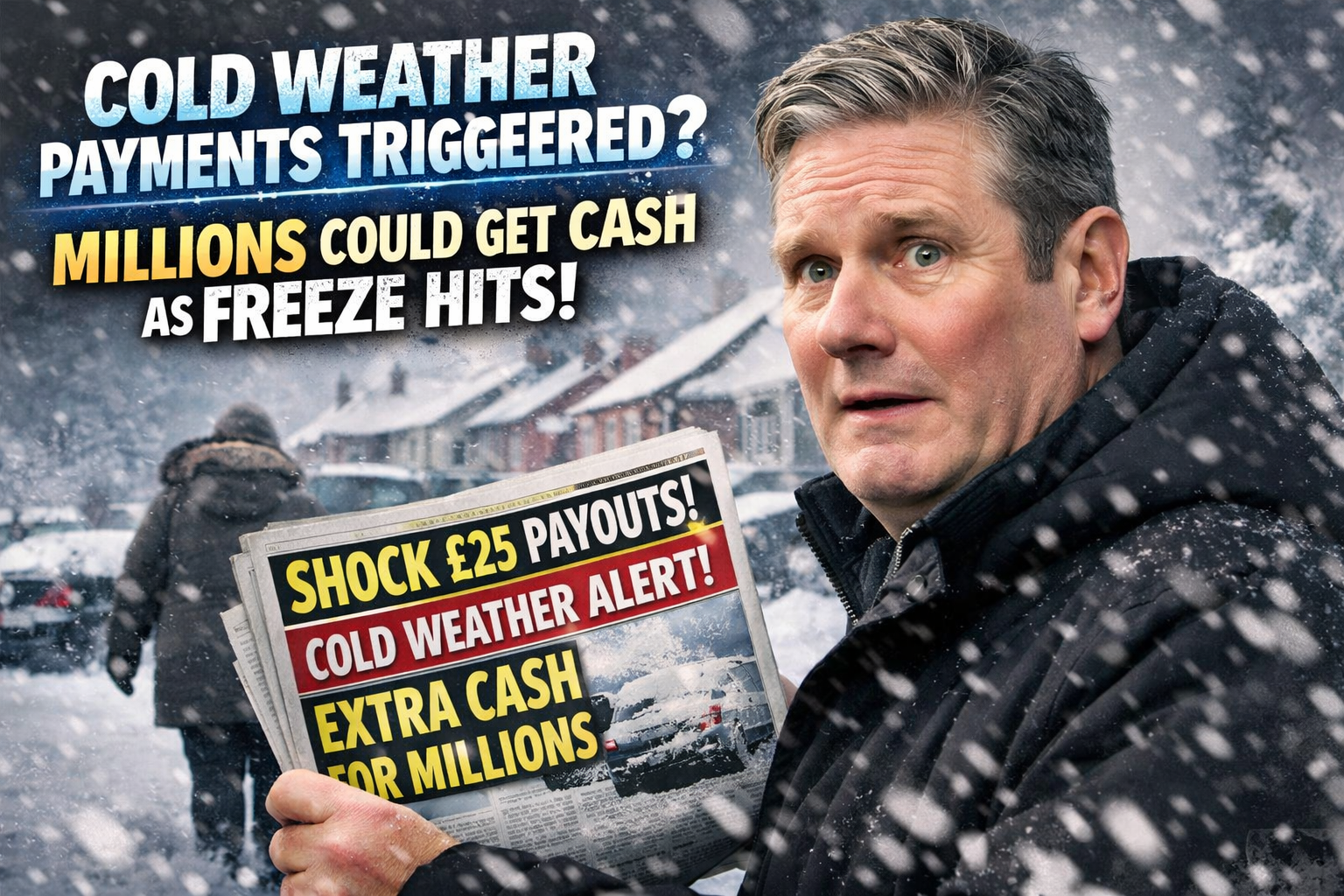
As winter tightens its grip across the UK, many households are quietly bracing for the same question every year — how to stay warm without blowing the monthly budget. Heating bills rise fast when temperatures fall, and for people already stretched thin, even a short cold snap can create serious financial pressure.
That’s where Cold Weather Payments come in. Often overlooked and misunderstood, this government-backed support can provide extra money automatically when freezing conditions hit. And in particularly harsh winters, some households receive multiple payments without ever filling out a form.
Yet thousands of eligible people still don’t realise how the scheme works, when payments are triggered, or why their neighbour might get paid while they don’t.
Here’s the full picture, explained clearly and simply.
What Cold Weather Payments Are Designed to Do
Cold Weather Payments exist to help vulnerable households cope with the extra cost of heating during extreme cold spells. The idea is straightforward: when temperatures drop low enough for long enough, heating homes becomes more expensive and more necessary.
Instead of asking people to apply in the middle of winter stress, the system works automatically. If the right conditions are met, money is paid directly to those who qualify.
This support is not a loan, does not need to be repaid, and does not affect other benefits.
How the Cold Weather System Actually Works
Cold Weather Payments are triggered by official temperature readings rather than personal experience. Every postcode is linked to a specific weather station, and payments are released only when that station records freezing conditions for a sustained period.
If the average temperature stays at or below the qualifying level for a full cold spell, the payment is released automatically. It does not matter how cold your home feels or how high your bills are — the decision is made purely on verified weather data.
This system can feel frustrating, but it ensures payments are issued fairly and consistently across the country.
How Much Support You Can Receive
Each qualifying cold spell unlocks a fixed payment that is added directly to your usual benefit payment. There is no restriction on how many times this can happen during a winter season.
In colder regions or during severe winters, multiple cold spells may trigger repeated payments. Over time, this can add up to a meaningful level of support, especially during periods of high energy costs.
Who Can Receive Cold Weather Payments
Eligibility depends on the type of benefit you receive and, in some cases, your household circumstances.
People most likely to qualify include those receiving:
-
Pension-related support
-
Income-based benefits
-
Disability or health-related support
-
Universal Credit with additional qualifying elements
For Universal Credit claimants, eligibility often depends on whether the claim includes housing costs, disability elements, or responsibility for young children.
This is one of the most common areas of confusion, as not every Universal Credit claimant qualifies automatically.
Why You Don’t Need to Apply
One of the biggest advantages of Cold Weather Payments is that there is no application process.
If you qualify and your area experiences a qualifying cold spell, the payment is issued automatically. There’s no need to:
-
Call the benefits office
-
Submit a claim
-
Prove heating costs
-
Track temperatures yourself
The money usually arrives within a short period after the cold spell ends and appears clearly labelled in your bank statement.
When Payments Are Active During the Year
Cold Weather Payments are only available during the official winter support period. If freezing conditions happen outside this window, no payment is triggered, even if temperatures are unusually low.
This seasonal limit is important to understand, as some cold snaps in early spring or late autumn may not qualify.
Why Some Areas Receive Payments and Others Don’t
It’s not unusual for people living just a few miles apart to have different outcomes.
This happens because:
-
Each postcode is linked to a different weather station
-
Some stations record slightly higher average temperatures
-
Even a small difference can prevent a trigger
The system is precise, sometimes to the frustration of households that feel equally cold but fall just outside the qualifying threshold.
What to Do If You Think a Payment Is Missing
Most Cold Weather Payments arrive without issues, but mistakes can happen.
You may want to follow up if:
-
You receive a qualifying benefit
-
Your area experienced a confirmed cold spell
-
No payment arrived after a reasonable waiting period
In these cases, contacting the benefits office can help clarify whether there was an eligibility issue or an administrative delay. Temperature data itself cannot be challenged, but benefit records can be corrected if they were wrong at the time.
The Difference Between Cold Weather Support and Other Winter Help
Cold Weather Payments are just one part of the UK’s wider winter support system.
They differ from other schemes in key ways:
-
They can be paid multiple times in one winter
-
They are triggered by weather, not age alone
-
They are automatic and reactive
Some households may receive Cold Weather Payments alongside other winter support, depending on their situation.
Why Cold Weather Payments Matter More Now
Energy prices have changed how people experience winter. Even a few days of intense cold can push monthly bills far beyond what many households can manage.
Cold homes are also linked to serious health risks, particularly for older adults and people with long-term conditions. Financial support during cold spells is not just about comfort — it’s about preventing illness and reducing pressure on health services.
For many families, the payment helps cover:
-
Extra heating use
-
Hot meals during colder days
-
Keeping living spaces safe and warm
Staying Informed Without Stress
You don’t need to track temperatures daily, but staying informed helps manage expectations. Knowing how the system works can reduce anxiety and prevent unnecessary worry when payments don’t arrive immediately.
If you receive a qualifying benefit, the best approach is simple:
-
Keep your benefit details up to date
-
Allow time after cold spells
-
Check bank statements carefully
Often, the payment arrives quietly when you least expect it.
Looking Ahead to Future Winters
Cold Weather Payments remain one of the most direct forms of winter support in the UK. While discussions about benefit reform continue, the scheme is still active and continues to provide targeted help when it’s most needed.
With weather patterns becoming more unpredictable, many experts believe this type of automatic support will remain essential in the years ahead.
Final Word
Cold Weather Payments don’t require paperwork, applications, or phone calls. They operate quietly in the background, stepping in when temperatures drop and heating costs rise.
If you qualify, the support may already be on its way — offering a small but meaningful cushion during the coldest days of winter.
In a season where warmth can become a luxury, that extra help can make a real difference.








Leave a Comment