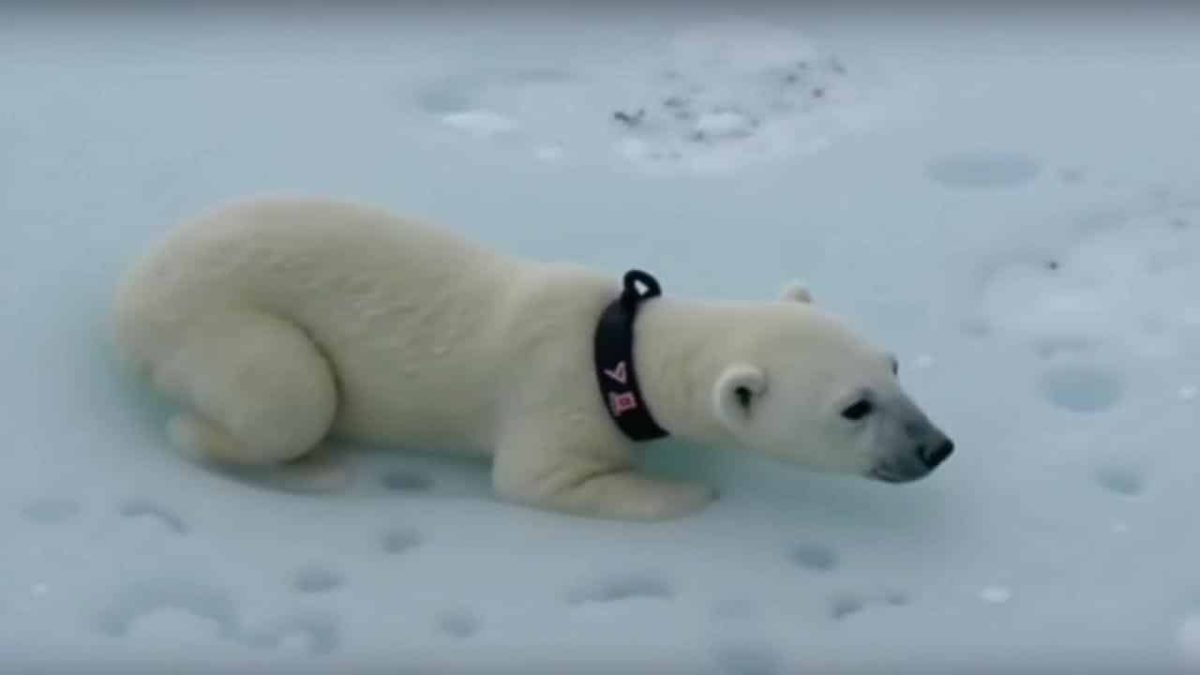
The frigid waters of the Arctic Ocean held a secret that would soon reshape our understanding of polar bear capabilities. Wildlife researchers tracking a young polar bear through cutting-edge GPS collar technology made a discovery that left the scientific community astounded. What began as routine monitoring in one of Earth’s most remote regions evolved into an extraordinary tale of endurance, adaptation, and survival against seemingly impossible odds.
The Unexpected Discovery
When researchers downloaded data from the GPS collar attached to a three-year-old male polar bear in the Canadian Arctic, they initially questioned their instruments. The coordinates seemed impossible—the bear had traveled an uninterrupted distance of over 400 kilometers across open ocean water. For context, this surpasses previous documented long-distance swimming records for young polar bears by a significant margin. The collar, equipped with advanced satellite technology, had meticulously tracked every coordinate change, creating an undeniable digital trail across the Arctic seascape.
Dr. Sarah Mitchell, a leading Arctic mammal researcher at the International Wildlife Institute, explained the significance: “We were genuinely shocked. While adult polar bears are known for their swimming prowess, this young bear’s journey demonstrated capabilities we didn’t believe were possible at that age and experience level. The data forced us to reconsider everything we thought we knew about juvenile bear behavior.”
Understanding Polar Bear Migration Patterns
Polar bears have long captivated scientists with their unique relationship with Arctic ice and open water. These apex predators have evolved remarkable adaptations for aquatic environments, possessing powerful limbs, water-resistant fur, and an extraordinary sense of direction. However, young bears—particularly those recently separated from their mothers—were thought to depend on established migration routes and sea ice platforms for their movements.
The traditional understanding suggested that juvenile bears would follow more predictable pathways, utilizing seasonal ice formations as stepping stones across the Arctic. This young bear, however, appeared to abandon these conventional routes entirely. Rather than waiting for favorable ice conditions or following the typical southward migration pattern, the animal committed fully to open-water swimming for an extended period.
Technological Marvel Behind the Discovery
Modern GPS collars represent pinnacles of wildlife monitoring innovation. These devices, barely larger than a smartphone, integrate satellite communication technology, advanced sensors, and data storage capacity. The collar tracking this remarkable bear featured hourly position updates, temperature sensors, and accelerometers that measured physical activity levels. This comprehensive data collection created an incredibly detailed portrait of the bear’s journey.
The collar’s battery system, powered by both solar panels and chemical cells, ensured continuous operation throughout the bear’s extended ocean journey. Such technology has revolutionized wildlife research, allowing scientists to observe animal behavior in real-time across vast, inaccessible territories. Without these technological advancements, this remarkable journey would have remained forever unknown.
The Grueling Ocean Crossing
Analyzing the GPS data revealed that the bear’s marathon swim spanned approximately nine days of nearly continuous movement. The animal maintained an average speed suggesting deliberate, purposeful swimming rather than aimless drifting. Water temperature readings from the collar indicated the bear navigated waters ranging from minus-one to plus-three degrees Celsius—conditions that would be lethal for most mammals within hours.
Nutritional concerns presented another puzzle for researchers. Young polar bears possess impressive fat reserves, but a journey of this magnitude would require substantial energy expenditure. Scientists theorized the bear might have encountered and consumed seals or marine mammals during the crossing, though the data couldn’t definitively confirm this hypothesis. Some researchers suggested the animal’s metabolism might have slowed in response to prolonged water immersion—an adaptation similar to diving mammals.
Climate Change and Behavioral Adaptation
The bear’s extraordinary journey occurred during a period of declining Arctic sea ice extent. Scientists have documented consistent reductions in seasonal ice coverage over the past two decades, forcing polar bears to spend longer periods in open water and adapting their foraging and migration strategies. This young bear’s journey might represent an evolutionary response to changing environmental conditions.
Professor James Chen, a climate ecology expert, noted: “This observation suggests polar bears possess greater behavioral flexibility than previously credited. As ice habitat diminishes, we may be witnessing the emergence of new survival strategies. While remarkable, this journey also underscores the pressures these animals face in our rapidly changing Arctic.”
Implications for Conservation
The discovery raises important questions about polar bear conservation strategies. If young bears can successfully navigate extreme open-water crossings, it suggests populations might be more resilient to sea ice loss than previously assumed. However, scientists caution against optimism. Successful journeys by individual animals don’t necessarily indicate population-wide sustainability.
The energy expenditure required for such journeys means bears must compensate through increased feeding efficiency. As ice habitat shrinks, bears have fewer platforms from which to hunt seals effectively. The math becomes increasingly difficult: longer swims require more calories, yet reduced ice habitat provides fewer hunting opportunities.
Future Research Directions
This remarkable discovery has sparked new research initiatives focused on polar bear oceanic behavior. Scientists plan to deploy enhanced GPS collars across multiple populations, collecting comparative data on swimming patterns, distances, and frequencies. University research teams have petitioned for funding to establish long-term monitoring programs examining how individual bears respond to variable ice conditions.
The findings also highlight the importance of continued investment in wildlife tracking technology. As devices become smaller, more efficient, and more data-rich, our capacity to understand animal behavior expands exponentially. Every data point collected contributes to a larger understanding of how wildlife adapts to environmental change.
Conclusion: Resilience in the Face of Change
The young polar bear’s extraordinary ocean crossing represents both an inspiring testament to animal resilience and a cautionary tale about changing Arctic conditions. While this individual bear successfully completed an unprecedented journey, it also demonstrated the lengths to which these animals must go to survive in their rapidly transforming habitat.
As climate change continues reshaping the Arctic landscape, polar bears will undoubtedly surprise us with unexpected adaptations and behaviors. This remarkable swimming journey serves as a reminder that nature possesses remarkable capacity for flexibility and survival, even as human activity fundamentally alters the world these magnificent creatures call home. The GPS collar’s data will continue informing conservation efforts for years to come, helping ensure these extraordinary animals have a viable future in an uncertain Arctic.










Leave a Comment