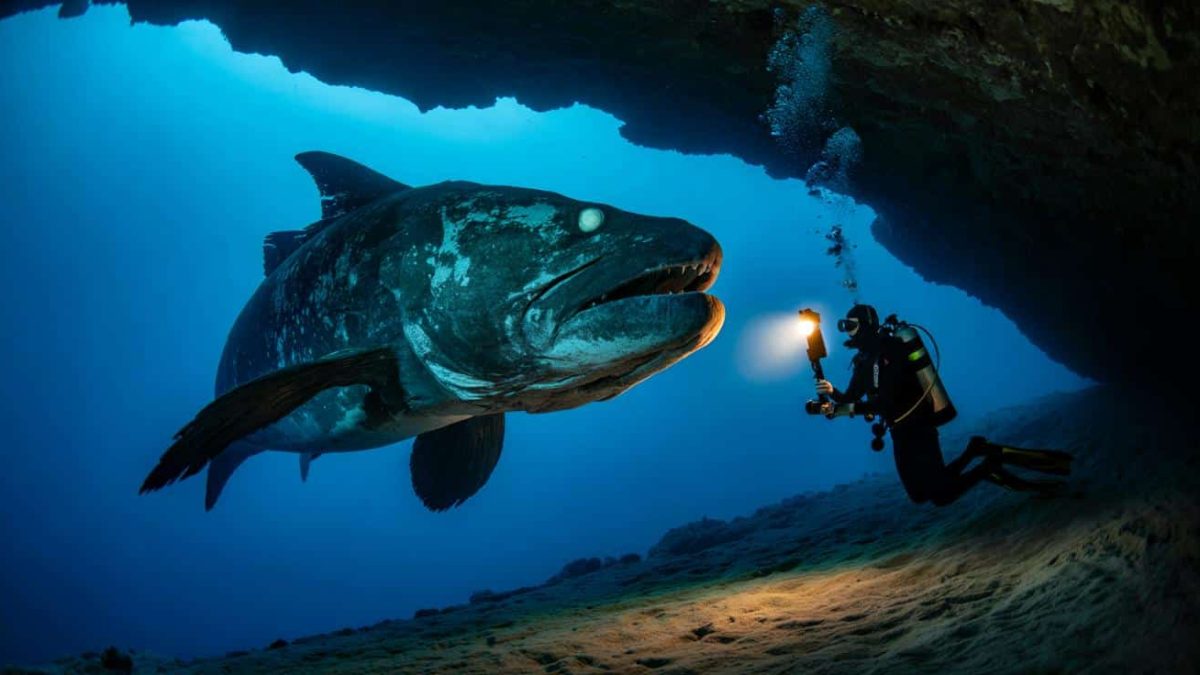
The ocean depths hold countless mysteries, yet few discoveries rival the significance of what French marine explorers recently documented off the coast of Indonesia. Their underwater cameras have captured images of a creature so ancient in its form that it reads like a biological manuscript from millions of years past. This remarkable encounter challenges our understanding of evolution and reveals that prehistoric life may still thrive in the darkest corners of our planet.
A Glimpse Into Deep Time
When we think of fossils, we typically imagine bones preserved in rock, ancient imprints of long-extinct creatures frozen in geological time. But nature has provided an alternative strategy for preserving life’s heritage: some organisms have simply remained largely unchanged across vast spans of time. These creatures, known as living fossils, represent a direct evolutionary continuity that spans from prehistoric epochs to our modern era.
The recent discovery by French diving expeditions demonstrates that the deep ocean is where evolution’s slowest clock ticks. In the abyssal zones, where pressure is crushing and light never penetrates, conditions have remained remarkably stable for eons. This environmental consistency creates the perfect conditions for biological stasis—where organisms have little evolutionary pressure to change because their habitat demands remain constant.
The French team’s documentation represents far more than simply capturing new photographs. It signifies our growing capability to explore the planet’s final frontier and our increasing commitment to understanding the full spectrum of life that shares our world. Every expedition into the deep brings us closer to comprehending the complete story of biological diversity.
The Indonesian Waters: A Biological Treasure Trove
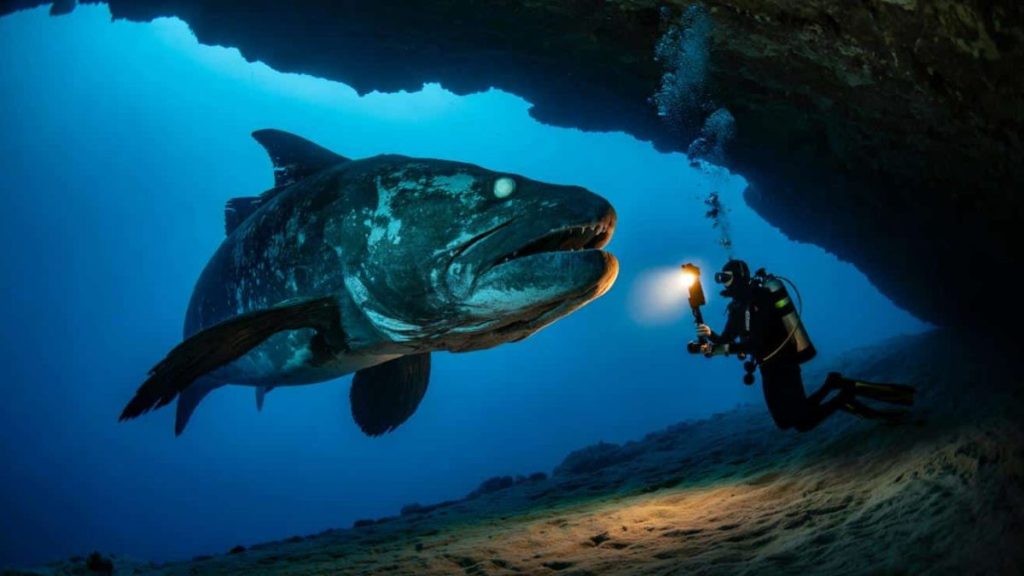
Indonesia’s marine environment represents one of Earth’s most biodiverse regions, a underwater realm where countless species have evolved in relative isolation from other ocean systems. The combination of deep trenches, seamounts, and unique current patterns creates distinct ecological niches that foster extraordinary biological specialization.
The Coral Triangle and surrounding waters have long captivated marine scientists precisely because of their remarkable species richness. However, the deepest regions—where most human exploration remains minimal—represent an entirely different frontier. The pressure, darkness, and extreme temperatures of these zones have selected for organisms with highly specialized adaptations, many of which have changed little since their ancestors first colonized these environments millions of years ago.
French oceanographic institutions have invested significantly in deep-water exploration technology, combining robotic submersibles with advanced imaging systems that allow researchers to document life forms without disturbing their natural habitats. This technological approach has proven invaluable for studying creatures that cannot survive in conventional laboratory conditions.
The choice to focus exploration efforts in Indonesian waters reflects the recognition that tropical deep-sea ecosystems remain severely understudied despite their ecological importance. Each expedition yields discoveries that expand our knowledge of planetary biodiversity and ecosystem function.
Evolutionary Standstill: Why Some Creatures Don’t Change
Evolutionary biologists have long puzzled over why certain organisms remain virtually unchanged across geological timescales. The answer lies in a principle that Darwin himself understood: natural selection acts upon variation, and when environmental conditions remain stable, there is minimal selective pressure for populations to accumulate novel traits.
Deep-sea organisms face an environment that has been remarkably consistent for millions of years. Food sources derived from surface productivity arrive as a gentle rain of organic matter. Competitors and predators exist in limited numbers. Temperature fluctuations are negligible. In such conditions, mutations that produce different body plans or behaviors confer no advantage—and many might actually be disadvantageous because they deviate from tried-and-tested survival strategies.
This concept challenges the popular misconception that evolution is always progressive, continuously driving organisms toward greater complexity or capability. In reality, evolution is fundamentally pragmatic. It favors whatever works, and if something is working exceptionally well, evolution may preserve that design across millions of years with remarkable fidelity.
The creatures documented by the French exploration teams represent nature’s successful long-term experiments—organisms that found viable strategies and have maintained them through epochs of planetary change.
Technological Marvels Enable Scientific Discovery
The ability to photograph these ancient creatures required remarkable technological achievements. Deep-sea exploration demands equipment that can withstand pressures exceeding 1,000 times atmospheric pressure at sea level. Cameras must function in complete darkness and capture useful imagery without disturbing fragile ecosystems.
Modern submersibles equipped with sophisticated lighting and imaging systems have transformed our capacity to study deep-ocean life. High-definition cameras, specialized sensors, and robotic arms allow researchers to observe and document creatures in their natural habitat with unprecedented clarity. The images captured by the French team represent the culmination of decades of technological development and oceanographic expertise.
These technological innovations have implications extending far beyond marine biology. The systems developed for deep-ocean exploration inform medical imaging, robotic engineering, and materials science. The pursuit of discovery in extreme environments drives innovation across multiple scientific and technical fields.
Scientific Significance and Future Implications
Documentation of living fossils provides invaluable data for understanding evolutionary processes, ecosystem stability, and the remarkable adaptive capacity of life. By studying organisms that have remained fundamentally unchanged for millions of years, biologists gain insights into the minimal requirements for survival, the stability of specific ecological roles, and the long-term sustainability of biological systems.
These discoveries also carry conservation implications. Species that have evolved in isolation within specific deep-sea habitats may possess extremely limited population sizes and narrow ranges of tolerance for environmental change. Understanding where these creatures live and what conditions they require is essential for developing effective conservation strategies.
The French expeditions represent collaborative scientific efforts that combine French oceanographic expertise with Indonesian marine knowledge and international cooperation. Such collaborations exemplify how modern science addresses planetary questions through coordinated international effort.
The Ocean’s Enduring Mysteries
Despite centuries of oceanographic study, our planet’s oceans remain profoundly unexplored. Estimates suggest that over ninety percent of ocean volume remains unvisited by humans. Within these vast, dark waters, countless creatures may exist undocumented, potentially representing entirely new branches of the tree of life or surprising connections to organisms known only from fossil records.
The French divers’ remarkable photographs serve as a powerful reminder that scientific discovery continues, that nature still surprises us, and that our planet harbors wonders we have scarcely begun to comprehend. Each expedition into the deep adds another piece to the vast puzzle of life’s diversity and evolution’s intricate patterns.
As we face unprecedented environmental challenges and accelerating biodiversity loss, these glimpses into Earth’s ancient biological heritage take on additional significance. They inspire conservation efforts and remind us why protecting our oceans—in all their mysterious depths—represents one of humanity’s most vital responsibilities.








Leave a Comment