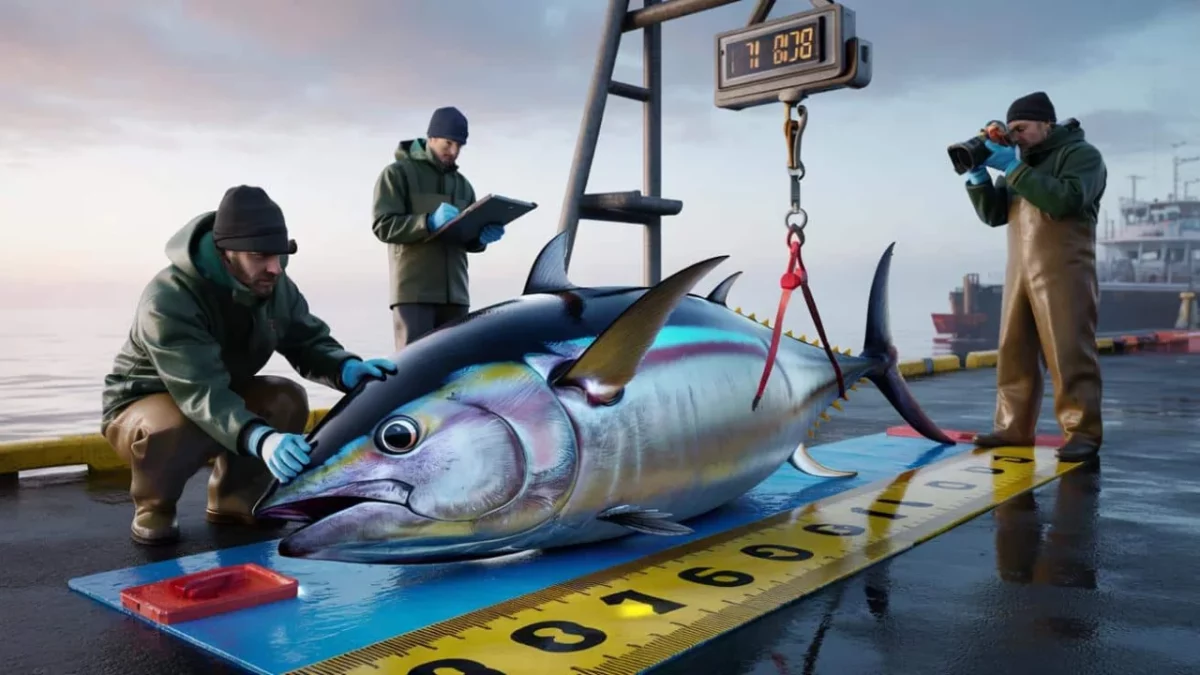
The depths of our oceans continue to reveal extraordinary creatures that challenge our understanding of marine biology. Recently, a colossal bluefin tuna specimen was captured, measured, and scientifically documented through rigorous peer-reviewed methodologies, marking a significant moment in ichthyological research. This discovery not only showcases the remarkable scale some fish achieve but also highlights the importance of standardized scientific protocols in validating extraordinary biological findings.
The Discovery That Sparked Scientific Interest
When commercial and research vessels reported the presence of an unusually large bluefin tuna in international waters, marine research institutions mobilized quickly. The initial observations suggested dimensions that exceeded typical records, prompting immediate scientific investigation. Unlike anecdotal fishing tales that often embellish such encounters, this discovery was treated with appropriate skepticism and subjected to verification procedures that would satisfy the scientific community’s most demanding standards.
The specimen’s appearance triggered a coordinated response among marine biology teams from multiple institutions. Rather than relying on photographs or hastily collected measurements, researchers recognized the necessity of comprehensive documentation. This measured approach would ultimately produce data valuable enough for publication in peer-reviewed scientific journals, transforming a casual observation into legitimate scientific knowledge.
Establishing Measurement Protocols and Standards
Before attempting to measure the magnificent creature, the scientific team established detailed protocols that would ensure accuracy and repeatability. Bluefin tuna, particularly large specimens, present unique challenges for measurement due to their powerful musculature, rapid movement capabilities, and the conditions under which they must be examined. The researchers developed procedures accounting for water temperature, fish stress levels, and the physiological changes that occur when these pelagic fish are removed from their natural environment.
The measurement team employed multiple complementary techniques simultaneously. Traditional methods using calibrated measuring devices were paired with advanced digital imaging systems that could capture precise dimensions from multiple angles. Underwater photogrammetry—a technique using overlapping photographs to create three-dimensional models—provided additional verification of physical dimensions. This redundancy wasn’t excessive caution; it represented best-practice science ensuring that no single measurement error could skew the final results.
The Peer Review Process and Scientific Validation
Once measurements were compiled, the research team prepared comprehensive documentation detailing every aspect of their methodology. This wasn’t simply a matter of reporting numbers; it involved explaining how instruments were calibrated, what environmental conditions prevailed during measurement, how the fish was handled, and what statistical analyses were applied to the collected data. This level of transparency is fundamental to peer review, where independent scientists evaluate whether procedures were sound and conclusions justified.
The peer review process subjected the findings to scrutiny from experts who had no stake in the outcome. These reviewers examined methodology, questioned assumptions, and verified that the researchers hadn’t made errors or overreached in their conclusions. Some of the most rigorous questioning came regarding whether the specimen’s measurements were truly exceptional or within the known range of bluefin tuna populations. Only after multiple rounds of revision and clarification did the scientific community accept the findings as credible.
What These Measurements Reveal About Bluefin Tuna Biology
The officially confirmed dimensions of this remarkable specimen provided invaluable data for understanding bluefin tuna growth potential. Scientists could compare these measurements against historical records spanning decades of research, determining whether this individual represented a true record-breaker or fell within previously documented ranges. The data also offered insights into the relationship between tuna age, growth rates, and environmental factors affecting marine predators.
Growth rings in otoliths—calcium carbonate structures within the fish’s ear—were analyzed to estimate age. This information revealed how rapidly the specimen had grown throughout its life and whether environmental conditions during particular years had influenced its development. Such longitudinal understanding helps marine biologists predict how populations might respond to changing ocean temperatures and shifting food availability.
Implications for Conservation and Ocean Management
The official confirmation of this specimen’s existence and dimensions carries significance beyond academic interest. Bluefin tuna populations have experienced alarming declines due to overfishing, making every large individual potentially valuable for breeding populations. Understanding the maximum size these fish can achieve under current environmental conditions informs conservation strategies and sustainable fishing policies.
International fisheries management organizations depend on accurate biological data when establishing catch quotas and protected areas. By documenting this specimen through peer-reviewed science, researchers provided information that policymakers could trust when making decisions affecting billions of dollars in fishing industry revenue and the survival of critically important ocean predators.
The Broader Importance of Scientific Rigor
This case exemplifies why scientific methodology matters profoundly when documenting extraordinary claims. Throughout history, reports of giant sea creatures have captured human imagination, yet most remain unverified. The difference between folklore and scientific knowledge rests entirely on whether claims survive rigorous testing and expert evaluation. By choosing to document this tuna through standardized protocols rather than relying on casual observation, researchers transformed a remarkable creature into a legitimate contribution to human knowledge.
The peer-review process, despite sometimes feeling cumbersome to researchers eager to announce discoveries, serves a vital function in protecting science’s credibility. It ensures that findings published under the banner of legitimate research actually meet standards worthy of that designation.
Looking Forward in Marine Research
This documented specimen will serve as a reference point for future bluefin tuna research for years to come. As ocean conditions continue evolving due to climate change, understanding the potential size and growth patterns of these fish becomes increasingly important. The officially confirmed measurements provide baseline data against which future specimens can be compared, enabling researchers to identify shifts in population characteristics that might indicate broader ecosystem changes.
The meticulous documentation and peer-review validation of this giant bluefin tuna represents science functioning at its best—curious, rigorous, and committed to truth over sensationalism. As we face unprecedented challenges in ocean conservation, this commitment to accurate knowledge becomes more valuable than ever.









Leave a Comment