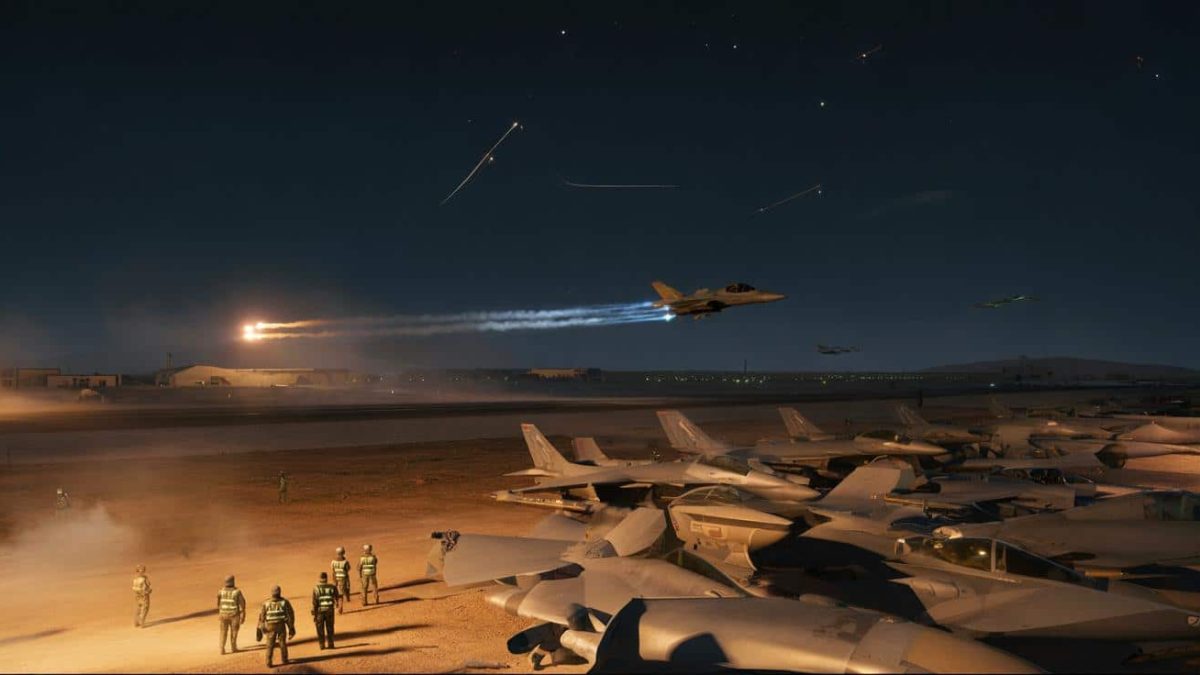
The skies above one of the world’s most strategically important regions are becoming increasingly populated with cutting-edge military hardware. Multiple squadrons of American fighter jets are converging on the Middle East in a demonstration of military capability that has captured international attention. This coordinated deployment represents one of the largest concentrations of advanced air assets in the region in recent memory.
The Aircraft Arsenal Taking Flight
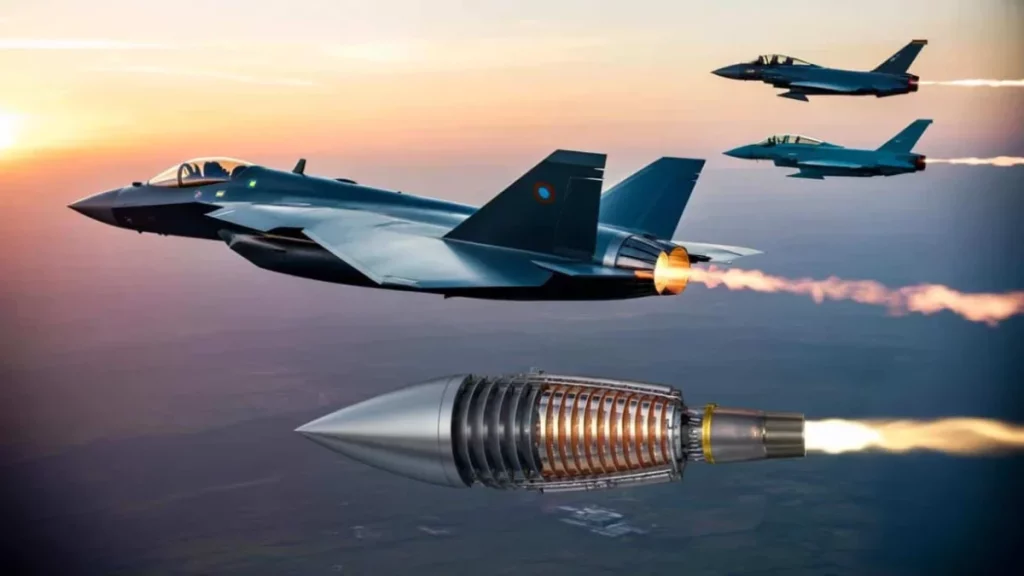
When military strategists discuss modern air superiority, four aircraft models dominate the conversation. The F-15 Eagle stands as a legendary fighter that has dominated aerial combat for decades. The F-16 Fighting Falcon represents the workhorse of air forces worldwide, known for its versatility and reliability. The F-22 Raptor symbolizes fifth-generation stealth technology with unparalleled combat capabilities. Finally, the F-35 Lightning II represents the future of integrated warfare systems and multi-role functionality.
The convergence of these aircraft types in a single theater demonstrates the seriousness with which military planners view the current situation. Each aircraft brings distinct advantages to the operational environment, creating a layered defense and offensive capability that few nations can match.
Strategic Implications of Regional Presence
Military presence serves multiple purposes beyond pure combat readiness. Showing the flag in critical regions communicates commitment to allies and deterrence to potential adversaries. The deployment of dozens of aircraft signals that leadership takes current regional dynamics seriously and is prepared to back diplomatic efforts with tangible military capacity.
Historical precedent demonstrates that visible military presence often prevents conflicts rather than initiates them. When potential adversaries understand the costs of aggression, they frequently pursue diplomatic solutions instead. The convergence of advanced fighters creates what military strategists call a “credible deterrent,” making conflict mathematically disadvantageous for any party considering hostile action.
Understanding the F-15 Eagle’s Role
The F-15 Eagle has earned its place as one of aviation’s great success stories. First introduced in 1976, this twin-engine fighter has never been shot down in air-to-air combat. Its combat record speaks volumes about design superiority and pilot capability. Modern variants have received significant upgrades, including enhanced avionics, improved engines, and expanded weapons capabilities.
In the Middle Eastern context, the F-15’s long-range capability and powerful radar systems make it ideal for maintaining air superiority across vast desert territories. Its speed and maneuverability continue to make it formidable in any aerial encounter, justifying its continued presence in active squadrons worldwide.
The F-16’s Versatility Advantage
The F-16 Fighting Falcon represents perhaps the most widely deployed fighter aircraft globally. Its design emphasizes agility and weapons flexibility, allowing pilots to adapt to diverse mission requirements. From air-to-air combat to ground attack, reconnaissance to electronic warfare, the F-16 adapts to operational needs with impressive effectiveness.
The aircraft’s popularity stems from its relatively lower operational costs compared to fourth and fifth-generation fighters, combined with genuine combat effectiveness. For regional deployments requiring sustained presence and varied mission capabilities, squadrons of F-16s provide exceptional flexibility and reliability.
Fifth-Generation Technology: The F-22 Raptor
The F-22 Raptor represents American air superiority technology at its peak. As the first operational fifth-generation fighter, it introduced stealth technology integrated with advanced avionics, supercruise capability, and thrust vectoring. These features combine to create an aircraft that fundamentally changed air combat doctrine.
The presence of F-22s in the Middle East carries significant strategic weight. Their capabilities ensure that American forces maintain technological superiority regardless of adversary equipment. The mere presence of these aircraft influences regional decision-making, as potential adversaries recognize the insurmountable technological gap.
The F-35’s Multi-Role Future
The F-35 Lightning II represents the direction modern warfare is heading. Rather than specializing in single roles, the F-35 integrates seamlessly with other military platforms through advanced data sharing systems. It serves as a flying sensor platform, a fighter, a bomber, and a reconnaissance asset simultaneously.
Deployment of F-35s signals investment in long-term regional stability. Unlike older platforms approaching retirement, the F-35 will serve for decades, ensuring technological relevance. Its integration with allied air forces means that American presence strengthens the entire coalition’s capability structure.
Logistical Challenges of Large Deployments
Maintaining dozens of advanced fighters in remote locations presents extraordinary logistical challenges. Each aircraft requires specialized maintenance, extensive parts inventory, trained personnel, and secure facilities. The infrastructure supporting these jets spans thousands of miles, involving multiple bases and coordination with allied nations.
Fuel consumption alone for sustained operations demands careful planning and resource allocation. Modern fighters consume tens of thousands of gallons during extended deployments, necessitating robust supply chains and forward positioning of resources. Ground crews must maintain proficiency with complex systems while operating in challenging desert environments.
International Reactions and Diplomacy
Such large-scale military deployments inevitably trigger international responses. Some nations view the presence as reassuring security guarantees, while others characterize it as provocative escalation. The diplomatic language surrounding military buildup becomes as important as the physical presence itself.
Regional allies typically welcome American presence, seeing it as strengthening their security position and deterring aggression. Conversely, adversarial nations issue statements denouncing the deployment as destabilizing, though rarely backing these assertions with equivalent military responses.
Technological Coordination Among Mixed Aircraft
Operating diverse fighter platforms simultaneously requires sophisticated coordination systems. Modern American military doctrine emphasizes network-centric warfare, where different aircraft types share real-time information through advanced communication systems. An F-35’s advanced sensors can detect targets that older fighters cannot, instantly sharing this information across the entire force.
This integration means that mixing fifth-generation and earlier aircraft creates capabilities greater than the sum of their parts. The F-35 becomes the coalition’s eyes, while F-15s and F-16s become the weapons platform. Such synergy multiplies effective combat power significantly.
Looking Forward
The convergence of American fighter jets in the Middle East reflects ongoing geopolitical complexity in one of the world’s most critical regions. Whether serving deterrent purposes, supporting diplomatic initiatives, or preparing for contingencies, these aircraft represent substantial military investment and political commitment.
As technology advances and aircraft retire, future deployments will evolve. Next-generation platforms are already in development, promising even greater capabilities. However, the fundamental purpose remains constant: maintaining the technological superiority and military credibility that have defined American air superiority doctrine for generations.









Leave a Comment