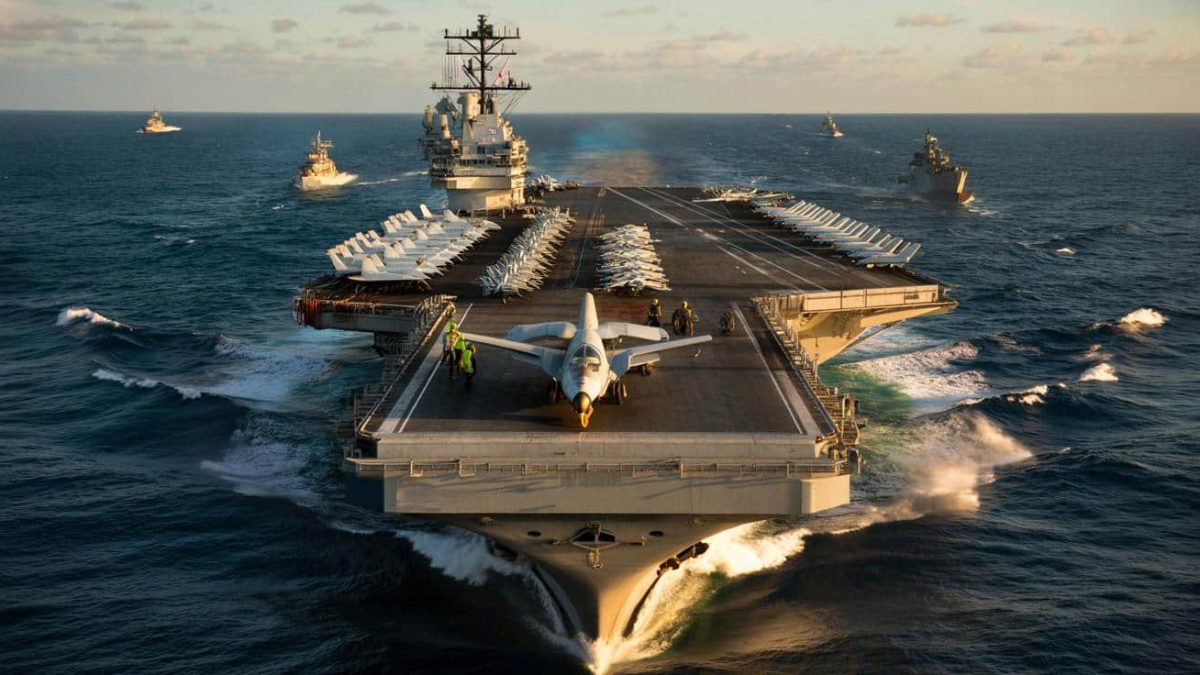
Imagine a mobile metropolis that cuts through ocean waves with unstoppable momentum, carrying enough firepower to influence global politics and defend international waters. This isn’t the plot of a Hollywood blockbuster—it’s the everyday reality of the USS Gerald R. Ford, a naval engineering achievement so monumental that it redefines what humanity can accomplish on the high seas.
A Vessel Beyond Comprehension
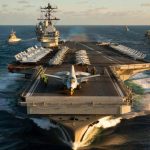
When most people think about large ships, they picture massive container vessels or luxury cruise ships. Yet the USS Gerald R. Ford operates in an entirely different league. Stretching 337 metres from bow to stern—roughly equivalent to three and a half football fields—this supercarrier represents the absolute pinnacle of maritime construction. At 100,000 tonnes, the vessel weighs as much as 14,000 elephants, a mind-bending figure that becomes even more remarkable when you realize this entire mass remains afloat through sophisticated engineering principles.
The sheer scale of this warship becomes apparent only when you understand the logistics behind its operation. The flight deck alone spans 4.5 acres, providing sufficient space for multiple simultaneous aircraft launches and recoveries. Sailors aboard often describe navigating the vessel as similar to walking through an entire city, complete with miles of corridors, specialized compartments, and distinct operational zones.
Technological Innovation at Its Core
Beyond the staggering dimensions lies an even more impressive reality: the USS Gerald R. Ford represents a quantum leap in naval technology. The vessel incorporates the Electromagnetic Aircraft Launch System (EMALS), a revolutionary departure from traditional steam catapults that have launched carrier aircraft for decades. This electromagnetic mechanism accelerates fighter jets from zero to 240 kilometres per hour in mere seconds, reducing stress on airframes and enabling longer operational range for each mission.
The ship’s power generation capabilities deserve particular attention. Two nuclear reactors provide virtually unlimited energy for decades, eliminating the need for refueling that constrains conventional warships. These reactors generate sufficient electricity to power a small city, yet they occupy a surprisingly compact space within the vessel’s massive hull. This nuclear propulsion system enables the carrier to maintain high-speed operations indefinitely, a crucial advantage in modern naval warfare scenarios.
Command Center of Global Operations
What truly distinguishes the USS Gerald R. Ford extends far beyond its physical specifications. The vessel functions as a floating command headquarters capable of coordinating complex military operations across vast oceanic regions. The ship’s integrated combat system processes overwhelming amounts of real-time data from multiple sources, enabling commanders to make split-second decisions affecting international relations and military strategy.
The combat information center operates 24/7, staffed by experienced personnel who monitor everything from enemy radar signals to friendly aircraft movements. Advanced sensors mounted throughout the vessel continuously scan the surrounding environment, creating a comprehensive tactical picture that extends hundreds of kilometres in every direction. This information dominance represents perhaps the most valuable asset any naval commander could possess.
Aviation Operations at Scale
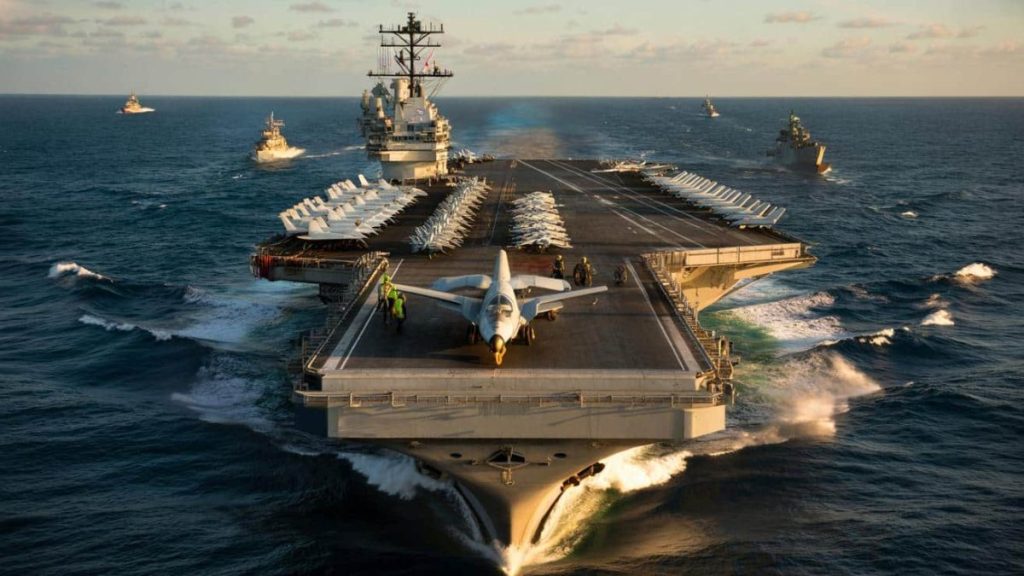
The USS Gerald R. Ford can simultaneously operate approximately 60 aircraft, ranging from supersonic fighter jets to transport helicopters. These aircraft can be armed, fueled, and launched within remarkably brief timeframes, enabling the carrier strike group to project overwhelming air power wherever American interests require protection. During a single day of intensive operations, the flight deck might launch and recover hundreds of aircraft sorties—an operational tempo that demands exceptional coordination among thousands of personnel.
The aviation fuel storage capacity alone—holding millions of litres—demonstrates the logistical scale required to sustain such operations. Similarly, the ammunition magazines store ordnance sufficient to execute extended combat operations without requiring supply vessel support. This self-sufficiency means the USS Gerald R. Ford can operate independently for months, carrying everything necessary to wage sustained military campaigns.
The Human Element
Operating this engineering marvel requires a crew of approximately 5,000 personnel, including naval aviators, engineers, maintenance technicians, and administrative staff. These individuals live and work aboard the vessel for extended deployments, often lasting six to nine months. The challenge of maintaining morale, health, and operational readiness among such a large population in a confined environment presents unique leadership challenges.
The ship includes its own medical facilities, comprehensive berthing areas, multiple dining facilities, and recreational spaces designed to sustain crew welfare. Yet despite these amenities, sailors describe carrier life as demanding and often monotonous, punctuated by moments of intense operational activity.
Strategic Implications
The existence of carriers like the USS Gerald R. Ford fundamentally shapes international geopolitics. A single carrier strike group possesses more air power than many entire nations maintain. This asymmetry of capabilities enables the United States to project influence globally and respond rapidly to emerging crises. Potential adversaries must account for the possibility of American carrier presence when calculating military options.
The construction of the USS Gerald R. Ford cost approximately $13 billion, making it one of the most expensive military projects ever undertaken. This investment reflects the strategic value policymakers assign to carrier-based power projection. Future carrier designs will likely incorporate even more advanced technologies, continuing this relentless evolution in naval capability.
Conclusion
The USS Gerald R. Ford stands as a monument to human ingenuity, military engineering excellence, and the continuous evolution of warfare technology. This 337-metre floating fortress will shape maritime security for decades to come, serving as a visible symbol of American naval dominance and a platform for projecting power across the world’s oceans. Whether viewed as a marvel of engineering or a symbol of military might, the USS Gerald R. Ford fundamentally represents humanity’s capacity to build structures of extraordinary complexity and capability.






Leave a Comment